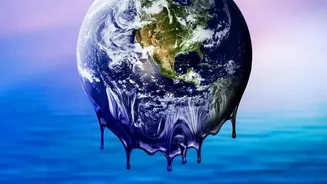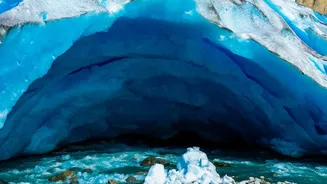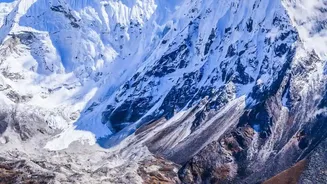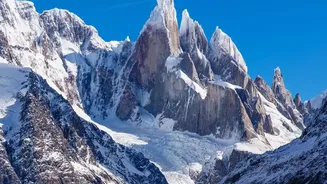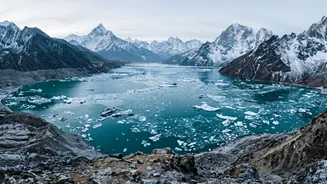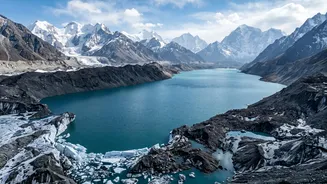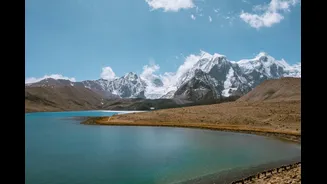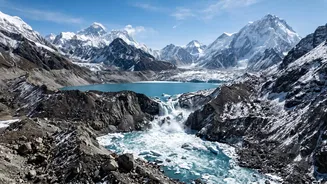






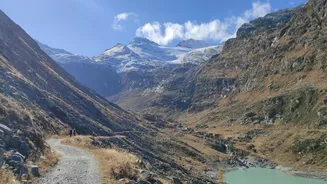
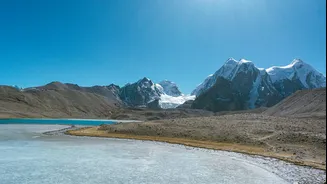
High in the Hindu Kush Himalayas, a silent threat is growing. As glaciers melt at an alarming rate, UN-backed reports are issuing stark warnings about 'ticking time bombs' in the form of unstable glacial lakes, posing a deadly risk to millions.
What is a Glacial Lake Outburst Flood?
Imagine
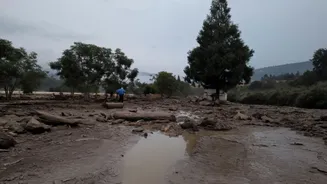
a massive bathtub perched on a mountain, held back by a crumbling wall of loose rock and ice. This is a glacial lake. A Glacial Lake Outburst Flood, or GLOF, is what happens when that natural dam suddenly breaks. The failure releases a terrifying wall of icy water, mud, and boulders down narrow mountain valleys at immense speeds. Unlike predictable river floods, GLOFs are sudden, violent, and immensely destructive. They can wipe out entire villages, demolish bridges, and obliterate critical infrastructure like hydropower plants in mere minutes, with the destructive force often felt hundreds of kilometres downstream.
The UN's Grave Assessment
Recent reports from UN agencies and affiliated scientific bodies like the International Centre for Integrated Mountain Development (ICIMOD) paint a grim picture. The Hindu Kush Himalaya region is warming significantly faster than the global average. This accelerated warming has caused glaciers to shrink at double the rate since the year 2000. As they retreat, they leave behind thousands of new or rapidly expanding glacial lakes—over 8,000 have been catalogued, with more than 200 identified as potentially dangerous. Studies show the frequency of GLOF events has increased fivefold since 1950, a surge directly linked to climate change. These are not distant threats; they are active and growing hazards right in India's backyard.
Why Climate Change is the Culprit
The connection is direct and undeniable. As global temperatures rise, Himalayan glaciers are melting faster than they can be replenished. This meltwater pools to form lakes, often contained by moraines—unstable dams of earth and debris left by the retreating glacier. These moraine dams can be breached by several triggers, all amplified by a warmer climate. An ice avalanche or landslide splashing into a full lake can cause it to overtop its dam. An extreme rainfall event can quickly fill the lake beyond its capacity. Furthermore, the permafrost that acts as a 'glue' holding mountain slopes together is thawing, increasing the risk of landslides that can trigger a GLOF.
India in the Hazard Zone
For India, these warnings are acutely relevant. The Indian Himalayan region, spanning states like Ladakh, Himachal Pradesh, Uttarakhand, Sikkim, and Arunachal Pradesh, is a hotspot for GLOF risk. A recent UN-led study revealed that while India ranks third in the number of GLOF events in the region, it has suffered the highest number of reported deaths, with over 6,000 fatalities recorded between 1835 and 2025. The catastrophic 2023 flood in Sikkim, which killed dozens and destroyed a major dam, was a direct result of the South Lhonak glacial lake breaching its banks. That event, along with the 2021 Chamoli disaster and the 2013 Kedarnath floods, serves as a tragic reminder of the country's vulnerability.
From Early Warnings to Action
Preventing GLOFs entirely is impossible, but mitigating their impact is not. Experts and UN reports are calling for urgent, coordinated action. This includes establishing robust, high-tech early warning systems that can provide downstream communities with precious minutes to evacuate. It also involves identifying the most dangerous lakes and exploring engineering solutions, such as controlled draining to lower water levels and reduce pressure on unstable dams. However, many of these lakes are in remote, transboundary regions, making monitoring and intervention a significant geopolitical challenge that requires regional cooperation between India, Nepal, Bhutan, and China.