





Why Yoga Works for Flexibility
Many people believe you need to be flexible to start yoga, but it is the practice itself that cultivates flexibility. It works by gently stretching muscles and, just as importantly, the connective tissues like fascia that wrap around them. Regular practice helps
increase the range of motion in your joints. It also works with your nervous system. When you hold a pose and breathe deeply, you send signals to your brain that it's safe to release tension, allowing muscles to lengthen more effectively. This combination of physical stretching and mental relaxation is what makes yoga a uniquely powerful tool for becoming more supple.
Cat-Cow Stretch (Marjaryasana-Bitilasana)
This is the perfect warm-up for the spine and a fantastic starting point for any beginner. Start on your hands and knees, with your wrists directly under your shoulders and your knees under your hips. As you inhale, drop your belly towards the mat, lift your chest and tailbone, and look forward (Cow Pose). As you exhale, round your spine toward the ceiling, tucking your chin to your chest and pressing the mat away (Cat Pose). Flow between these two movements for a minute, syncing your breath with the motion. This simple sequence warms up the entire back and improves spinal mobility.
Downward-Facing Dog (Adho Mukha Svanasana)
An iconic yoga pose, Downward-Facing Dog is a full-body stretch that targets hamstrings, calves, shoulders, and the spine. From your hands and knees, tuck your toes, lift your hips up and back, forming an inverted 'V' shape with your body. Spread your fingers wide and press firmly into the mat. For beginners, it's crucial to keep your knees generously bent to protect your lower back and focus on lengthening your spine. You can 'pedal' your feet, bending one knee and then the other, to gently stretch each hamstring.
Seated Forward Bend (Paschimottanasana)
This pose provides an intense stretch for the entire back side of the body, from your heels to your neck. Sit on the floor with your legs extended straight out in front of you. You can sit on a folded blanket to help tilt your pelvis forward. Inhale to lengthen your spine, and as you exhale, hinge at your hips and begin to fold forward over your legs. Don't worry about touching your toes; the goal is to keep your back long. If your hamstrings are tight, keep a soft bend in your knees or use a strap around your feet to assist the stretch.
Butterfly Pose (Baddha Konasana)
Excellent for opening the hips and stretching the inner thighs and groin, areas that are often tight from prolonged sitting. Sit on the floor and bring the soles of your feet together, letting your knees fall out to the sides. Hold onto your ankles or feet. Sit up tall to lengthen your spine. To deepen the stretch, you can gently press your knees toward the floor or fold forward. Avoid forcing the stretch; allow gravity to do the work.
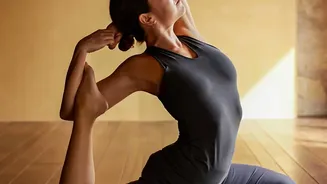
Low Lunge (Anjaneyasana)
This pose is a powerful stretch for the hip flexors, quadriceps, and groin. From a tabletop position, step your right foot forward between your hands. Slide your left knee back until you feel a comfortable stretch in the front of your left thigh and hip. Ensure your right knee is stacked directly over your right ankle. You can keep your hands on the floor, on blocks for support, or on your front thigh. Hold for 30 seconds before switching sides.
Building a Consistent Practice
The key to improving flexibility is consistency. Even 10-15 minutes a day can make a significant difference over a few weeks. It is more effective to practice for a short period daily than to do a long session once a week. Always listen to your body and never push into sharp pain. Use props like blocks and blankets to support your body and make poses more accessible. The goal is gradual progress, not instant perfection. Over time, your body will adapt, and poses that once seemed impossible will become part of your comfortable routine.