




The dream of planting human feet on Martian soil is a powerful driver of modern space exploration. Yet, beyond the rocket science lies a stark reality: the journey is fraught with dangers that challenge the limits of human endurance.
The Unseen Enemy in Deep Space
The single greatest
threat to astronauts on a Mars mission is invisible: space radiation. Unlike on Earth, where our planet's magnetic field and atmosphere shield us, deep space is awash with hazardous particles. There are two primary types. The first is a constant, low-level shower of Galactic Cosmic Rays (GCRs), which are high-energy particles originating from supernova explosions far outside our solar system. The second threat comes from our own sun in the form of Solar Energetic Particle (SEP) events—unpredictable bursts of radiation from solar flares that can deliver a massive dose in a short time. A trip to Mars, which could take up to three years, would expose astronauts to radiation levels up to 700 times higher than on Earth.
The Heavy Toll on Human Health
This constant bombardment of radiation can wreak havoc on the human body. The primary long-term concern is an increased lifetime risk of cancer. Studies suggest that radiation exposure could significantly damage hematopoietic stem cells, which produce blood cells, potentially leading to leukemia and a weakened immune system. Beyond cancer, NASA has identified other grave risks, including damage to the central nervous system, which could impair cognitive and motor functions. There is also a heightened risk of developing degenerative diseases, such as cardiovascular issues and early-onset cataracts. This doesn't even account for the other physiological challenges of long-duration spaceflight, like bone density loss, muscle atrophy, and the immense psychological strain of isolation and confinement millions of miles from home.
The Case for Robotic Vanguards
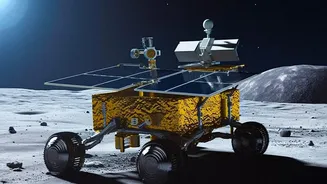
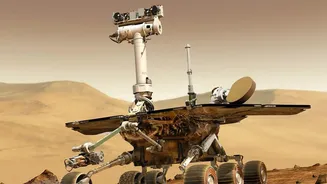
Given these profound risks, the argument for robotic exploration becomes incredibly compelling. Robots are immune to radiation, require no life support, and can operate in hazardous environments for years on end. They are also vastly more cost-effective. A crewed mission to Mars could cost hundreds of billions of dollars, whereas a robotic mission like the Perseverance rover costs a fraction of that, primarily because it doesn't need food, water, oxygen, or a return ticket. Missions like Perseverance, Curiosity, and the Insight lander have already provided invaluable data, mapping the surface, analyzing the soil, and searching for signs of past life—all without putting human lives at risk. Robots can be our scouts, preparing the way and helping scientists understand the hazards before we even consider sending people.
The Irreplaceable Human Element
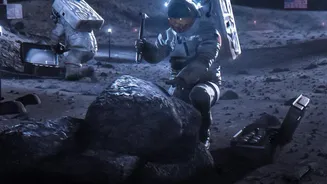
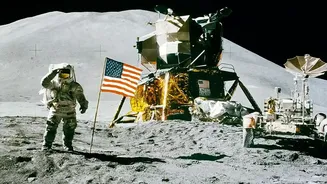
Despite the advantages of robots, the drive to send humans persists for several key reasons. Humans possess an unparalleled ability for on-the-spot problem-solving, ingenuity, and adaptability. While a rover moves at a crawl, sometimes covering less than a kilometer per hour and requiring hours or days for new instructions from Earth, an astronaut can walk, dig, climb, and make complex decisions in real-time. If a piece of equipment fails or an unexpected scientific opportunity arises, a human can react instantly. This dramatically increases the pace and quality of scientific discovery. Furthermore, there is an intangible but powerful argument about the spirit of exploration. Sending humans to Mars isn't just about data collection; it's about pushing the boundaries of human experience and establishing our species as interplanetary.
Bridging the Gap: A Hybrid Future
The debate is not necessarily a binary choice between humans and robots but rather a question of strategy and timing. The future of Mars exploration will almost certainly involve a deep partnership between the two. NASA and other agencies are actively researching solutions to the radiation problem, including advanced shielding materials, improved forecasting for solar storms, and even potential medical countermeasures to protect astronauts. The most logical path forward involves using increasingly sophisticated robots to conduct initial reconnaissance, identify resources like water ice, and even pre-deploy habitats and equipment. These robotic pioneers would reduce the risks and lay the groundwork, making an eventual human mission safer and more productive. In this model, robots are not a replacement for humans, but an essential enabler for them.