








The Devil We Know: El Niño's Impact
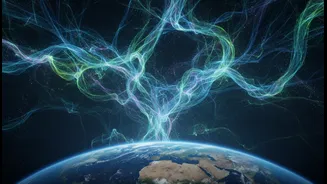
For India, El Niño is not an abstract concept; it is a recurring threat with tangible consequences. This climate pattern, characterized by the warming of the eastern Pacific Ocean, disrupts global weather systems and has a historically strong correlation
with weaker monsoon rainfall in India. A deficient monsoon can have a domino effect on the Indian economy, impacting crop yields, straining water reservoirs, fueling food inflation, and placing immense stress on the agricultural sector, which employs a vast portion of the population. With global temperatures already rising, a strong El Niño event, like the one predicted to intensify, can supercharge heatwaves and make weather even more erratic, pushing our systems to their limits.
Taming the Tempest: The Tech on the Table
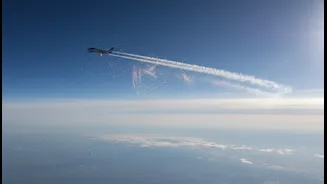
Faced with such a powerful and destructive natural cycle, a desperate question arises: what if we could control it? This has led scientists into the controversial realm of geoengineering, or large-scale climate intervention. The two leading ideas for 'solar radiation management' (SRM) are marine cloud brightening (MCB) and stratospheric aerosol injection (SAI). MCB involves spraying tiny sea salt particles into low-lying marine clouds to make them more reflective, bouncing more sunlight back into space. SAI is even more ambitious, proposing the release of reflective particles, like sulfates, high into the stratosphere to create a global sunshade, mimicking the cooling effect of a large volcanic eruption. These aren't just science fiction; they are concepts being actively modeled and debated in the scientific community.
The Allure of a Quick Fix
The appeal of these technologies is obvious. In a world struggling to reduce carbon emissions, the promise of a 'thermostat' to quickly lower global temperatures is incredibly tempting. Proponents argue that solar geoengineering could temporarily reduce the worst impacts of climate change, like extreme heat, potentially saving lives and buying more time for the world to transition to a green economy. For regions acutely vulnerable to climate shifts, like India during an El Niño year, the potential to dial down a drought or a heatwave seems like a lifeline. Some models suggest these technologies could cool the planet and reduce heat-related mortality. The question is, at what cost?
A Cure Worse Than the Disease?
The risks and unknown side effects of geoengineering are monumental. Recent studies have sounded major alarms. One alarming simulation found that deploying marine cloud brightening over the Pacific could dramatically weaken the El Niño cycle by as much as 60% in a decade. While that may sound good, such a sudden and drastic change would have far-reaching and unpredictable consequences for global weather patterns, potentially shifting rainfall and drought to new areas. Other risks include potential damage to the ozone layer, reduced productivity of crops and marine algae from less sunlight, and disruptions to vital ecosystems. We could inadvertently trigger a cascade of new problems, some even worse than the ones we were trying to solve.
The Ultimate Power Play: A Governance Nightmare
Beyond the scientific risks lies a geopolitical minefield. Who gets to control the world’s thermostat? If one country or a small coalition of nations could unilaterally deploy technology that alters the global climate, the potential for conflict is immense. What if a technology deployed to prevent droughts in California inadvertently wrecks the Indian monsoon? There is currently no international law or comprehensive governance framework specifically for solar radiation management. Decisions that could affect every person on the planet are being discussed, but mostly in developed countries, leaving a dangerous governance vacuum. The potential for this technology to be weaponized or to create new forms of global inequality is profound.