


Your New Morning Routine
Forget a gentle sunrise. On the Moon, you'll likely live by a strict 24-hour schedule to mimic Earthly cycles, as the lunar 'day' is two weeks of constant sunlight followed by two weeks of darkness. Your morning won't start with a leisurely coffee but
with a health check. Living in one-sixth of Earth's gravity takes a toll on the human body, affecting everything from muscles to bones. Astronauts will likely spend up to two hours a day on rigorous exercise just to mitigate these effects. Even simple tasks like hygiene are complex. Showers and sinks must be specially designed for a low-gravity environment to prevent water from floating away. After that, it’s time for breakfast, likely a combination of pre-packaged rations and, if you're lucky, some fresh greens from the habitat's garden.
The 9-to-5, Lunar Style
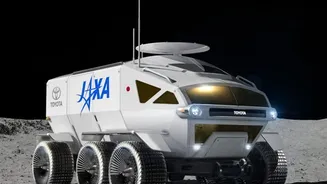
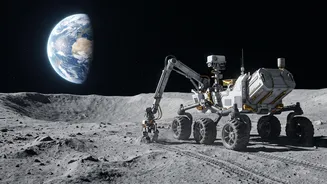
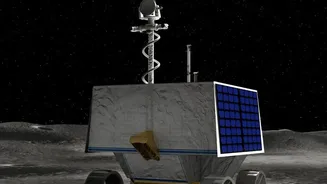
Work on the Moon will be demanding and critical to the mission's survival. The job descriptions will be highly technical. A key task will be habitat maintenance. In an environment with extreme temperature swings from 123°C to -248°C, constant radiation, and the threat of micrometeorites, ensuring the habitat's integrity is a full-time job. Another major focus will be science. Geologists will study the Moon's history, while biologists will conduct experiments in the unique low-gravity and high-radiation conditions. Many jobs will involve operating rovers and robotic equipment for exploration and construction outside the base, as exposure to the lunar surface must be carefully managed. Fine, abrasive lunar dust is a significant hazard, clinging to everything and posing risks to both equipment and lungs if brought inside.
What's for Dinner?
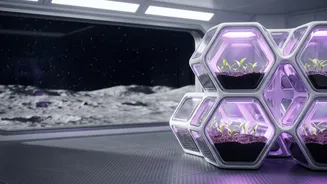
Shipping food from Earth is expensive, so a key goal for a sustainable lunar presence is growing it onsite. But lunar 'soil', or regolith, lacks the organic compounds needed for traditional farming. The solution lies in advanced hydroponic and aeroponic systems inside sealed, pressurised greenhouses. These structures will need to be shielded from radiation while allowing in specific light wavelengths for photosynthesis. Early crops will likely include fast-growing, nutrient-dense plants like leafy greens, herbs, and even chickpeas, which have been successfully grown in simulated lunar soil. These plants won't just provide food; they will be a vital part of the life-support system, recycling water, producing oxygen, and removing carbon dioxide. For the crew, fresh food will also be a major psychological boost, providing variety from monotonous packaged rations.
Staying Connected and Sane
Isolation and confinement are huge psychological hurdles for long-duration space missions. Living in a small, enclosed habitat with just a few other people for months on end can lead to interpersonal tension. To combat this, habitats are designed with private quarters and common areas where crews can gather for meals and relaxation. Regular communication with family and mission control on Earth will be crucial, though there will be a noticeable time lag. Downtime will be filled with exercise, watching movies, reading, and personal hobbies. Studies from simulated missions show that leisure activities and personal conversation are vital for reducing feelings of detachment and stress. Ultimately, the mental well-being of the crew is as important to mission success as the engineering of their habitat.