
Your Pocket Planetarium
The single greatest change brought by smartphone apps is the power of instant identification. Modern stargazing apps use your phone's built-in GPS and compass to know exactly where you are and which way you're pointing. When you hold your phone up to the sky,
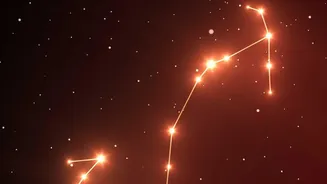
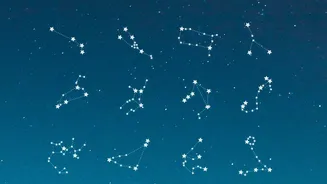
these apps display a real-time, labelled map of the celestial objects in your view. This technology, often called augmented reality (AR), overlays information directly onto your camera's live feed. Suddenly, that bright dot isn't just a dot—it's Jupiter. That faint cluster of stars is revealed as the Pleiades star cluster. Popular apps like Stellarium Mobile, SkyView, and Star Walk 2 excel at this, turning a potentially confusing sky into a friendly, interactive guide. They remove the initial barrier to entry, making astronomy accessible to anyone, without needing to first learn how to read a traditional star chart.
Planning and Discovery Made Easy
Beyond simply identifying what's already there, these apps have become indispensable planning tools for amateur astronomers. Curious about the next meteor shower or when the International Space Station (ISS) will be visible from your city? Apps like Sky Tonight and Star Walk 2 can send you notifications for major celestial events, ensuring you never miss a show. They allow you to travel through time, showing you what the sky will look like on a future date or what it looked like in the past. This feature is a game-changer for planning. For instance, if you want to see a specific constellation at its highest point, you can simply scrub forward in time to find the perfect moment. Apps like PhotoPills are specifically designed for photographers, helping them plan the exact positioning of the moon or the Milky Way for stunning shots.
The Dawn of Smartphone Astrophotography
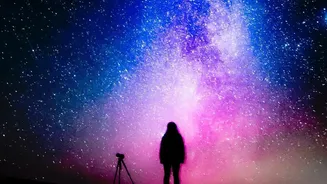
Not long ago, capturing a decent image of the night sky required expensive, specialized camera equipment. Today, smartphones, when paired with the right apps and a simple tripod, can produce surprisingly beautiful results. Your phone’s default camera app is usually not designed for the low-light conditions of the night sky. However, dedicated camera apps like NightCap Pro can unlock your phone's potential. They allow for manual control over settings like ISO and, crucially, enable long-exposure shots. This technique allows the camera's sensor to gather more light over several seconds or even minutes, revealing stars and details invisible to the naked eye. Some apps even use a technique called 'stacking,' where they take multiple photos and merge them to reduce noise and create a clearer, more brilliant final image. While it won’t replace a dedicated astrophotography setup, it has made capturing a personal memento of the cosmos a reality for millions.
An Extension for Your Telescope
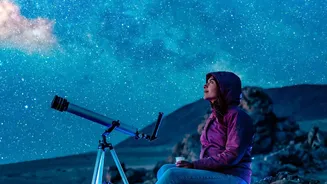
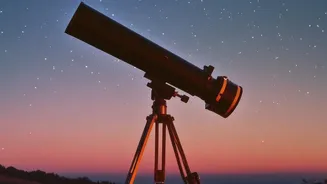
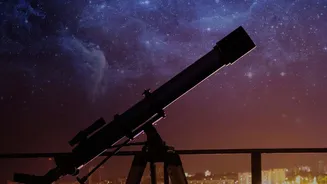
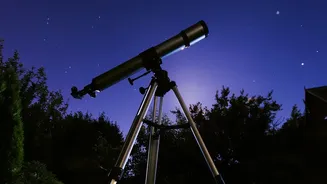
For those who do own a telescope, smartphone apps have become a powerful co-pilot. Instead of manually searching for faint, deep-sky objects, apps can guide you. Some apps, like SkySafari, can even connect to and control computerized telescopes. A newer innovation is seen in telescopes with StarSense Explorer technology. These setups use your smartphone's camera, mounted on the telescope, to analyze the star patterns it sees and figure out exactly where it's pointing in the sky—a process called plate solving. You then simply choose an object you want to see in the app, and it will show you on-screen arrows telling you where to move the telescope. When the on-screen bullseye turns green, the object is in your eyepiece. This bridges the gap between the digital convenience of an app and the breathtaking, real-time view through an eyepiece.