



Meet the Ancient 'Sea Lily'
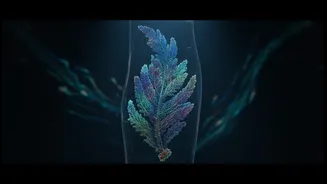
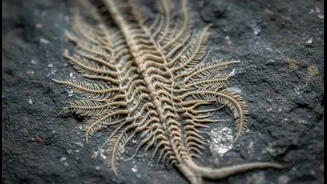
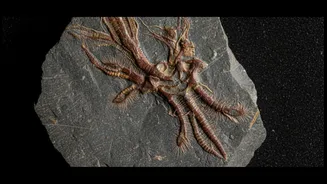
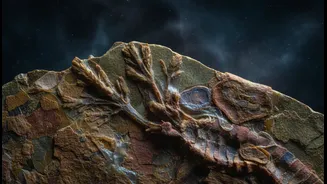
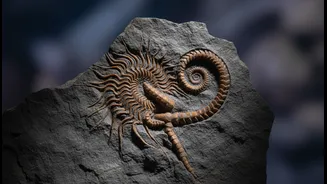
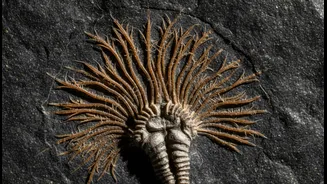
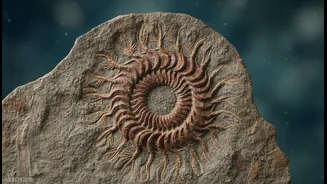
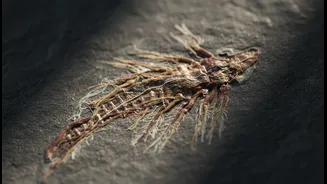
The creature in question is a crinoid, an ancient marine animal related to starfish and sea urchins. Though they look like plants with their feathery arms and long stalks, often earning them the nickname 'sea lilies', they are very much animals. They
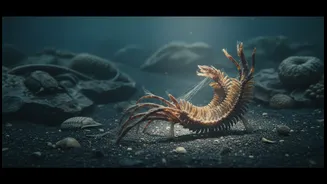
have been around for nearly 500 million years, carpeting the seafloor in vast underwater forests long before the dinosaurs. They were passive filter feeders, using their numerous arms to catch tiny food particles drifting in the ocean currents. While their fossilised skeletal plates are quite common, finding one with any of its delicate soft parts preserved is almost unheard of. After death, soft tissues like skin and organs are the first things to decay, typically vanishing long before fossilisation can occur.
A Discovery Against All Odds
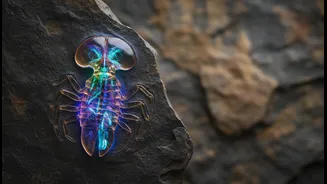
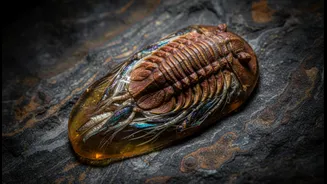
Recently, however, palaeontologists studying a 450-million-year-old crinoid fossil named Dendrocrinus simcoensis found something extraordinary: preserved soft tissues. Specifically, they identified fossilised 'tube feet', the tiny, delicate appendages the crinoid used for feeding and interacting with the water. This is only the second time soft tissue has ever been documented in a crinoid fossil, and this specimen is the oldest known example by a significant margin. Such preservation requires a near-perfect sequence of events. The animal must be buried rapidly in fine sediment with very low oxygen levels, essentially sealing it off from the bacteria and scavengers that drive decay. Scientists have described the find as a "one-in-a-million" event, a brief snapshot of biology that is almost always erased from the fossil record.
More Than Just a Pretty Fossil
This discovery is more than just a curiosity; it's a vital piece of a much larger puzzle. Fossils of skeletons can tell us about an animal's size and shape, but soft tissues reveal how it actually lived. The preserved tube feet of this ancient crinoid allow scientists to understand its feeding strategy and behaviour in unprecedented detail. By comparing this ancient anatomy to that of the 700 or so species of crinoids alive today, researchers can see how much—or how little—they have evolved over hundreds of millions of years. This particular find suggests that some ancient crinoids may have fed and behaved very differently from their modern relatives, providing crucial new data points on the evolutionary tree.
Rebuilding an Entire Ancient World
Here is where the discovery's true importance comes into focus. Reconstructing an entire ancient ecosystem is incredibly challenging. Palaeontologists often have to work with an incomplete and biased record, dominated by hard shells and bones. Finding preserved soft tissue is like finding a high-resolution photograph in an album full of blurry sketches. It doesn't just add detail to one animal; it provides context for all the surrounding life. Understanding how this crinoid fed helps scientists build a more accurate food web for its 450-million-year-old reef environment. It helps answer questions like: What did it eat? What might have eaten it? How did it compete with other filter feeders? These details are fundamental to understanding the function and resilience of Earth's earliest complex ecosystems.
A Window into Deep Time
Ultimately, a find like this does more than just fill a gap in our knowledge of crinoids. It validates the entire scientific effort to reconstruct the past. Every fossil that preserves exceptional details—be it soft tissue, stomach contents, or even colour patterns—provides a critical test for the models scientists build of ancient worlds. These models are not just academic exercises; they help us understand the baselines of healthy ecosystems before major human impact and offer insights into how life responds to environmental change over geological timescales. This single, stunningly preserved sea lily, which lived more than 200 million years before the first dinosaurs, offers a rare moment of clarity, reminding us that the story of life on Earth is still being uncovered, one incredible fossil at a time.