


Escape the City Glow
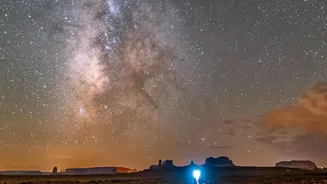
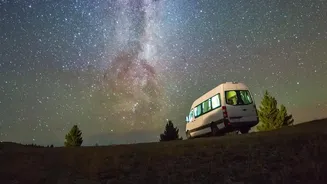
The single most important step for a beginner is to get away from light pollution. The glow from cities, suburbs, and even small towns can wash out all but the brightest stars. To find a truly dark spot, use online light pollution maps. These maps use a colour-coded
system, often called the Bortle Scale, to show the level of skyglow. Aim to travel to a 'green' zone or darker if you can, which are often found in national or state parks. Even driving a short distance away from immediate city lights to a 'yellow' zone can make a huge difference. Look for an open area with a clear view of the horizon, away from dense forests or tall buildings that might block your view.
Let Your Eyes Adapt
Once you’ve found your spot, turn off all lights—including your phone—and give your eyes time to adjust. It can take 20 to 30 minutes for your eyes to become fully dark-adapted, allowing you to see much fainter objects. A single glance at a bright white light, like a phone screen, can ruin your night vision instantly, forcing you to start the process all over again. If you need to see, use a dim red flashlight. Red light has a minimal effect on your night vision, which is why astronomers use it to read charts or adjust equipment. Some apps have a red-light 'night mode' for this purpose.
Know Your Way Around
Before you try to find complex constellations, start with the basics. Can you spot the Moon? What about the brightest points of light? These are often planets. A key difference between stars and planets is that stars twinkle, while planets shine with a more steady light. This is because stars are so far away they are single points of light easily disturbed by our atmosphere, whereas planets are closer and appear as tiny discs. You can easily see Venus, Mars, Jupiter, and Saturn with the naked eye when they are in the sky. Mars has a distinct reddish hue.
Use a Digital Guide
While you should avoid looking at your bright phone screen, stargazing apps can be an invaluable tool for beginners. Many free and paid apps like Star Walk 2, SkyView, and Stellarium Mobile use your phone’s location to create a real-time map of the sky. You can point your phone at a bright object, and the app will identify it for you. It’s a fantastic way to learn the names of stars and constellations. The best practice is to use the app to get oriented at the beginning of your session, then switch it to red-light mode or put it away to let your eyes adapt fully.
Learn Celestial Landmarks
Just like navigating a city, you need landmarks. In the Northern Hemisphere, the easiest starting point is the Big Dipper (also known as The Plough). This familiar spoon-shaped group of seven stars is part of the larger constellation Ursa Major and is visible year-round. The two stars at the end of the Dipper's bowl are called the 'Pointer Stars' because they point directly to Polaris, the North Star. On the other side of Polaris, you'll often find Cassiopeia, which is shaped like a bright 'W' or 'M'. In the winter, the constellation Orion the Hunter is impossible to miss, with three bright stars forming his belt.
Keep an Eye Out for Special Events
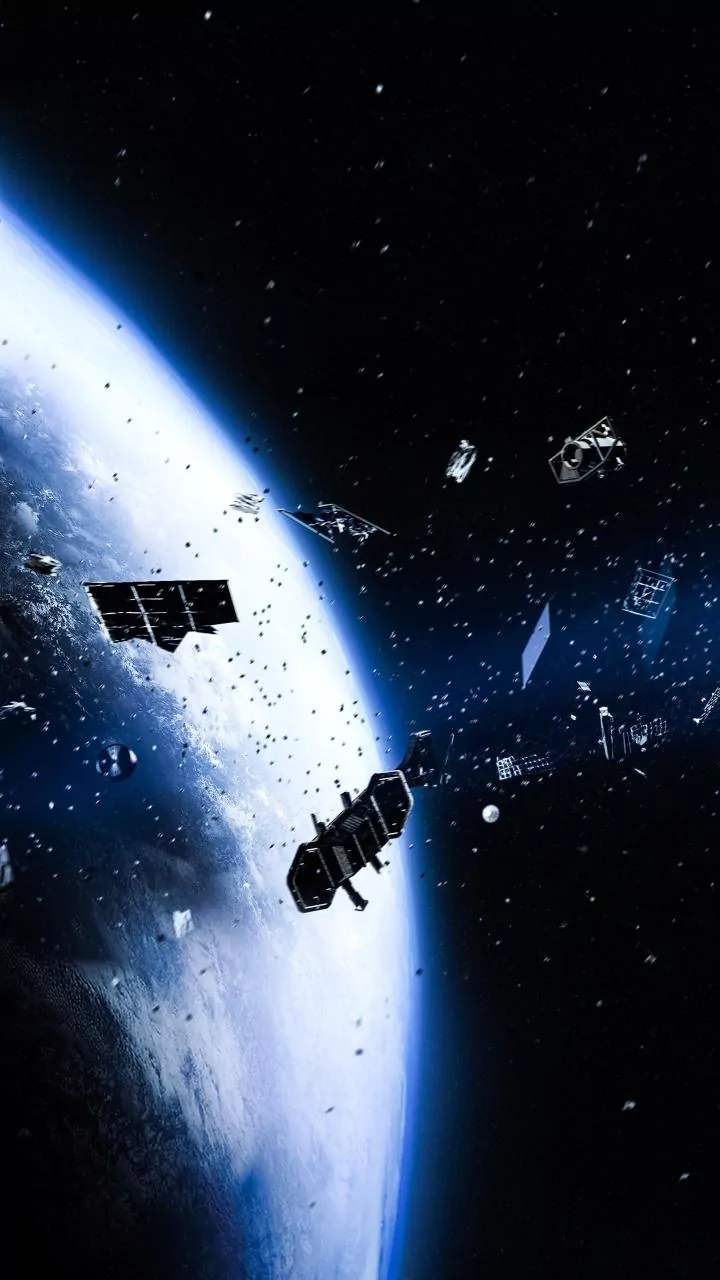
The night sky is dynamic. Throughout the year, you can witness meteor showers, like the Perseids in August or the Geminids in December. Sometimes, planets will appear very close to each other in an event called a conjunction. You can also spot satellites. The International Space Station (ISS) is frequently visible as a very bright, steady light moving quickly across the sky. Websites and apps like Heavens-Above or the NASA app can tell you exactly when and where to look to spot the ISS from your location.