






A Different Kind of 'First'
While India already boasts a 'Dark Sky Reserve' in Hanle, Ladakh, and a 'Dark Sky Park' at Pench Tiger Reserve, Udmal’s initiative is pioneering a new category. The 'Dark Sky Community' designation is arguably the most grassroots of them all. Unlike a vast,
remote reserve or a protected park, a Community certification from the global body DarkSky International focuses on inhabited areas—towns and villages where people live and work. It acknowledges a collective commitment by residents, local businesses, and government bodies to adopt intelligent lighting practices. Hanle’s Reserve protects a core scientific zone, and Pench’s Park offers conservation with visitor programs, but Udmal’s effort is about integrating daily life with the preservation of the night sky.
What is a Dark Sky Community?
Becoming a Dark Sky Community isn't about turning off all the lights and living in complete darkness. Instead, it’s about being smarter with light. The core idea is to combat 'light pollution'—the excessive and misdirected artificial light that floods our nightscapes, washes out the stars, and disrupts ecosystems. This is achieved through practical measures: using shielded fixtures that point light downwards where it's needed, opting for warmer-hued bulbs that are less disruptive to wildlife, and eliminating unnecessary upward-facing lights. For Udmal, the goal is not less light, but 'wiser light.' The benefits are manifold: it saves energy, protects nocturnal animals whose behaviors are governed by natural light cycles, preserves cultural stargazing traditions, and opens up new avenues for science and tourism.
The Udmal Resolution
The journey for this remote tribal village in Nashik's Surgana taluka began with a decisive local action. The Udmal Gram Sabha passed a formal resolution under the Panchayats (Extension to Scheduled Areas) Act, or PESA, to actively conserve its pristine night skies. This community-led decision was the critical first step, demonstrating a collective will to protect a natural asset. Following this, the Nashik district administration, led by Collector Ayush Prasad, gave the project its full backing, sanctioning ₹42.1 lakh to facilitate the transformation. The funds will be used for night-sky quality assessments, installing responsible lighting systems, and running awareness campaigns, all in collaboration with the NGO Astronera, which provides technical expertise.
A Vision for Astro-Tourism and Livelihood
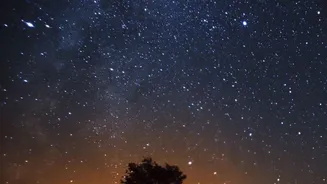
The ambition behind the Udmal project extends far beyond just seeing more stars. It is a strategic move to build a sustainable local economy. By preserving its dark skies, the village aims to become a premier destination for 'astro-tourism.' This new form of eco-tourism attracts visitors who are weary of city lights and eager to experience the awe of a truly star-filled sky, including a clear view of the Milky Way. The project intends to create sustainable livelihood opportunities for the local tribal community by training them as guides and in other tourism-related roles. The vision is to create a model where environmental conservation and economic empowerment go hand in hand, proving that a village’s greatest asset can be the natural beauty it chooses to protect.
The Path to International Recognition
The Gram Sabha resolution and government funding have paved the way, but the journey to official certification is a meticulous process. Udmal will now undertake the practical steps required by DarkSky International. This includes retrofitting public lighting, educating residents and businesses on best practices, and demonstrating a long-term commitment to dark-sky principles. Once these measures are implemented and documented, the community can formally apply for the 'International Dark Sky Community' designation. If successful, this small village in Maharashtra won't just be a local success story; it will become a global example of community-led conservation and a beacon for other regions in India looking to reclaim their connection to the cosmos.