





The Age of the Infinite Scroll
Platforms like TikTok, Instagram Reels, and YouTube Shorts have fundamentally rewired our media consumption habits. They deliver an endless stream of content engineered to capture our attention in the first few seconds. This model thrives on what some
call 'dopamine scrolling,' where each new video provides a small, satisfying hit that keeps us engaged. Research has shown that our attention spans online have decreased, with one study noting a drop from an average of 2.5 minutes on a screen in 2004 to just 47 seconds in recent years. This isn't a moral failing; it's a response to a media environment that bombards us with stimuli, rewarding quick, 'snackable' content over deep, prolonged engagement. The result is a viewing public conditioned to expect instant hooks and rapid pacing.
Cinema's Immersive Promise
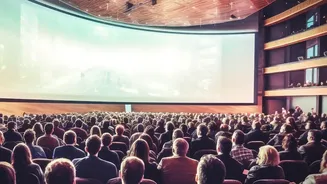
Feature cinema, by contrast, operates on an entirely different premise. Its power lies in its ability to demand and hold our focus for an extended period, creating a space for deep emotional investment, complex character development, and nuanced storytelling. Directors like Alexander Mackendrick have long argued that a filmmaker's primary job is to direct the audience's attention. This is achieved through deliberate pacing, careful composition, and sound design that builds a world around the viewer. A great film doesn't just show you a story; it immerses you in it. It asks for your patience, promising a richer, more profound reward than the fleeting buzz of a viral clip. It is this very commitment that is now being tested.
The Director's Dilemma
For film directors, this cultural shift presents a significant challenge. How do you tell a slow-burn story to an audience accustomed to 15-second plot twists? The pressure is on to make films that are more immediately gratifying. This can manifest in faster editing, with some modern blockbusters featuring average shot lengths of less than three seconds, a stark contrast to the 8-12 second averages of classic films. This 'tiktokification' of cinema can lead to movies that feel rushed and chaotic, prioritizing constant stimulation over narrative coherence. There's also the risk that studios, chasing viral moments, might favor scripts with easily clippable scenes or shocking reveals, potentially sidelining more subtle, character-driven projects. Even legendary directors like Martin Scorsese, while an amusingly reluctant star of his daughter's TikToks, have voiced concerns about content being devalued in the fast-paced churn of social media.
Adapting, Resisting, or Both?
Filmmakers are not simply surrendering. Many are finding creative ways to navigate this new landscape. Some lean into the trend, using the visual language of social media in their films and marketing. Studios now create promotional materials specifically for platforms like TikTok, using fast-paced edits and viral sounds to generate hype. Others are taking the opposite approach, doubling down on what makes cinema unique. Directors like Christopher Nolan and Denis Villeneuve continue to make long, immersive epics, arguing that the theatrical experience is a powerful antidote to digital distraction. The box office success of lengthy films like 'Oppenheimer' and 'Dune: Part Two' proves that audiences are still willing to make a commitment for a compelling story told on a grand scale. This suggests that rather than killing cinema, the short-form revolution is forcing it to reassert its value.
An Audience That Contains Multitudes
Ultimately, the notion that audiences have universally lost their ability to focus is too simplistic. People who enjoy scrolling through Reels are often the same people who will binge-watch an entire TV series or flock to see a three-hour movie. The formats serve different needs. Short-form video is perfect for a moment of light entertainment, while feature films offer a deeper, more sustained escape. The challenge for directors isn't that attention spans have vanished, but that attention has become a more valuable and fragmented commodity. Getting an audience to put down their phone for two hours now requires a more explicit promise of an experience they can't get anywhere else. The desire for meaningful storytelling hasn't gone away; it just coexists with the demand for instant gratification.