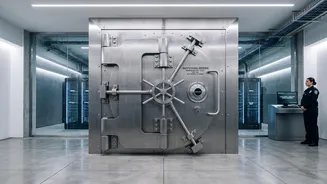








In late October 2026, the cryptocurrency world was shaken by news of a security breach at Binance, the world's largest exchange, with reported losses soaring to an astonishing $6.3 billion. This is what we know about the largest crypto heist in history.
The Heist of a Lifetime
On October 29, 2026, attackers drained approximately $6.3 billion in digital assets from Binance's hot wallets across ten different blockchains. The entire operation was executed with alarming speed, taking only about 20 minutes from start to finish. This incident dwarfs all previous crypto thefts, making it the largest known financial heist of its kind in history, surpassing the previous record held by a $1.5 billion hack on the Bybit exchange in 2025. The sheer scale of the theft immediately sent shockwaves through the financial and tech communities, raising urgent questions about the security of centralized crypto exchanges.
How the Attack Unfolded
Binance's investigation revealed a sophisticated, multi-stage attack that began months before the actual theft. The initial point of entry was traced back to June 2026, when a Binance DevOps engineer unknowingly downloaded a malicious software installer. Though this initial threat was detected, the attackers gathered key information about the company's wallet infrastructure team. They then used this intelligence to launch a social engineering campaign, targeting another engineer with a fake job interview process in September. By convincing this employee to download a file for a 'test assignment', the attackers gained a deeper foothold. This eventually allowed them to compromise an internal AI tool, gain access to more employee computers, and ultimately seize control of an internal transaction-signing service, which they used to authorize the massive withdrawals.
The Prime Suspects and Global Response
Multiple blockchain intelligence firms, including Chainalysis and TRM Labs, along with the US Federal Bureau of Investigation (FBI), have attributed the attack to TraderTraitor, a hacking group linked to North Korea. This group is believed to be part of the infamous Lazarus Group, which has been implicated in numerous large-scale crypto thefts aimed at generating revenue for the North Korean regime. In response to the breach, Binance worked swiftly with industry partners like Tether and Circle to freeze a significant portion of the stolen funds. Within days, an estimated $2.7 to $3 billion worth of assets had been successfully frozen, preventing the hackers from moving or cashing out nearly half of their loot.
Binance's Promise to Users
Immediately following the attack, Binance suspended withdrawals to secure its systems and prevent further losses. The company quickly made a crucial announcement: all user funds were safe and any losses from the hack would be covered entirely by Binance. To make good on this promise, the exchange utilized its Secure Asset Fund for Users (SAFU), an emergency insurance fund established in 2018, as well as its own corporate funds. By November 2, Binance reported that it had replenished nearly all stolen assets in affected customer accounts and began to restore withdrawal services in stages. This rapid response to make users whole stands in stark contrast to many previous exchange hacks where customers often faced total losses.
Lessons for the Crypto Investor
This historic event serves as a stark reminder of the inherent risks associated with centralized cryptocurrency platforms. While Binance's ability to cover the massive loss is a testament to its scale, it also highlights the fact that even the largest players are prime targets for sophisticated cybercriminals. For Indian investors and users worldwide, this underscores the age-old crypto mantra: 'not your keys, not your coins'. Holding assets on an exchange means entrusting their security to a third party. While convenient, it exposes funds to risks beyond an individual's control. The incident reinforces the importance of using strong, unique passwords, enabling two-factor authentication (2FA), and considering the use of personal hardware wallets for the longterm storage of significant crypto holdings.