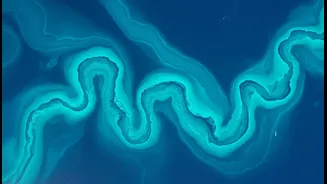








An Otherworldly Glow
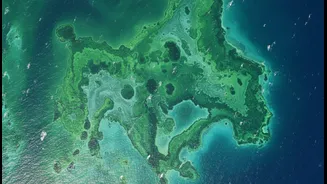
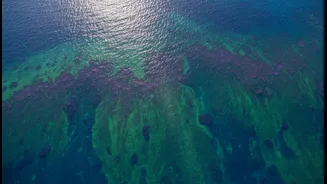
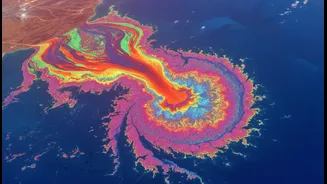
When satellites capture images of these phenomena, the ocean appears to be glowing in vibrant shades of blue and green. These are not chemical spills or strange reflections, but enormous gatherings of microscopic life. The culprits are a specific type
of phytoplankton known as coccolithophores. These single-celled organisms are encased in minute, ornate plates of calcium carbonate, called coccoliths. When these phytoplankton multiply into the trillions under the right conditions, the sheer density of their reflective plates scatters sunlight, turning vast patches of ocean into a characteristic milky, turquoise colour that is easily visible from orbit. Recent images from NASA's PACE satellite have captured these spectacular blooms in places like the Black Sea, showcasing their immense scale.
The Recipe for a Bloom
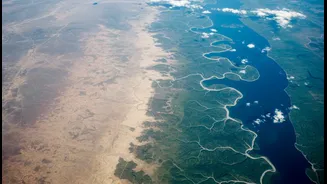
Phytoplankton blooms don't happen by accident. They are population explosions that require a specific convergence of factors: sunlight, warm water, and, most importantly, an abundance of nutrients. While some blooms are part of natural cycles, like seasonal upwelling that brings nutrient-rich deep water to the surface, many are now supercharged by human activity. The primary drivers are excessive nutrients, particularly nitrogen and phosphorus, entering coastal waters. This process, known as eutrophication, is largely fueled by agricultural runoff from fertilizers and animal waste, as well as wastewater discharge from urban areas. Essentially, we are over-fertilizing our coastal oceans, creating the perfect conditions for these algae to grow at an explosive rate.
A Shadow Over the Reefs
For coral reef ecosystems, which thrive in clear, nutrient-poor waters, these blooms are a dire warning. While coccolithophores themselves are not typically toxic, their massive presence causes a cascade of problems. The most immediate threat is the blocking of sunlight. Corals have a symbiotic relationship with algae living inside their tissues, which photosynthesize to provide the coral with most of its food. When a dense algal bloom forms overhead, it acts like a thick blanket, cutting off the sunlight these vital symbionts need to survive. Starved of light, the corals weaken, becoming more susceptible to disease and bleaching.
The Aftermath: A Suffocating End
The danger doesn't end when the bloom dissipates. As the trillions of phytoplankton die, they sink and are decomposed by bacteria. This decomposition process consumes vast amounts of oxygen from the water. The result can be the creation of hypoxic, or low-oxygen, "dead zones." In these suffocating conditions, fish, sponges, and other marine life struggle to breathe. Corals, already weakened by the lack of light, can perish. This shift in water chemistry is a sign of a system thrown completely out of balance. The very same nutrient pollution that fuels the bloom also directly harms corals, making them more vulnerable to disease and stress. The beautiful swirl is not just a symptom; it's an active participant in the ecosystem's disruption.