


The Universe's Standard Story
For decades, cosmology has operated on a relatively straightforward principle known as the hierarchical or 'bottom-up' model. The idea was that after the Big Bang, small things formed first. Tiny fluctuations in density allowed gravity to pull together
the first stars. These stars gathered into small, primitive galaxies. Over billions of years, these small galaxies would merge and collide, gradually building the enormous, complex spiral and elliptical galaxies we see in the universe today. This step-by-step assembly process was the accepted history of our cosmos. It was a neat, orderly story that made sense. But the JWST's powerful infrared eyes are revealing that the universe's early years may have been far more chaotic, and productive, than this model allows.
Galaxies Too Big, Too Soon
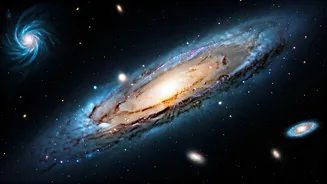
One of the most persistent surprises from JWST is the discovery of galaxies that are simply too massive and mature for their age. Astronomers are finding surprisingly bright and large galaxies that existed just a few hundred million years after the Big Bang. For example, a galaxy designated JADES-GS-z14-0, seen as it was just 290 million years after the universe began, is already 1,600 light-years across and shines with the light of countless young stars. According to the bottom-up model, there shouldn't have been enough time for gravity to assemble something so substantial. These early galaxies are not the small, disorganized collections of stars that theories predicted. Instead, they look surprisingly grown-up, forcing scientists to consider that the process of galaxy formation was much faster and more efficient than previously thought.
Black Holes on Cosmic Fast-Forward
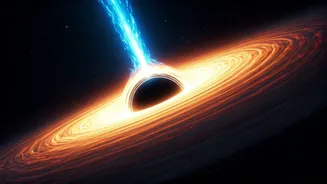
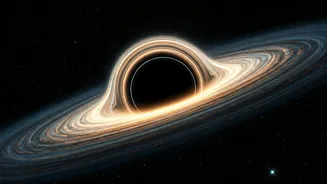
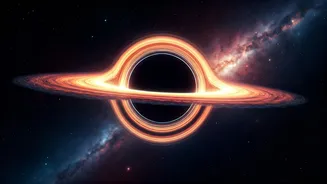
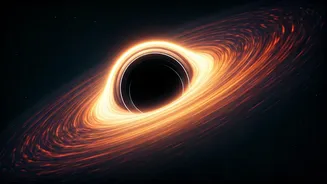
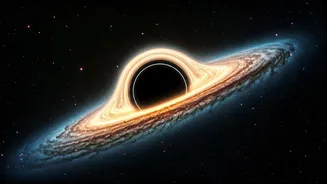
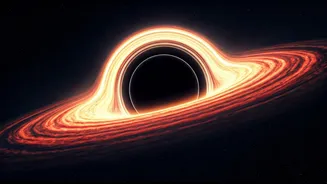
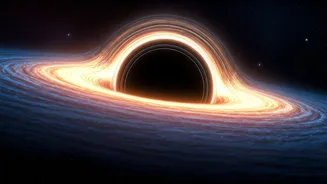
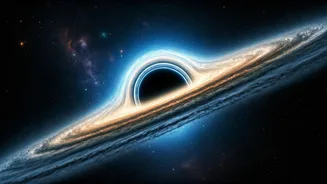
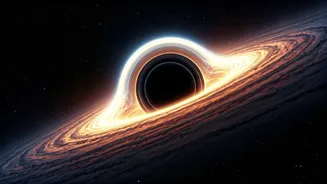
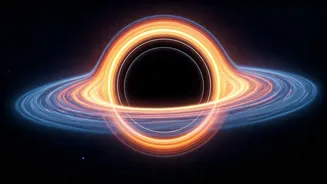
It’s not just the galaxies that are unexpectedly large; it’s what lies at their centers. The JWST is consistently finding supermassive black holes in the early universe that are far too big for their own good. In the modern universe, there is a known relationship between the mass of a galaxy and the mass of its central black hole, which is typically a tiny fraction of the host galaxy's stellar mass. But in the cosmic dawn, JWST is finding black holes that make up a significant percentage, sometimes 10% or more, of their host galaxy's mass. Some theories suggest these black holes must have grown from massive initial "heavy seeds" or gobbled up matter at rates far exceeding theoretical limits. One active supermassive black hole was confirmed in a galaxy just 570 million years after the Big Bang, and it was found to be more massive relative to its host galaxy than expected, challenging the idea that galaxies and their black holes grow in lockstep.
Rewriting the First Chapter
These discoveries don't invalidate the Big Bang, but they are forcing a major rethink of what happened immediately afterward. The universe appears to have been in a hurry, building complex structures at a blistering pace. Scientists are now exploring new theories to explain this rapid development. Perhaps the first stars were far more massive than today's, burning brighter and collapsing into larger black hole seeds. Maybe the filaments of gas that fed early galaxies were denser, allowing for super-charged star formation. Another possibility is that some of the objects we see, like the mysterious "little red dots," aren't just galaxies but a new class of object entirely, perhaps powered by voracious, hidden black holes. Whatever the answer, the JWST has shown that the early universe was not a simple, quiet place but a dynamic and surprisingly busy construction site.