




The Clock is Ticking for the ISS
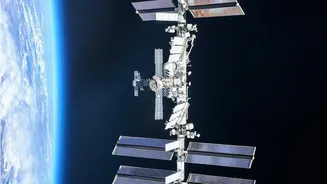
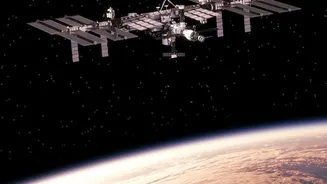
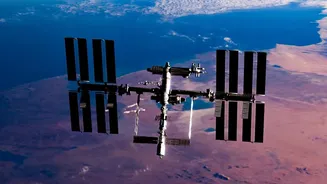
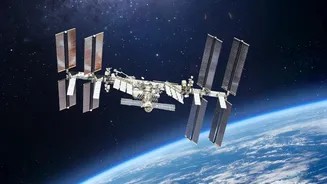
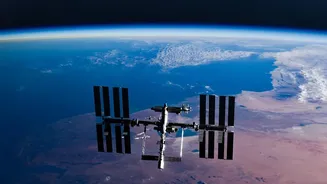
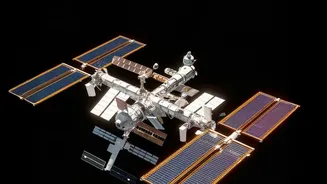
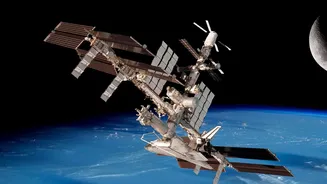
The International Space Station is one of modern history's greatest engineering achievements. Since its first components were launched in 1998, it has hosted thousands of experiments in fields like human biology, materials science, and medicine, leading
to breakthroughs that are impossible to replicate on Earth. Studies on muscle atrophy and bone loss inform our understanding of long-duration spaceflight, while unique protein crystal growth research has aided in the development of new disease treatments. However, the station is aging. After more than a quarter-century of continuous human occupation, maintaining its complex systems is becoming increasingly costly and challenging. NASA plans to de-orbit the ISS around 2030, leaving a potential void in low-Earth orbit (LEO) that could halt critical long-term scientific investigations in their tracks.
The High Cost of a Research Gap
Losing access to a microgravity lab, even temporarily, would be a major setback. Many experiments, particularly in human physiology and biology, require years of continuous data collection. A gap would mean losing momentum on vital research that helps prepare for future missions to the Moon and Mars and delivers benefits back on Earth. Furthermore, a gap in American and European presence in LEO could cede leadership in this strategic domain, as China's Tiangong space station is already operational and expanding. To prevent this, NASA is actively fostering a new commercial marketplace in space through its Commercial Low-Earth Orbit Destinations (CLD) program. The strategy is to transition from being the owner and operator of an orbital outpost to becoming a customer of several privately owned and operated stations.
A New Generation of Orbital Platforms
Several companies are racing to build the successors to the ISS. Axiom Space is already flying private astronaut missions to the ISS and plans to launch its first module, which will initially attach to the station before becoming a free-flying commercial platform. Other major players include the Starlab station, a joint venture from Voyager Space and Airbus, and concepts like Blue Origin's Orbital Reef, envisioned as a 'mixed-use business park' in space. These companies aren't just building replacements; they are designing next-generation platforms intended to be more efficient, specialized, and accessible. Starlab, for instance, is slated to launch on a single flight aboard a Starship rocket, complete with a fully functional science park, accelerating the timeline for research.
Designed for Discovery and Commerce
Private habitats offer key advantages for science. While the ISS is a multi-purpose facility where research must compete with maintenance and operational tasks, new commercial stations are being designed with dedicated science modules and greater automation. Axiom Station, for example, will feature a dedicated Research and Manufacturing module. This specialization promises more uptime for experiments and greater capacity. Commercial operators also aim to streamline the complex process of sending experiments to space, which can currently take years of planning and intense competition for limited resources. By offering 'turnkey' solutions that cover everything from hardware development to mission integration, companies like Axiom aim to make orbital research more accessible to universities, startups, and pharmaceutical firms.
Beyond Research: A New Economy in Orbit
The business model for these new stations relies on a diverse customer base. While NASA will be a primary 'anchor tenant' to ensure its research continues, these platforms are also being built to support in-space manufacturing, technology demonstrations, and even space tourism. Starlab has partnered with Hilton to design its crew quarters, signaling a serious push to make space a destination for more than just government astronauts. This diversified approach is crucial for creating a self-sustaining economy in low-Earth orbit, reducing the long-term cost burden on taxpayers and fostering a new wave of innovation. By ensuring there is no gap after the ISS retires, these commercial habitats are not just continuing a legacy; they are building the foundation for a permanent and thriving human presence in space.