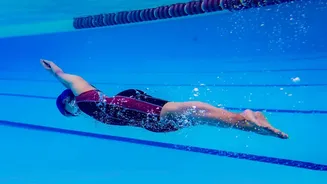









The debate is timeless: which is the better workout, running or swimming? Both offer superb cardiovascular benefits, but the answer isn't simple. It depends on your goals, your body, and, just as importantly, where you do it.
The Battle for Calorie Burn
When it comes to shedding
calories, intensity is king. On paper, running often has a slight edge. A person of average weight can burn more calories in a 30-minute run at a moderate pace than in a 30-minute leisurely swim. However, this doesn't tell the whole story. Water is about 800 times denser than air, meaning your muscles are under constant resistance in the pool. A vigorous swim, especially using demanding strokes like butterfly, can easily match or even surpass the calorie burn of a high-speed run. Swimming engages the entire body, from your arms and shoulders to your core and legs, which can lead to a more comprehensive workout and boost your metabolism for hours afterward. Ultimately, the activity you can sustain at a higher intensity for longer will burn more calories, making this a near-tie dependent on personal effort.
Joint Impact and Injury Risk
Here, swimming has a clear and significant advantage. The buoyancy of water supports up to 90% of your body weight, making it a low-impact exercise that is exceptionally gentle on joints. This makes it an ideal choice for individuals with arthritis, joint pain, or those recovering from injuries. While swimming isn't entirely without risk—improper form can lead to shoulder or neck overuse injuries—the overall injury rate is substantially lower. Running, by contrast, is a high-impact activity. Each stride sends a force of two to three times your body weight through your legs, stressing your ankles, knees, and hips. This pounding can lead to common ailments like shin splints and stress fractures, particularly when running on hard surfaces like concrete. The trade-off is that this weight-bearing stress is excellent for building bone density, which helps prevent osteoporosis.
Muscle Toning and Development
If a full-body workout is your goal, swimming is the undisputed champion. It requires a coordinated effort from your arms, chest, back, core, and legs, promoting the development of long, lean muscles across your entire body. The constant resistance of the water ensures every part of you is working. Running primarily targets the lower body, building powerful glutes, hamstrings, and calves. While your core is engaged for stability, running doesn't provide the same upper-body conditioning as swimming. To achieve similar all-over toning, runners often need to supplement their workouts with strength training.
The Pool vs. The Open Water
The environment of your swim dramatically changes the experience. A swimming pool offers a controlled, safe setting. The water temperature is consistent, there are no currents or waves, and clear lane lines make it easy to focus on technique and pace. Lifeguards are typically on duty, adding a layer of safety. Open water swimming in a lake or ocean introduces unpredictability. You'll contend with colder temperatures, currents, and waves, which demand greater stamina and navigational skills like 'sighting'. Visibility is often low, and you're exposed to the elements. This makes open water swimming a greater mental and physical challenge, but also a more adventurous experience that many find deeply rewarding for its connection to nature.
The Great Outdoors vs. The Treadmill
Just as with swimming, where you run matters. Outdoor running on varied terrain like trails and hills engages more stabilising muscles in your legs and core as you adapt to uneven surfaces. Factors like wind resistance and inclines can also increase your calorie burn. Plus, the changing scenery and fresh air provide mental health benefits that can make exercise feel less like a chore. However, running on hard pavement can be tough on joints. Treadmills offer a cushioned, lower-impact surface, which is a significant advantage for those prone to injury. They also provide a controlled environment, allowing you to precisely manage your pace and incline without worrying about weather or traffic.
Accessibility and Cost
Running is arguably one of the most accessible forms of exercise. All you truly need is a good pair of shoes, and you can do it almost anywhere, anytime, with no membership fees required. This convenience makes it easy to maintain as a consistent habit. Swimming requires access to a body of water, which for most people means a pool with associated entry fees or a gym membership. The initial gear costs for a swimsuit and goggles are generally low, but access remains the biggest hurdle. For those with specific health conditions or injuries, however, swimming's physical accessibility can make it the more practical long-term option.