





A Policy Universe Reimagined
The single most significant catalyst for this expansion is a fundamental shift in government policy. The introduction of the Indian Space Policy 2023 has been a game-changer, formally opening the doors for private companies—referred to as Non-Government
Entities (NGEs)—to participate in end-to-end space activities. This includes everything from building satellites and launch vehicles to providing space-based services. The policy creates a stable and predictable regulatory environment, which is crucial for attracting private investment. It moves away from the old model where the Indian Space Research Organisation (ISRO) did almost everything, and toward a new framework where the private sector is an active partner.
The Rise of Private Pioneers
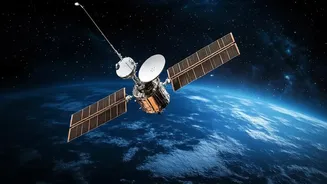
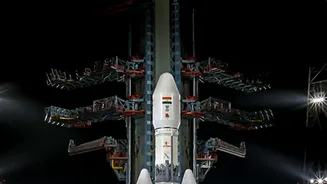
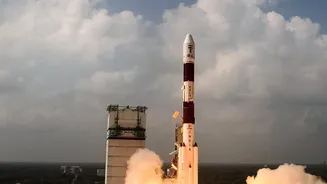
This policy overhaul has unleashed a wave of entrepreneurial energy. India's space startup ecosystem has grown exponentially, from a handful just a decade ago to over 400 firms in 2026. These companies are attracting significant investment, with private funding expanding nearly six-fold in recent years. Startups are driving innovation in areas like low-cost launch vehicles and small satellite constellations, which are in high demand globally. By embracing advanced manufacturing techniques like 3D-printed rocket engines, these private firms are drastically reducing costs and production timelines, making India's launch services more competitive. The successful launch of Vikram-1, India's first privately developed orbital rocket, marks a major milestone in this journey.
Meet the New Space Regulator
To manage this new, crowded landscape, the government established the Indian National Space Promotion and Authorisation Centre (IN-SPACe). Acting as a single-window agency, IN-SPACe is responsible for promoting, authorising, and supervising the activities of private space companies. Its role is to ensure a level playing field, facilitate access to ISRO's world-class facilities and technologies, and provide regulatory clarity. This removes significant barriers for startups and established companies alike, allowing them to innovate faster without having to build every piece of infrastructure from scratch. By handling the regulatory approvals, IN-SPACe allows the private sector to focus on what it does best: building and innovating.
ISRO's New Focus: The Final Frontier
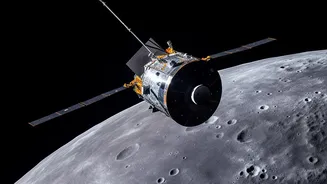
With the private sector taking on more commercial and manufacturing roles, ISRO is free to evolve. The national space agency is now transitioning away from routine operational activities to focus on its core mandate: advanced research and development, deep-space exploration, and national security missions. This includes ambitious projects like the Gaganyaan human spaceflight program and the development of next-generation technologies. ISRO will act as a mentor and partner to the private industry, transferring mature technologies for commercial exploitation. This strategic realignment ensures that while the commercial market flourishes, India continues to push the boundaries of space science and exploration.
Unlocking Downstream Value
The projections for India's space economy are staggering, with estimates suggesting it could grow from its current valuation of around $8.4 billion to $44 billion by 2033. A huge portion of this growth is expected to come from the 'downstream' sector. This refers to the vast array of services and applications that rely on space-based assets. Think of satellite communications providing internet to remote areas, Earth observation data helping farmers improve crop yields, navigation services optimising logistics, and geospatial analytics aiding in urban planning and disaster management. As more satellites are launched, the data and services they provide will create immense economic value across countless industries.