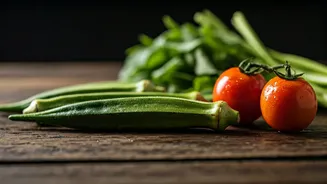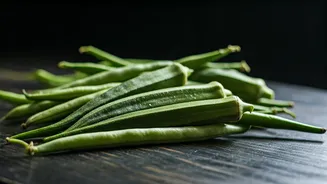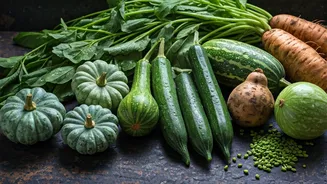








Bottle Gourd (Lauki): The Hydrating Hero
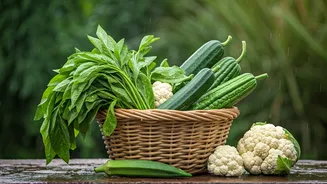
Often overlooked, lauki is a superstar vegetable during the monsoon. Composed of over 90% water, it's incredibly hydrating and very easy on the digestive system, which tends to be sluggish during this season. It is packed with fibre, which helps prevent
constipation and keeps your gut healthy. Rich in vitamins C, B, and iron, bottle gourd is also known to be a cooling vegetable, helping to balance body temperature. Its low-calorie, low-fat nature makes it an excellent choice for weight management. A simple lauki sabzi with minimal spices or a comforting soup are perfect ways to incorporate this humble gourd into your rainy-day meals.
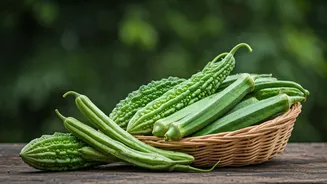
Bitter Gourd (Karela): The Immunity Booster
The name might scare some away, but bitter gourd is one of the most powerful vegetables for monsoon health. Its bitter properties are a sign of its potent medicinal qualities. Karela is loaded with Vitamin C, a powerful antioxidant that is crucial for fighting off infections and strengthening the immune system. It also has antiviral and antibacterial properties, making it a formidable ally against common monsoon illnesses like the flu and colds. Furthermore, it's excellent for regulating blood sugar levels and purifying the blood. To reduce its bitterness, you can salt it and let it rest for 30 minutes before cooking a delicious stuffed karela or a simple stir-fry.
Pointed Gourd (Parwal): The Digestive Aid
Parwal, or pointed gourd, is a staple in many Indian households for a reason, especially during the rains. It is light, easy to digest, and particularly effective in keeping stomach-related issues at bay. Rich in fibre, it helps maintain a healthy digestive tract and can provide relief from gas, acidity, and constipation—common complaints during this season. Parwal is also a good source of vitamins A and C, which contribute to better immunity and skin health. Its seeds are known to help control cholesterol. Whether you make a simple 'parwal ki bhujia' or add it to a mixed vegetable curry, it's a versatile and beneficial addition to your plate.
Ridge Gourd (Turai): The Low-Calorie Champion
Similar to its gourd cousins, turai is another excellent monsoon vegetable. It is extremely low in calories and high in dietary fibre, making it ideal for those watching their weight. Its high water content helps keep you hydrated, while its pulp is known for its blood-purifying properties. Ridge gourd is also rich in essential nutrients like vitamin C, zinc, and iron, which all work together to fortify your immune system. According to Ayurvedic principles, it helps balance the 'pitta' dosha, which can be aggravated during the humid monsoon weather. A simple turai dal or a sabzi with chana dal makes for a wholesome and nourishing meal.
Beetroot (Chukandar): The Antioxidant Powerhouse
While leafy greens should be consumed with caution during the monsoon due to mud and grime, root vegetables like beetroot are a safe and incredibly healthy bet. Beetroot is a fantastic source of antioxidants and nutrients that detoxify the body. It’s rich in folate, potassium, and vitamin C, all of which are essential for energy production and immune function. The vibrant colour comes from betalains, compounds that have powerful anti-inflammatory properties. A warm beetroot soup, a simple salad (with well-washed beets), or even a glass of fresh juice can provide a much-needed energy and immunity boost on a gloomy day.
A Note on Preparation
Regardless of the vegetable, proper cleaning is non-negotiable during the monsoon. The increased moisture in the air and soil can lead to a higher concentration of germs and bacteria. Always wash your vegetables thoroughly under running water. You can even soak them in a bowl of water with a bit of salt or vinegar for 15-20 minutes before rinsing them again. It's also advisable to cook vegetables well instead of eating them raw, as heat helps kill any lingering pathogens, further protecting you from water-borne diseases.