



A New Generation of Weather Watcher
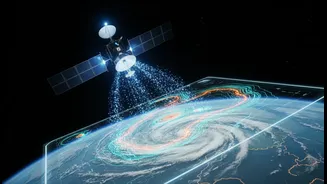
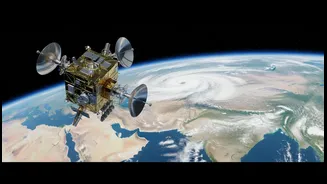
Launched in February 2024, INSAT-3DS is India's next-generation meteorological satellite, designed to provide a major upgrade to the nation's weather monitoring capabilities. Positioned in a geostationary orbit 36,000 kilometres above the Earth, it works
alongside its predecessors, INSAT-3D and INSAT-3DR, to offer continuous and enhanced observation of the Indian subcontinent and the surrounding oceans. Fully funded by the Ministry of Earth Sciences, its mission is not just to forecast weather but to provide critical data for disaster warnings, protecting life and property across the country. This state-of-the-art satellite represents a significant leap forward, ensuring that India has a dedicated and powerful tool to monitor its complex climate.
What Makes INSAT-3DS a Game-Changer?
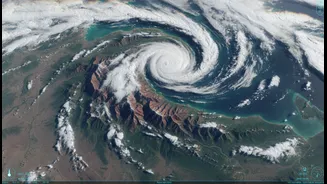
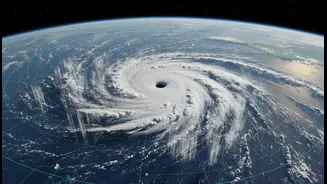
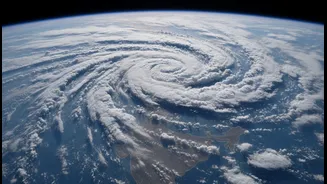
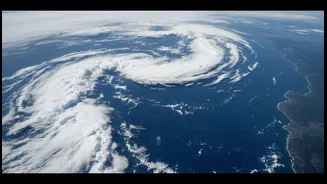
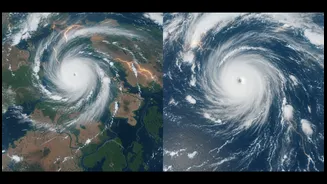
What truly sets INSAT-3DS apart are its advanced instruments: a six-channel Imager and a nineteen-channel Sounder. Think of the Imager as a highly advanced camera. It captures high-resolution pictures of cloud cover, sea surface temperature, and even vegetation health across multiple light spectrums. This allows it to monitor cloud development, track cyclones, and spot fog, even at night. The Sounder, however, is what provides a revolutionary, three-dimensional view of the atmosphere. It measures the temperature and humidity at 40 different vertical levels, from the ground up to 70 kilometres. This ability to create a vertical profile of the atmosphere gives meteorologists unprecedented insight into the conditions that lead to severe weather, a task much more difficult with previous technologies.
From Complex Data to Clear Forecasts
The sheer volume of data beamed down by INSAT-3DS is immense. The magic happens in how this information is processed and shared. The data is downlinked to ISRO's ground stations and processed into usable products in near real-time. These products—over 40 types, including rainfall estimates, wind speeds, and aerosol levels—are then used by the India Meteorological Department (IMD) to create the forecasts we see on the news and on our phones. This enhanced data improves the accuracy of everything from daily rainfall predictions to cyclone track forecasting. While the public may not see the raw satellite data, they experience its benefits through more reliable and timely warnings, helping them make better decisions, whether it's a farmer planning to sow crops or a family preparing for a heavy downpour.
Empowering Farmers and Saving Lives
The impact of better monsoon science extends far beyond convenience. For India's agricultural sector, which is heavily dependent on the monsoon, more accurate predictions about the onset and intensity of rains are invaluable. Farmers can better plan their sowing and harvesting schedules, improving yields and reducing losses. The satellite's data also plays a critical role in disaster management. By providing earlier and more precise warnings for cyclones, floods, and thunderstorms, authorities can evacuate people more effectively and prepare emergency responses. Its instruments can detect the signatures of developing storms, track their movement, and predict their intensity with greater certainty. The satellite also carries a search and rescue transponder, which aids in locating distress beacons from ships, aircraft, or trekkers in remote areas.
Science for Everyone
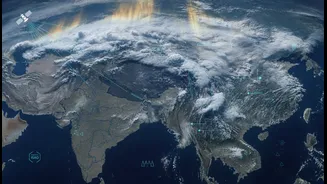
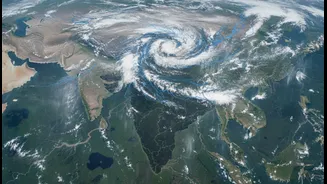
While the core technology is complex, the goal is simple: to make the science of weather accessible and useful for everyone. Through portals like MOSDAC (Meteorological and Oceanographic Satellite Data Archival Centre) and visualization tools like RAPID, the IMD is making it easier for agencies and even the public to see and understand weather patterns. The crisp, clear images of cloud formations sweeping across the country, like those seen during recent monsoon surges, are direct outputs from these satellites. They turn abstract atmospheric physics into a tangible picture, helping non-experts grasp the scale and movement of weather systems. This democratization of data is empowering a new generation to understand the forces that shape their world.