

Ancient Origins Beyond Asana
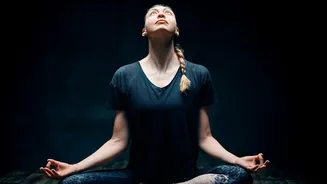
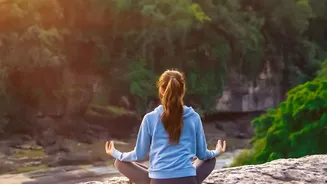
The story of yoga begins over 5,000 years ago in ancient India, long before the familiar physical postures, or 'asanas', became its hallmark. Early evidence from the Indus-Saraswati Valley Civilization suggests meditative practices were already in existence.
The first textual mentions appear in the Vedas, sacred texts that form the foundation of Hinduism. During this era, yoga was less about physical flexibility and more a spiritual discipline focused on controlling the breath, chanting mantras, and connecting with the divine. It was a subtle science aimed at achieving harmony between mind and body, practiced by priests and ascetics as a path to spiritual insight.
A System for the Mind
A pivotal moment in yoga's history came around 400 CE with the sage Patanjali's 'Yoga Sutras'. This collection of 196 concise verses systematically organized yoga into a coherent philosophy and practice. Patanjali defined yoga as 'the cessation of the fluctuations of the mind' and outlined the famous 'Eight Limbs of Yoga' as a practical path to achieve this state. This framework includes ethical principles (Yamas), self-discipline (Niyamas), posture (Asana), breath control (Pranayama), and progressive stages of meditation leading to enlightenment. The asana limb, which dominates modern yoga, was just one small part of a much broader system designed for mental and spiritual clarity.
The Journey to the West
For centuries, yoga remained primarily an Eastern spiritual tradition. Its introduction to the Western world is largely credited to Swami Vivekananda, an Indian monk who made a powerful impression at the 1893 Parliament of Religions in Chicago. Vivekananda spoke eloquently about India's philosophical traditions, including Raja Yoga—the yoga of the mind and meditation. He presented yoga not as a series of physical exercises, but as a universal path to spiritual realization compatible with Western thought. His lectures and writings sparked immense interest and opened the door for other Indian gurus to travel west and share their knowledge.
The Rise of Modern Postural Yoga
The 20th century saw a significant transformation. Pioneers like T. Krishnamacharya, often called the 'father of modern yoga', began to emphasize the physical asanas more heavily. His students would become some of the most influential figures in yoga's global spread. B.K.S. Iyengar developed a style focused on precise alignment and the use of props, making yoga accessible to a wider range of bodies. Pattabhi Jois popularized the dynamic and physically demanding Ashtanga Vinyasa system. Others, like Indra Devi, brought yoga to Hollywood celebrities, further boosting its appeal. Slowly, the perception of yoga in the West began to shift from a purely meditative discipline to a powerful method for physical fitness and well-being.
From Niche Practice to Global Industry
By the late 20th and early 21st centuries, yoga had firmly entered the mainstream, becoming a central pillar of the booming wellness economy. The 1980s fitness craze embraced styles like Power Yoga, and by the 2000s, its therapeutic benefits for stress relief and mental health were widely recognized. Today, the global yoga market is a multi-billion dollar industry, encompassing everything from studio classes and retreats to apparel and digital apps. This massive growth was fueled by a collective shift toward holistic health and the practice's unique ability to blend physical activity with mindfulness and mental clarity.