
A Mission to Earth’s Hostile Sibling
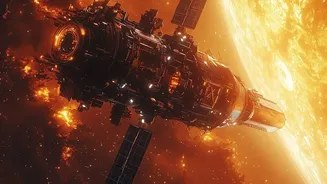
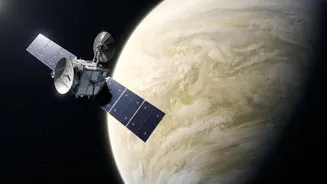
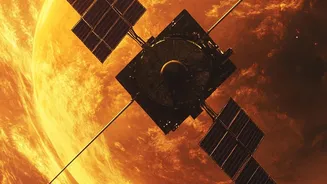
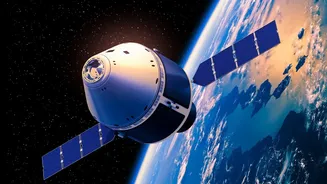
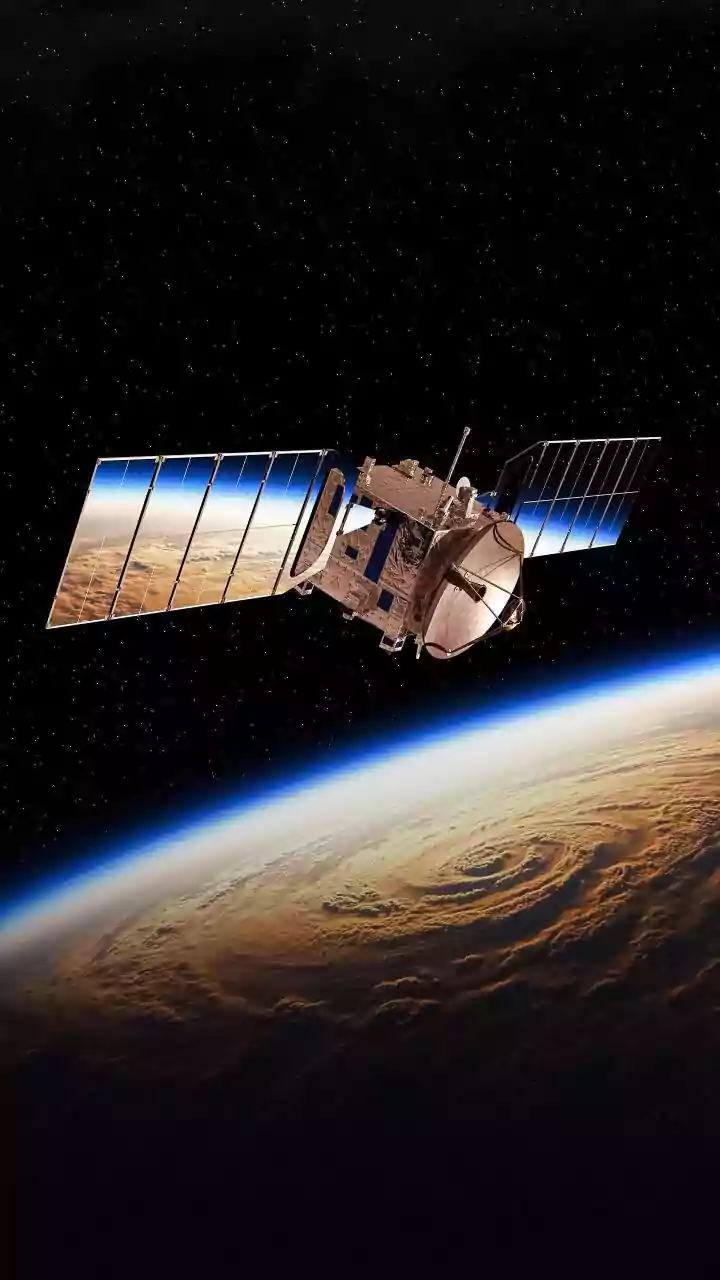
Following its celebrated missions to the Moon and Mars, the Indian Space Research Organisation (ISRO) is setting its sights on our other planetary neighbour, Venus. The Shukrayaan-1 mission, India's first venture to the second planet from the sun, is an ambitious
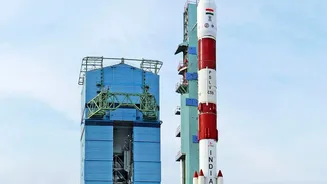
orbiter project designed to conduct a comprehensive global survey. Scheduled for launch in March 2028 aboard the heavy-lift LVM-3 rocket, the spacecraft will embark on a 112-day journey to enter a large elliptical orbit around Venus. The mission's primary goal is to understand how Venus, a planet so similar in origin to Earth, evolved into a scorching, toxic greenhouse world. Scientists hope to map its volcanic surface, investigate its complex weather systems, and analyse its dense atmosphere, offering clues not just about Venus, but about the long-term evolution of planetary climates, including our own.
The Great Venusian Veil
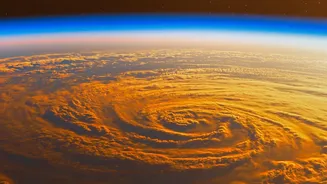
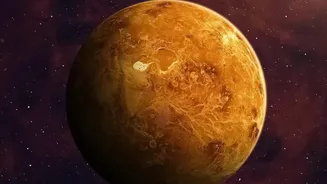
The single greatest challenge in studying Venus is its atmosphere. The planet is permanently shrouded in a thick, unbroken layer of clouds made predominantly of sulfuric acid. This cloud deck is so opaque that it prevents direct optical observation of the surface, which remained a mystery until the advent of radar imaging. Below these clouds lies a truly extreme environment. The atmosphere, composed of over 96% carbon dioxide, is about 93 times denser than Earth's, creating a surface pressure equivalent to being nearly a kilometre underwater. This dense blanket of CO2 has triggered a runaway greenhouse effect, pushing surface temperatures to an average of 467°C, hot enough to melt lead. This makes landing and operating surface probes incredibly difficult; the longest any craft has survived on the surface is just over two hours. It is precisely this hostile, hidden environment that Shukrayaan is being equipped to explore from orbit.
A Toolkit to Pierce the Clouds
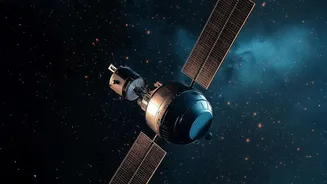
To study what lies beneath the Venusian clouds, Shukrayaan will carry a payload of around 100 kg, comprising approximately 19 advanced instruments from India and international partners, including Russia, Sweden, and Germany. The headliner instrument for peering through the atmosphere is a high-resolution Synthetic Aperture Radar (SAR). Radar is crucial because its signals can penetrate the thick cloud cover, day or night, to map the geological features of the surface with high precision. This will allow scientists to search for active volcanoes, lava flows, and other clues about the planet's internal processes. Another key instrument is a ground-penetrating radar, which will be a world-first for Venus, designed to study the shallow subsurface stratigraphy—the layering of rock and soil just below the surface. Other instruments will include thermal and cloud-monitoring cameras, lightning sensors, and spectrometers to analyse atmospheric composition at various altitudes.
Searching for Scientific Answers
The data gathered by these sensors will address some of the biggest questions in planetary science. By studying the interaction between the solar wind and the Venusian ionosphere, scientists hope to understand why Venus lost its oceans, if it ever had them. An instrument co-developed with Sweden, the Venusian Neutrals Analyser (VNA), will be key to studying how particles escape the planet's atmosphere. The mission will also investigate the phenomenon of atmospheric "super-rotation," where the upper atmosphere circles the planet in just four Earth days, far faster than the planet's own 243-day rotation. Furthermore, instruments like the Venus InfraRed Atmospheric Gases Linker (VIRAL), a contribution from Russia and France, will analyse the atmospheric chemistry in detail. This in-depth study of Venus’s runaway greenhouse effect will serve as a valuable, if cautionary, model for understanding climate change on Earth.