

A Seven-Year Autumn
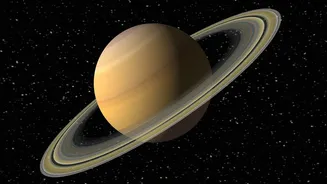
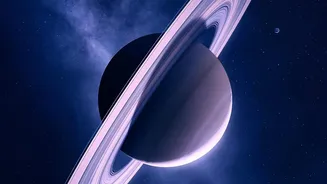
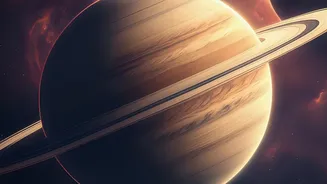
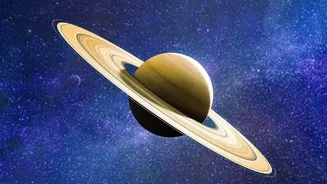
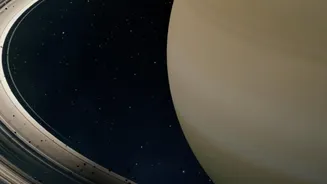
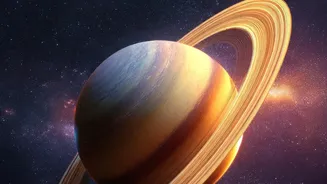
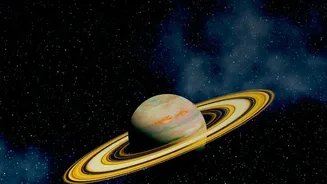
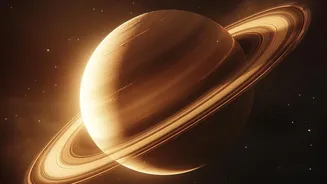
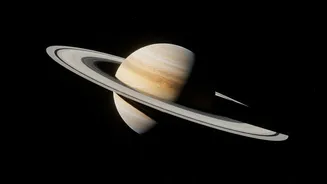
Imagine a single season that lasts longer than seven Earth years. That's the reality on Saturn. The ringed planet takes a leisurely 29 Earth years to complete one trip around the sun. Just like Earth, Saturn is tilted on its axis, by about 27 degrees,
which means different parts of the planet receive varying amounts of sunlight throughout its long year. This tilting is what drives the seasons, causing gradual but massive shifts in the planet's atmosphere. For years, astronomers have been tracking these changes, and the latest observations from the Hubble Space Telescope, as part of its Outer Planets Atmospheres Legacy (OPAL) program, are providing a continuous stream of data on this slow-motion weather report.
A New View in a Different Light
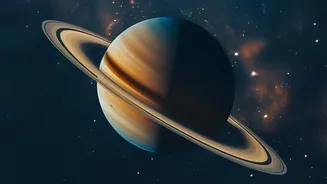
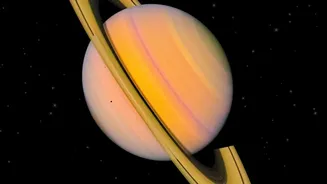
The latest series of observations, taken between 2018 and 2020, caught Saturn's northern hemisphere as it transitioned from its long summer towards autumn. While our eyes see Saturn in yellowish-brown hues, Hubble can observe in different wavelengths, including infrared and ultraviolet, revealing details hidden from plain sight. These observations allow scientists to peer through the planet's haze and track changes in temperature, cloud height, and atmospheric composition. Recent combined observations with the James Webb Space Telescope have even allowed scientists to 'slice' through Saturn's atmosphere, studying it as a full three-dimensional system.
Subtle Shifts with Big Implications
So what did Hubble see? The changes are subtle, but telling. Scientists noted that from 2018 to 2020, Saturn's equator brightened by 5 to 10 percent. There were also slight changes in the colour of its atmospheric bands and even shifts in its powerful wind speeds. In 2018, winds near the equator were measured at a staggering 1,600 kilometres per hour, faster than the 1,300 km/h recorded by the Cassini spacecraft years earlier. By 2020, the speeds had returned to Cassini levels. According to lead scientist Dr. Amy Simon, this could mean that the clouds observed in 2018 were about 60 kilometres deeper in the atmosphere.
Haze, Storms, and Lingering Mysteries
The observations also noted a slight reddish haze developing over the northern hemisphere as summer progressed, possibly due to increased heating from sunlight changing the atmospheric chemistry. Meanwhile, the south pole, just emerging from winter, has taken on a bluish hue. These yearly check-ins also help astronomers track small, transient storms that pop up and disappear in Saturn’s turbulent atmosphere. While the changes from one Earth year to the next might seem small, scientists expect them to become more dramatic as the planet heads further into its new season. These long-term studies are crucial, as they don't just tell us about Saturn; they help us understand how the atmospheres of gas giants—the most common type of planet found outside our solar system—work.