



Cosmic Soup: The Ingredients for Life
At its core, life is a breathtakingly complex form of chemistry. All living things on Earth are built from a handful of key elements and a specific set of organic molecules. For decades, scientists have wondered how these building blocks, such as amino
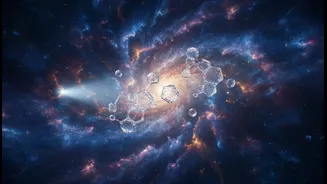
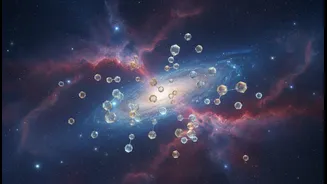
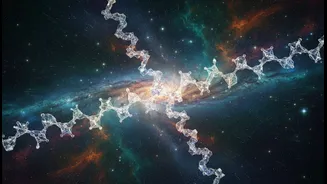
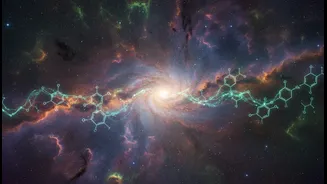
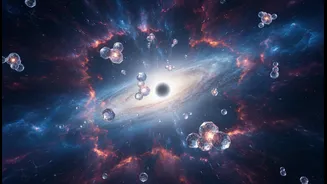
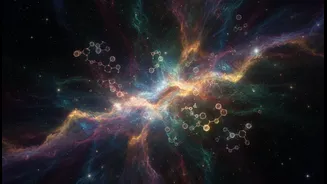
acids and sugars, first appeared on a barren, young Earth. The answer, it seems, is being written in the stars. Research has shown that the vast, cold voids between stars are not empty at all. They are immense chemical factories, or 'molecular clouds', rich with gas and dust. Within these clouds, under conditions of extreme cold and radiation, simple atoms link up to form a surprisingly rich variety of complex organic molecules. This process, known as prebiotic chemistry, suggests that the essential ingredients for life are not unique to Earth but are common throughout the universe.
Cosmic Fingerprints from JWST
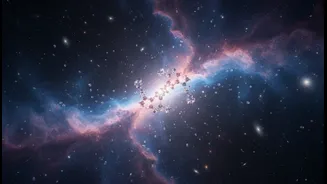
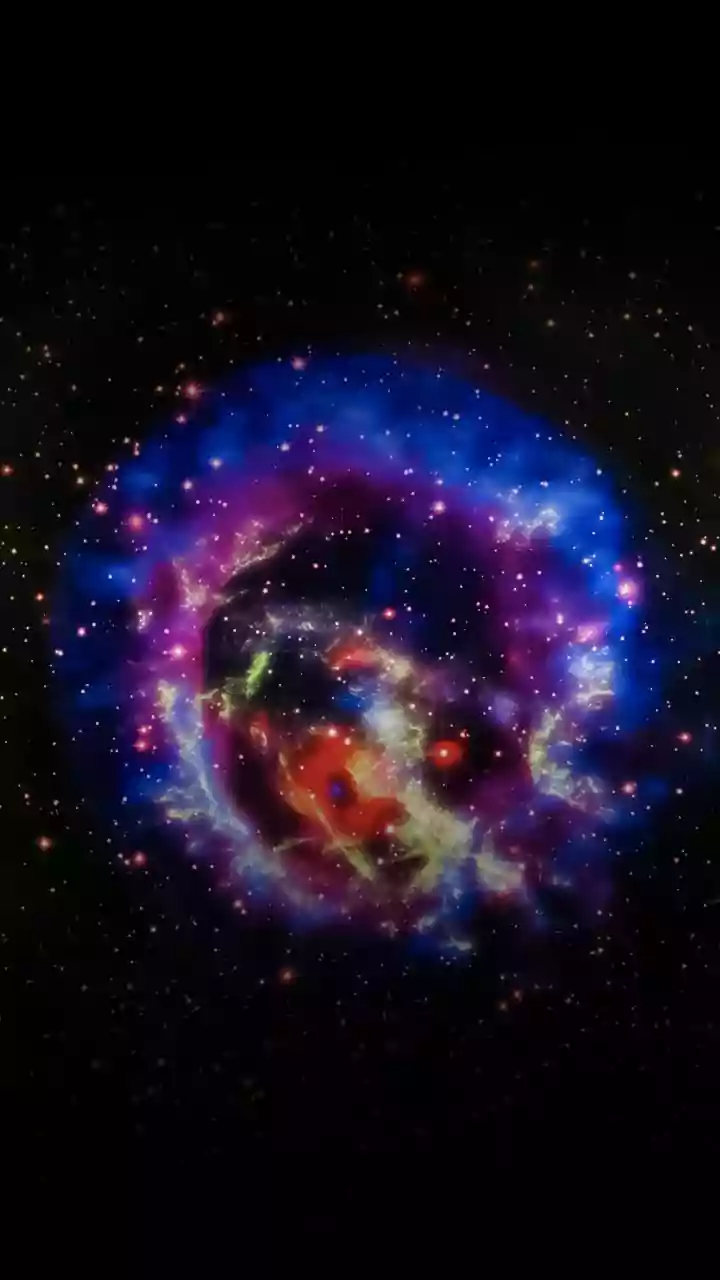
Powerful new tools are giving astronomers an unprecedented view into these stellar nurseries. The James Webb Space Telescope (JWST), with its ability to peer through cosmic dust in infrared light, has been a game-changer. In recent observations of distant galaxies and star-forming regions, JWST has detected an unexpected abundance and variety of organic molecules. Scientists have identified compounds like methane, benzene, and other hydrocarbons. In one case, they found the methyl radical (CH3+), a highly reactive molecule considered a cornerstone of organic chemistry, for the first time outside our Milky Way. These discoveries confirm that the building blocks of biochemistry are being actively formed in many different cosmic environments, suggesting that the raw materials for life are widespread.
Special Delivery: Messengers from Space
So, how did these space-faring molecules get to Earth? The leading theory points to a cosmic delivery service in the form of asteroids, comets, and meteorites. Four and a half billion years ago, during the formation of our solar system, these small bodies constantly bombarded the young planets. When scientists analyse meteorites that have fallen to Earth, they find a treasure trove of extraterrestrial organic compounds. The famous Murchison meteorite, which landed in Australia in 1969, was found to contain dozens of different amino acids—the building blocks of proteins. More recent studies of other meteorites have revealed sugars, nucleobases (the components of DNA and RNA), and even traces of liquid water preserved in salt crystals. These space rocks serve as time capsules, proving that the key ingredients for life were present in the solar system from its very beginning and were delivered directly to Earth’s doorstep.
From Stardust to Us
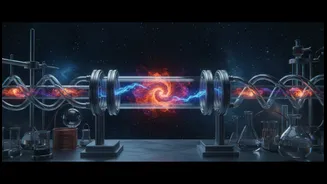
This growing body of evidence paints a compelling picture. Life on Earth didn't necessarily have to start from scratch. Instead, our planet was likely 'seeded' with complex organic molecules forged in the hearts of interstellar clouds and delivered by celestial impacts. This idea, a version of the 'panspermia' hypothesis, doesn't claim that fully formed organisms arrived from space, but rather that the crucial raw materials did. This would have given the origin of life on Earth a significant head start, providing a rich chemical toolkit for the first biological processes to work with. Experiments simulating the conditions of deep space have successfully created complex prebiotic molecules, lending strong support to the idea that these processes are a natural and universal part of cosmic evolution. It suggests that the story of life on Earth is inextricably linked to the life cycle of the stars themselves.