




Why You Can't Just Pack Oxygen
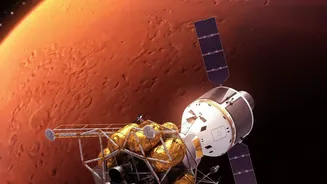
The fundamental challenge of any long-term Mars mission isn't just the journey; it's what you do when you get there. The Martian atmosphere is famously hostile, composed of about 95% carbon dioxide, with only a trace amount of oxygen. For humans to survive,
let alone establish a base, they need a steady supply of breathable air. Packing enough oxygen for a multi-year mission is logistically impossible due to weight and space constraints on rockets. The cost of launching every kilogram of payload from Earth is immense. Therefore, the only viable solution is to make oxygen on-site, a concept known as In-Situ Resource Utilization, or ISRU. This principle of “living off the land” is critical for making human exploration of Mars sustainable and affordable.
MOXIE: The Little Toaster That Could
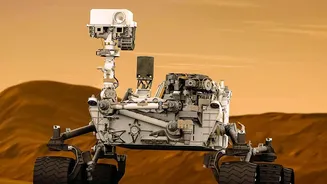
The first major breakthrough in this area came from a car-battery-sized device aboard NASA's Perseverance rover. The Mars Oxygen In-Situ Resource Utilization Experiment, or MOXIE, successfully proved that oxygen could be generated on Mars. Using a process called solid oxide electrolysis, MOXIE heated the Martian CO2 to about 800 degrees Celsius and split the molecules, producing pure oxygen and carbon monoxide as a byproduct. Over its mission, which ended in 2023, MOXIE ran 16 times, producing a total of 122 grams of oxygen — enough to keep a small dog alive for about 10 hours. While a modest amount, it was a monumental proof of concept, showing the technology works in the harsh Martian environment.
Scaling Up for a Human-Sized Footprint
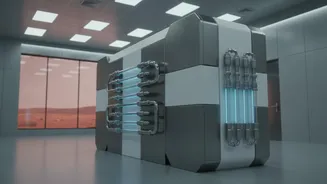
The success of MOXIE was just the beginning. The original instrument was a technology demonstration, about 0.5% of the scale needed for a human mission. Now, scientists are focused on the next crucial phase: developing and testing scaled-up versions of these electrolysis reactors. The challenge is not just to make a bigger MOXIE, but a more efficient and robust one. A system for a human crew would need to run continuously for months, producing kilograms of oxygen per hour, not grams. Recent research has explored various advanced reactor designs, including plasma reactors and low-temperature electrolyzers that could potentially produce oxygen and fuel with greater energy efficiency than MOXIE.
How It Works: Turning CO2 into O2
The core technology, electrolysis, is a bit like running a fuel cell in reverse. Imagine the carbon dioxide molecule (CO2) as a tiny package with one carbon atom and two oxygen atoms. The reactor first pulls in the thin Martian air and compresses it. Then, using intense heat and an electrical charge, it effectively breaks the chemical bonds holding the CO2 molecule together. The oxygen atoms are isolated and collected, while the leftover carbon monoxide is vented away. The goal is to produce oxygen with at least 98% purity, which MOXIE successfully achieved. New designs are exploring ways to do this at lower temperatures or with different catalysts to reduce the massive power requirements, a key consideration on a planet where energy is a precious commodity.
More Than Just Breathable Air
While providing breathable air is the most obvious benefit, it's not even the biggest driver for this technology. The vast majority of the oxygen produced on Mars—upwards of 75%—would be used for something else entirely: rocket propellant. To launch a crewed ascent vehicle from the Martian surface for a return trip to Earth requires an immense amount of oxidizer, estimated to be around 33 to 50 tons. Producing this on Mars would radically change the economics of a round-trip mission, saving hundreds of tons of launch mass from Earth. The oxygen can also be combined with hydrogen (potentially extracted from Martian water ice) to create water, or used to fuel ground vehicles, making these reactors the centerpiece of a future Martian industrial ecosystem.