





Farming and Power from the Same Land
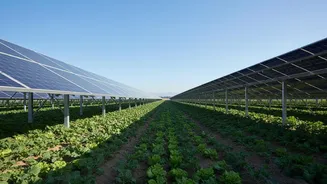
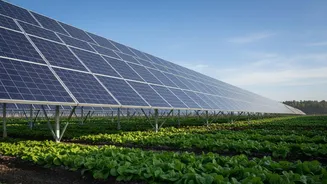
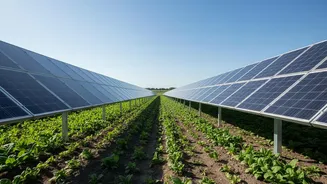
Imagine a farm where crops grow productively while, several feet above them, rows of solar panels silently generate electricity. This is the core idea of agrivoltaics, or agri-PV. It’s a dual-use approach where the same piece of land harvests both sunlight
for energy and food for the table. Instead of having to choose between a solar park and a farm, this model integrates them. Solar panels are installed on elevated structures, high enough for tractors and farm workers to operate underneath. The goal is to increase the overall productivity of the land, addressing two of India's most pressing challenges: the need for more renewable energy and the pressure on agricultural land.
India's Big Bet on Agrivoltaics
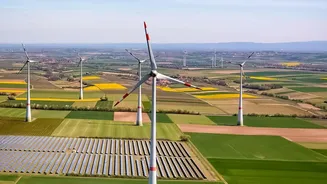
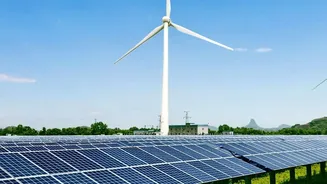
The Indian government is actively encouraging this synergy through policies like the Pradhan Mantri Kisan Urja Suraksha evam Utthaan Mahabhiyan (PM-KUSUM) scheme. Launched in 2019, PM-KUSUM helps farmers install solar pumps and even set up small solar power plants on their land, allowing them to sell surplus electricity to the grid. This initiative transforms farmers from just food producers into 'prosumers'—producers and consumers of energy. The push for agrivoltaics is driven by India's ambitious target of achieving 500 GW of non-fossil fuel energy capacity by 2030. By promoting solar installations on existing farmland, the country can scale up its clean energy production without sacrificing precious land needed for agriculture.
The Crucial Question of Shade
While the concept is powerful, the execution is delicate. Simply placing solar panels over a field is not enough; in fact, it could be disastrous for the crops below. The most critical factor to consider is shade. Solar panels block a portion of the sunlight, creating a unique microclimate underneath. This partial shade can be a double-edged sword. For some crops in hot, sunny regions, the shade is a blessing. It protects them from the scorching afternoon sun, reduces heat stress, and conserves precious soil moisture by lowering evaporation by as much as 30-40%. However, for other crops that need full sun, the same shade can stunt growth by limiting photosynthesis, the process that fuels plant life. This makes understanding the impact of shade the absolute first step in any agrivoltaics project.
Why the Assessment Must Start with the Crop
This is why experts insist that any agrivoltaics assessment must begin with the crop, not the solar panel technology. The entire system design—from the height and tilt of the panels to the spacing between rows—must be tailored to the specific light requirements of the plants being grown. Shade-tolerant crops like ginger, turmeric, and many leafy greens often thrive in agrivoltaic systems, sometimes even producing higher yields than in open fields. Trials have shown that these crops benefit from the cooler, more stable environment under the panels. In contrast, sun-loving crops would require a different panel layout with more spacing to allow sufficient light to pass through. By putting the crop first, engineers can design a system that optimises both the agricultural yield and the energy output, creating a truly symbiotic relationship.
Benefits Beyond a Dual Harvest
When designed correctly, the advantages of agrivoltaics extend far beyond just food and energy. For farmers, it offers a diversified and more stable income stream. Revenue from selling electricity can provide a financial cushion, especially during a poor harvest. The improved microclimate not only saves water—a critical benefit in water-scarce states—but can also protect delicate crops from extreme weather like hail or intense downpours. Furthermore, the transpiration from the crops helps to cool the solar panels, which can slightly increase their energy-generating efficiency. This creates a virtuous cycle where the farm and the power plant support each other.
Hurdles on the Path to Scale
Despite its immense potential, the widespread adoption of agrivoltaics in India faces significant challenges. The primary obstacle is the high initial investment. Agrivoltaic systems can cost up to 25% more than conventional ground-mounted solar plants due to the specialised mounting structures required. For many small and marginal farmers, securing the necessary financing is a major roadblock. Additionally, there is a need for more India-specific research to create standardised models for different agro-climatic zones and crop types. Building awareness and trust among farmers, who may be wary of uncertain returns or the complexity of the technology, is also crucial for success.