



Why Bring the Moon to Earth?
Rovers and landers can perform incredible science on the lunar surface, but they are limited by the instruments they can carry. Bringing lunar samples back to Earth allows scientists to use equipment that is far too large, delicate, or power-hungry to launch
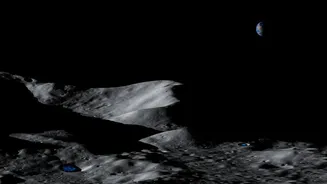
into space. With samples in terrestrial labs, researchers can conduct exhaustive analysis with the world's most advanced tools, uncovering secrets about the Moon's origin, the history of our solar system, and the true distribution of resources like water ice. These samples can be preserved and re-analysed for decades with future technologies, much like the Apollo-era samples are still yielding new discoveries today. Chandrayaan-4 aims to collect these precious materials from the Moon's south polar region, an area believed to be rich in water ice.
A Complex, Multi-Part Spacecraft
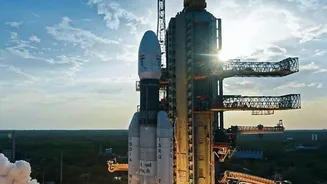
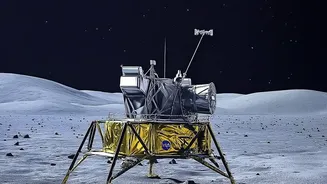
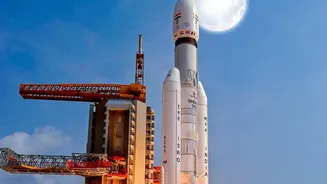
Chandrayaan-4 is not a single vehicle but a suite of five distinct modules, a level of complexity that requires two separate rocket launches. The entire mission architecture includes a Propulsion Module to travel to the Moon, a Descender Module for the landing, an Ascender Module to launch back off the Moon, a Transfer Module to carry the sample in lunar orbit, and a Re-entry Module to bring it safely to Earth. Because the combined weight is too much for a single rocket, ISRO plans to use two powerful LVM3 launch vehicles. The different components will be launched separately and then dock in Earth's orbit to form the final integrated spacecraft before heading to the Moon.
The Collection Process on the Surface
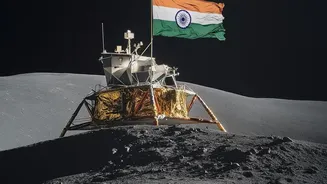
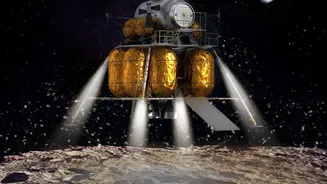
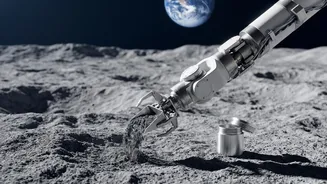
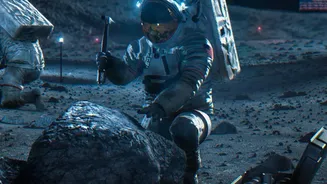
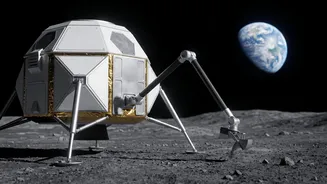
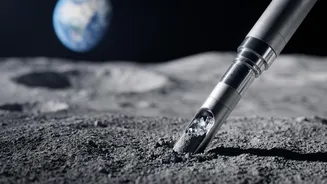
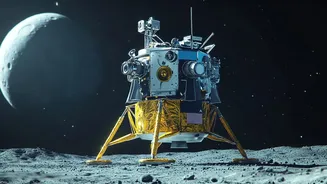
Once the Descender Module achieves a soft landing, the main event begins. The lander is equipped with a robotic arm to perform the sample collection. This arm will first scoop up loose surface soil and rocks, known as regolith. In addition to the scooping action, the lander will feature a drilling mechanism designed to collect subsurface samples. This is crucial for accessing materials that have been shielded from the harsh space environment, especially potential water ice deposits buried beneath the surface. The mission aims to collect up to 3 kilograms of this precious material. Cameras will monitor the entire process to ensure a successful collection.
Securing the Sample for a Long Journey
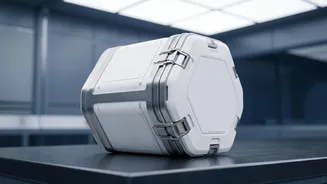
After collection, the robotic arm will transfer the soil and drilled core samples into containers located inside the Ascender Module. These containers are designed to be hermetically sealed, creating a vacuum-locked environment. This step is vital to prevent contamination and to preserve the pristine nature of the samples, especially fragile substances like water ice, which could otherwise vaporize. The sealed canister will protect its contents from the extreme temperature changes and radiation of the return journey, ensuring what arrives on Earth is exactly as it was on the Moon.
The Ascent and Orbital Rendezvous
With the samples securely stored, the Ascender Module will perform a feat never before attempted by an Indian mission: launching from the surface of another celestial body. Using the lander as a launchpad, the Ascender will fire its engines and lift off into lunar orbit. It will then have to perform a series of precise manoeuvres to find, approach, and dock with the Transfer Module, which will have been waiting in orbit. This orbital rendezvous is one of the most challenging parts of the mission, requiring technology that ISRO has been actively testing with experiments like SPADEX to ensure success.
The Final Leg: Returning to Earth
Once the Ascender and Transfer modules are docked, the sample container is transferred to the Re-entry Module. The Transfer Module then fires its engines to push the Re-entry Module on a path back toward Earth. As it approaches our planet, the Re-entry Module, which is designed to withstand the intense heat of atmospheric entry, will separate and begin its final descent. It will land on Earth, where recovery teams will be waiting to retrieve the canister and transport it to a specialised laboratory for analysis, completing a historic round trip.