


Valley of Flowers, Uttarakhand
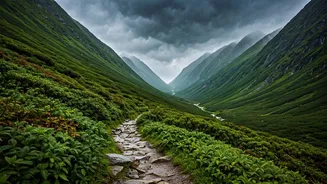
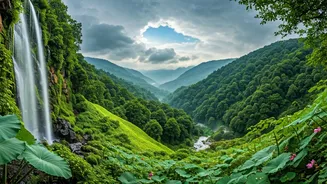
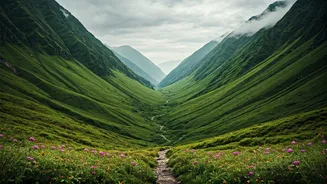
A UNESCO World Heritage Site, the Valley of Flowers is a Himalayan meadow that lives up to its name, especially during the monsoon. From July to September, this high-altitude valley bursts into a riot of colour with over 300 species of alpine flowers,
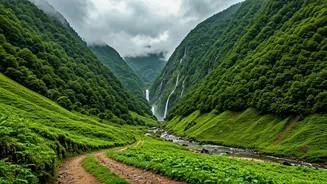
including the elusive blue poppy and Brahma Kamal. The trek itself is moderately challenging, taking you through dense forests, alongside the gushing Pushpawati River, and into a landscape that feels like it’s been painted by the gods. The mist that often shrouds the valley adds a layer of mystique, making the vibrant colours of the flowers pop even more. It’s a journey into a real-life fairy tale, where the reward is a floral spectacle found nowhere else on earth. **Best time:** July to early September **Difficulty:** Moderate **Duration:** 4-6 days
Hampta Pass, Himachal Pradesh
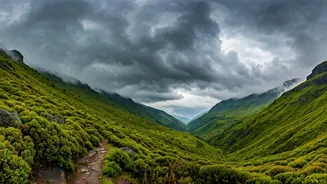
For those who love dramatic landscapes, the Hampta Pass trek is an unparalleled monsoon experience. This trek is a journey of contrasts, starting from the lush, green Kullu valley and crossing over into the stark, arid landscape of Lahaul. During the monsoon, the Kullu side is at its most verdant, with wildflower-laden meadows and gushing streams. As you ascend towards the 14,100 ft pass, you'll navigate rocky terrain and glacial moraines, often with the thrill of walking through clouds. The moment you cross the pass, the scenery shifts dramatically to barren mountains and the winding Chandra River below. It’s like walking from one world into another in a single day, a truly unique Himalayan adventure heightened by the monsoon's magic. **Best time:** June to September **Difficulty:** Moderate **Duration:** 4-5 days
Rajmachi Fort, Maharashtra
Nestled in the Sahyadri mountains, the trek to Rajmachi Fort is a classic Western Ghats monsoon adventure. The route becomes a paradise for nature lovers, with dense green foliage, countless small waterfalls, and a carpet of mist that creates an ethereal atmosphere. The trek can be approached from two sides, Lonavala or Karjat, with the former being a longer but gentler walk. The destination is the historic fort, comprising two citadels, Manaranjan and Shrivardhan, which offer panoramic views of the surrounding hills and the Ulhas river valley. On a clear day after a fresh spell of rain, the views are simply breathtaking. Camping overnight at the base village allows you to witness a sky full of stars and, if you're lucky, a forest floor glittering with fireflies. **Best time:** June to September **Difficulty:** Easy to Moderate **Duration:** 1-2 days
Dudhsagar Falls, Goa
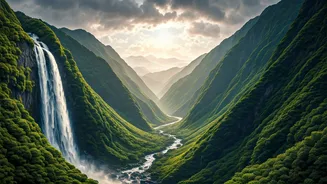
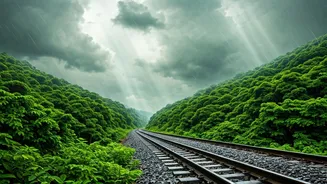
While Goa is famous for its beaches, its hinterland offers one of the most spectacular monsoon sights in India: Dudhsagar Falls. Translating to 'Sea of Milk', this four-tiered waterfall roars to life during the rainy season, becoming a formidable and awe-inspiring force of nature. While the direct railway track route is often restricted for safety, the trek through Bhagwan Mahaveer Sanctuary is an incredible alternative. You'll wade through streams and walk along jungle trails, surrounded by rich biodiversity. The final reveal of the falls, plunging over 300 metres amidst the lush greenery, is a powerful and humbling experience. It's a different side of Goa, one that is wild, raw, and utterly unforgettable. **Best time:** July to October **Difficulty:** Moderate **Duration:** 1 day
Tarsar Marsar, Kashmir
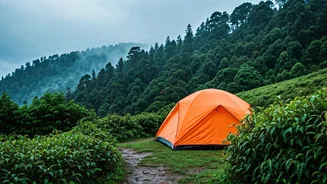
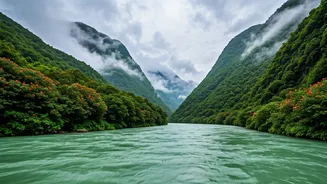
Often called the 'paradise within a paradise', the Tarsar Marsar trek in Kashmir is a journey to a series of pristine, crystal-clear alpine lakes. During the monsoon months, the meadows are at their greenest, dotted with wildflowers, and the lakes of Tarsar, Marsar, and Sundarsar reflect the dramatic, cloud-filled skies with stunning clarity. The trek takes you through picture-perfect valleys, across shepherd's trails, and over gentle mountain passes. Unlike other regions where monsoons can be intense, Kashmir experiences milder rainfall, making trekking conditions pleasant. The campsites, often set beside these magnificent lakes, offer a sense of serenity and solitude that is hard to find elsewhere, making it a truly bucket-list-worthy trek. **Best time:** July to September **Difficulty:** Moderate **Duration:** 7 days