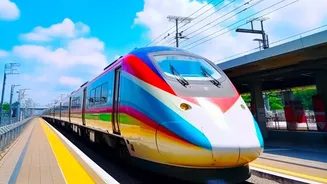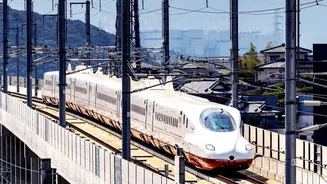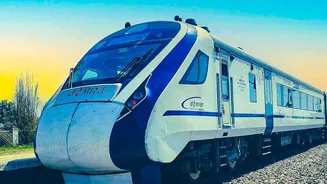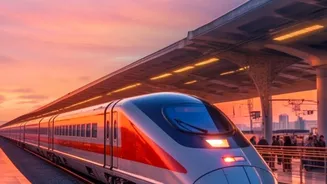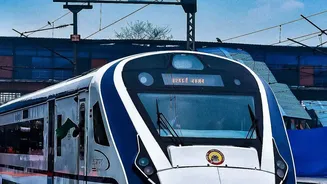






India's long-awaited bullet train dream is speeding towards reality, with the first operational section set to launch in Gujarat. This initial phase connecting Surat and Vapi is more than just a new route; it's a monumental step for the nation.
The First Run: What to Expect
Railway
Minister Ashwini Vaishnaw has confirmed that the first section of India's inaugural high-speed rail service will commence operations in the last quarter of 2027. This crucial first phase will link the bustling commercial hubs of Surat and Vapi in Gujarat, a corridor of immense industrial importance. This stretch is part of the larger 508-kilometre Mumbai-Ahmedabad High-Speed Rail (MAHSR) project. While the full corridor's completion is slated for later, the launch of the Surat-Vapi section will serve as a significant proof of concept, allowing for the start of passenger services and demonstrating the capabilities of high-speed travel in the Indian context. The government's strategy is to open the line in phases as sections are completed, making this initial run a critical milestone.
A Quantum Leap in Technology and Speed
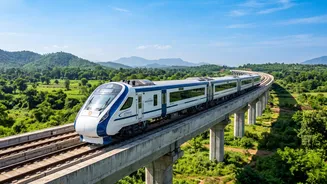
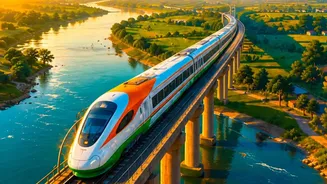
The project is being developed using Japan's renowned Shinkansen technology, known for its impeccable safety record and reliability. The entire 508 km corridor is designed for trains to operate at speeds up to 320 kmph. While the full journey between Mumbai and Ahmedabad will eventually be cut to just under two hours, the impact on the Surat-Vapi stretch will be transformative for daily commuters and businesses. Significant progress has been made on the infrastructure, with much of the viaduct—the elevated structure on which tracks are laid—already complete in Gujarat. As of late 2026, hundreds of kilometres of pier work and viaducts have been constructed. Furthermore, a 50-km stretch between Surat and Bilimora has already been electrified, a key step before trial runs can begin.
The 'Make in India' Boost
Beyond the civil engineering marvels, the project is also a major boost for domestic manufacturing. India is developing its own high-speed trainsets, with Integral Coach Factory (ICF) and Bharat Earth Movers Limited (BEML) leading the charge. The indigenous B28 trainset, designed for speeds of 280 kmph, is expected to undergo track trials by mid-2027, just ahead of the planned commercial launch. The first body frame has already been completed and is undergoing structural testing. This move towards self-reliance in high-speed rail technology is a strategic goal, with plans for an even faster B35 trainset in the works for the future.
Powering an Economic Corridor
Connecting Surat, a global hub for diamonds and textiles, with Vapi, one of Asia's largest industrial estates, is expected to have a profound economic impact. Proponents believe the high-speed link will essentially merge these cities into a single economic zone, drastically improving mobility for professionals, goods, and services. The enhanced connectivity is projected to boost business activity, stimulate real estate development around the new stations, and create thousands of direct and indirect jobs. By making day trips between these commercial powerhouses effortless, the bullet train aims to unlock new opportunities for collaboration and growth, catalysing the entire regional economy.
The Road Ahead: Challenges and the Bigger Picture
While the Gujarat section has progressed rapidly, the project has faced delays, particularly in Maharashtra, due to land acquisition challenges and the complexity of constructing India's first undersea rail tunnel. This 21-km tunnel, with a 7-km portion under Thane Creek, is a massive engineering undertaking. Giant Tunnel Boring Machines (TBMs), as tall as four-storey buildings, were deployed in mid-2026 to excavate this section. These challenges explain why the corridor is being opened in phases. The successful launch of the Surat-Vapi section is therefore not just the end of one chapter but the crucial beginning of a new, faster era for Indian transportation infrastructure.