





A Near-Perfect Test Flight
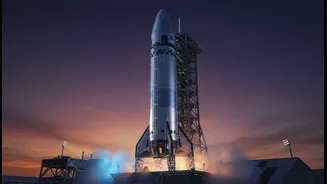
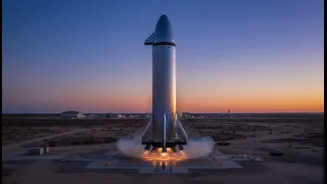
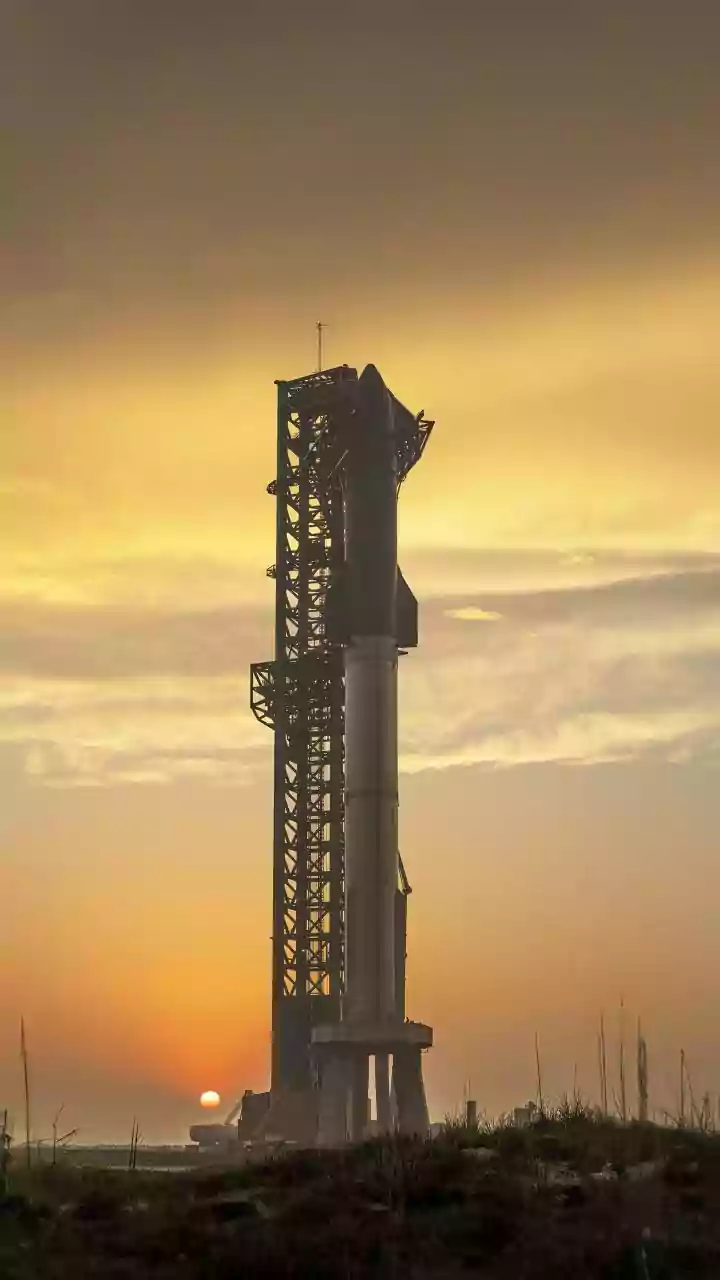
SpaceX's thirteenth Integrated Flight Test (IFT-13), which has faced a couple of brief delays, is now anticipated to be one of the most significant in the program's history. Following a successful fourth flight that saw both the Super Heavy booster and
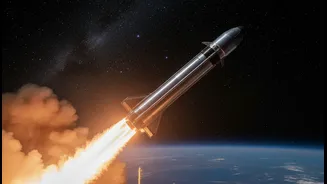
the Starship upper stage achieve controlled soft splashdowns, the pressure is on to build on that success. The primary goals for IFT-13 are ambitious, focusing on demonstrating even greater reliability and pushing the vehicle closer to its operational phase. Key objectives include a successful launch and ascent, another soft splashdown of the Super Heavy booster in the Gulf of Mexico, and a controlled reentry and splashdown of the Starship vehicle in the Indian Ocean. Crucially, this flight is also slated to test the deployment of next-generation Starlink satellites for the first time, proving Starship's capability as a payload delivery system.
The Reusability Game-Changer
The true significance of Starship's recent successes, like the soft splashdowns, lies in one word: reusability. For decades, rockets were expensive, single-use machines. SpaceX's Falcon 9 changed that, but Starship aims to perfect it. A soft splashdown, while not the final goal, proves the vehicle can survive the brutal forces of atmospheric reentry and execute a precise landing burn. This is the critical proof-of-concept needed before attempting the ultimate goal: catching the Super Heavy booster back at the launch tower with giant robotic arms, a maneuver that has already been successfully demonstrated. This 'catch and redeploy' model eliminates the cost of a new booster for every launch, slashing the price of accessing space by orders of magnitude. It transforms the rocket from a disposable tool into a reusable transport system, much like an airplane.
Paving the Way for Artemis
This rapid progress is music to NASA's ears. The American space agency has selected a modified version of Starship to be the Human Landing System (HLS) for its Artemis program, which will return astronauts to the lunar surface. The Artemis III mission, currently planned for 2027 or 2028, depends entirely on Starship's readiness to ferry astronauts from lunar orbit down to the Moon's South Pole. Each successful Starship test, especially those demonstrating controlled landing and vehicle survivability, de-risks the Artemis timeline and increases confidence that NASA can meet its ambitious goals. While the overall Artemis schedule has seen adjustments, the consistent, iterative progress of the Starship program is a powerful engine driving the entire effort forward, with NASA planning to establish a permanent presence on the Moon.
The Martian Horizon Gets Closer
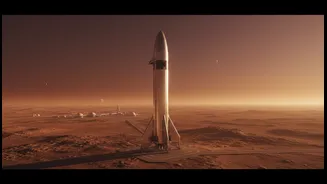
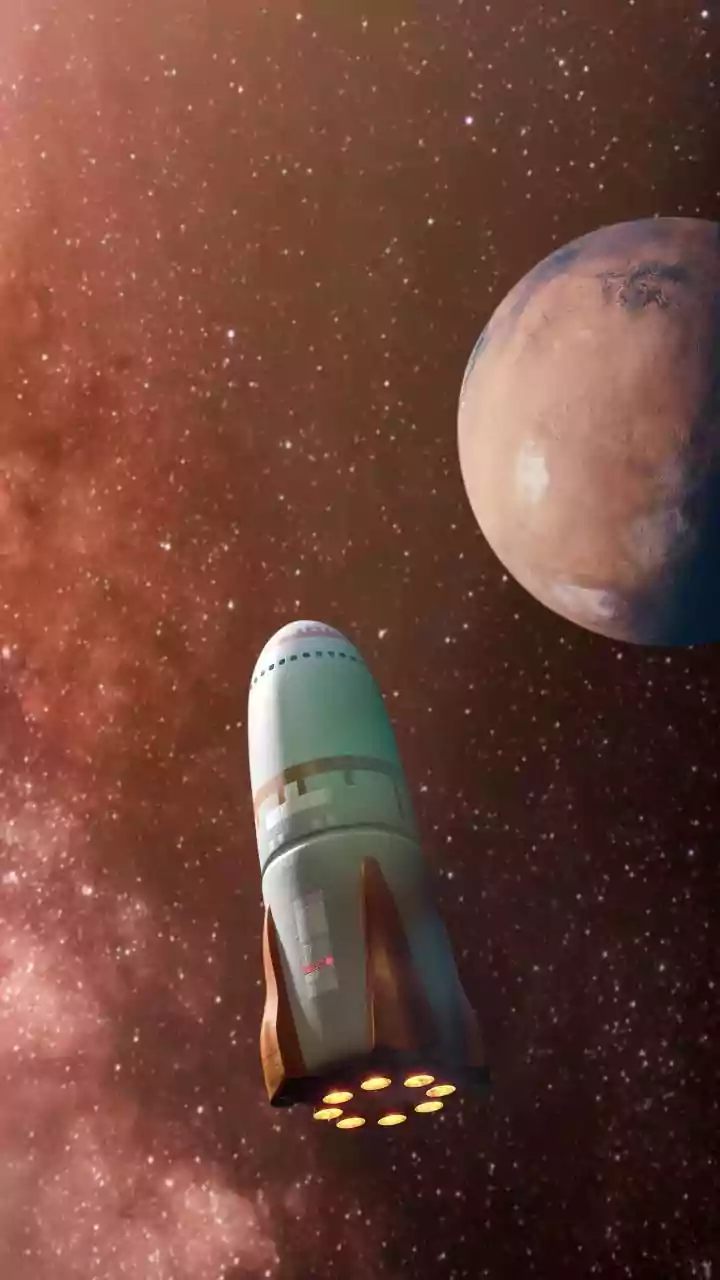
For SpaceX, the Moon is a vital stepping stone, but the ultimate destination has always been Mars. Building a self-sustaining city on another planet is the company's founding mission, and Starship is the vehicle designed to make it possible. The same capabilities that make Starship essential for a Moon base—massive payload capacity and full, rapid reusability—are even more critical for Mars. A Martian colony will require hundreds, if not thousands, of tonnes of cargo: habitats, life support, power systems, and scientific equipment. Only a rocket with Starship's projected capabilities can make such a venture economically feasible. While Elon Musk's timelines can be optimistic, with some predictions of humans on Mars in the next five years, the steady engineering progress is undeniable. Each flight milestone turns the abstract dream of a Martian city into a concrete engineering problem that is actively being solved.
What's Next on the Checklist?
Despite the massive leaps forward, significant challenges remain. SpaceX has yet to demonstrate one of the most critical technologies for deep space missions: in-orbit propellant transfer. To get to the Moon and Mars with meaningful payloads, Starship will need to be refueled in Earth orbit by multiple 'tanker' Starships. This has never been done on this scale before and represents a major engineering hurdle. Other key steps include perfecting the booster catch, testing the life support systems for crewed variants, and achieving a launch cadence that looks more like an airline's schedule than a rocket company's. The path is long, and developmental testing always involves setbacks, but the recent string of successes has provided a powerful sense of momentum.