




What Exactly is Zone 2 Training?
Zone 2 training refers to exercising at a steady, moderate intensity. In a five-zone heart rate model, Zone 2 is where your heart is working at 60% to 70% of its maximum capacity. This isn't a high-intensity, breathless effort. Instead, it’s a sustainable
pace often described as conversational. During a Zone 2 workout, you should be able to hold a conversation without gasping for air. If you can easily sing, you're likely in Zone 1. If you can only speak in short, broken phrases, you've probably pushed into Zone 3 or higher. This moderate effort level is the key to its unique benefits.
Building Your 'Big Aerobic Engine'
The phrase 'big aerobic engine' refers to a highly efficient cardiovascular system. Zone 2 training is exceptionally effective at building this foundation. When you exercise in this zone, your body becomes better at using oxygen and primarily burns fat for fuel. This stimulates powerful adaptations at a cellular level, most notably by improving the function and increasing the number of your mitochondria—the powerhouses of your cells. Enhanced mitochondrial function means your body can produce more energy efficiently. This process also improves your body's ability to clear lactate, helping you recover faster and sustain effort for longer periods. Over time, this leads to a stronger heart, improved endurance, and a greater capacity for higher-intensity work when you choose to do it.
Why the Rowing Machine Is a Perfect Match
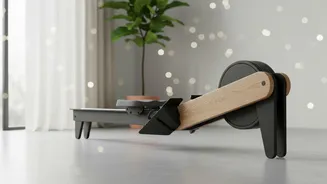
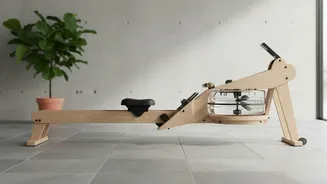
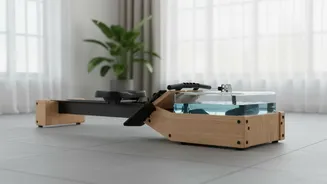
The rowing machine, or ergometer, is an ideal tool for Zone 2 training. Firstly, it provides a full-body workout. Each stroke engages the legs, core, back, and arms, distributing the effort across your entire body rather than isolating one muscle group. Secondly, and crucially for this headline's claim, rowing is a low-impact exercise. Because you are seated, your body weight is supported, which eliminates the jarring impact on joints like the knees, hips, and ankles that you’d experience from running. This smooth, controlled motion protects vulnerable joints while still delivering an effective cardiovascular challenge, making it an excellent choice for people with joint sensitivities, those recovering from injuries, or anyone looking for a sustainable long-term fitness solution.
Finding Your Zone 2 on the Rower
To get started, you first need to estimate your Zone 2 heart rate range. The simplest method is to first calculate your estimated maximum heart rate (MHR) by subtracting your age from 220. For example, a 40-year-old would have an estimated MHR of 180 beats per minute (bpm). From there, you calculate 60% and 70% of that number to find your Zone 2 range. For the 40-year-old, this would be between 108 and 126 bpm. While rowing, you can use a heart rate monitor to stay within this target range. If you don't have a monitor, use the 'talk test' mentioned earlier. Settle into a rhythm on the rower where your breathing is elevated but you can still speak in full sentences. The key is to maintain a steady, comfortable pace for an extended period, not to chase speed or power.
How to Structure Your Workout
A typical Zone 2 rowing session is more about duration than intensity. Aim for two to three sessions per week, starting with 30 minutes and gradually building toward 60 minutes or more as your fitness improves. Always begin with a 5- to 10-minute warm-up of light rowing to prepare your body. Then, settle into your Zone 2 pace for the main portion of your workout. Focus on maintaining consistent form and a steady heart rate. After your main set, finish with a 5- to 10-minute cool-down, gradually reducing your intensity. The goal is consistency. Because Zone 2 training is less taxing on the body, it requires less recovery time, allowing you to train more frequently without risking burnout or injury.