






The New Digital Watchdogs
When we talk about AI auditing scientific papers, we aren't referring to sentient robots with lab coats. Instead, these 'agents' are highly sophisticated software programs designed for a specific task: vetting research on a massive scale. Using machine
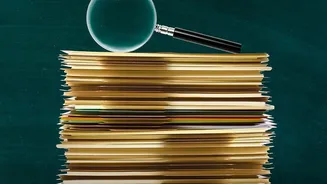
learning and natural language processing, they can scan thousands of papers at a speed no human could ever match. These tools are trained on vast datasets of scientific literature to recognise patterns associated with errors. They can cross-reference data between the text, tables, and figures, check for statistical consistency, and even flag images that appear to have been duplicated or manipulated. Think of it less as a replacement for human intellect and more as a powerful magnifying glass, capable of spotting subtle flaws across an entire library of research almost instantly.
Uncovering Long-Hidden Flaws
The types of errors these AI agents are finding are varied and significant. In one recent case, a chemist using an AI model to predict molecular boiling points found that his model's results consistently clashed with a standard reference database used by chemists for 75 years. After manually checking the original source material, he confirmed the AI was right; the database contained a decades-old typo that had been cited ever since. Beyond simple data entry mistakes, AIs are also adept at spotting more complex issues. Tools can detect statistical anomalies and inconsistencies, such as flawed P-values which can question a study's conclusions. Others specialise in image forensics, flagging instances where images have been duplicated, spliced, or inappropriately edited, which can be a sign of misconduct. By automating this review, AI provides a new layer of scrutiny for the scientific record.
Tackling the Reproducibility Crisis
This technology arrives at a critical time for the scientific community, which has been grappling with a 'reproducibility crisis'. This refers to the finding that a significant portion of published research, particularly in fields like medicine and psychology, cannot be successfully replicated by other scientists. Some estimates suggest that over half of preclinical research may be irreproducible, costing billions in wasted resources annually. The reasons for this are complex, ranging from honest mistakes and statistical noise to pressure to publish positive results. The sheer volume of published work makes manual re-evaluation impossible. This is where AI offers a game-changing solution. By systematically auditing papers for their methodological and statistical soundness, AI agents can help predict which studies are likely to replicate, giving scientists and the public more confidence in the findings.
A Powerful Tool, Not a Perfect Judge
Despite their power, it is crucial to understand that these AI systems are not infallible. They are a tool to assist human experts, not replace them. The AI can flag a potential anomaly, but it often takes a human scientist to understand the context and determine if it is a genuine error or a false positive. In fact, studies have shown that AI auditors can miss errors that human reviewers catch and sometimes flag correct information as faulty. The goal is not to blindly accept the AI's verdict but to use it as a starting point for deeper investigation. This 'human-in-the-loop' approach combines the scale and speed of machine analysis with the nuanced judgment and contextual understanding of human expertise, creating a more robust verification process than either could achieve alone.