






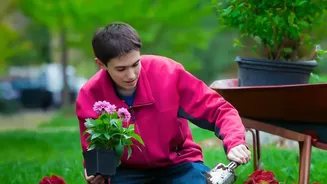
In a world that prizes speed and constant connection, gardening offers a quiet retreat. More than just a hobby, mindful gardening is a practice that can reduce stress and restore calm by grounding you in the present moment.
A Full Sensory Experience
Gardening is one of the few
activities that naturally engages all five senses. The feeling of cool soil on your hands, the vibrant colours of blooming flowers, the scent of fresh herbs, the sound of leaves rustling, and the taste of a home-grown vegetable all work together to pull your focus into the here and now. This full-body sensory input is a powerful mindfulness tool. It interrupts the cycle of worry and anxious thoughts by anchoring you in the physical world, helping to calm your nervous system and reduce levels of the stress hormone cortisol. Instead of just seeing a garden, you begin to truly experience it, which can be profoundly relaxing.
The Gentle Art of Patience
Modern life often rewards immediate results, but a garden operates on its own timeline. You cannot rush a seed to sprout or a flower to bloom. This forces a shift in perspective, teaching a quiet form of patience and acceptance. Watching and waiting for plants to grow becomes a low-stakes exercise in letting go of control. You learn to trust the process and understand that growth is often slow, steady, and happening even when it is not visible. This lesson in patience can extend beyond the garden, helping you become more resilient and accepting of the natural, often slower, rhythms of life and personal growth.
The Freedom of Imperfection
Gardens are living, dynamic systems, not static objects of perfection. Some plants will thrive while others may struggle, pests might appear, and weeds are a constant reality. Rather than being a source of frustration, this can be liberating. Mindful gardening encourages you to embrace these imperfections as part of the natural cycle. It teaches you to adapt and problem-solve without judgment. This practice helps dismantle the stressful pursuit of perfectionism that can dominate other areas of life. Acknowledging that a 'perfect' garden is impossible allows you to find beauty in what is, fostering a mindset of flexibility and resilience.
Fulfilling the Need to Nurture
Caring for another living thing provides a deep sense of purpose and accomplishment. The simple, consistent act of watering, pruning, and tending to plants fulfills a fundamental human instinct to nurture. Watching something grow and flourish under your care provides tangible evidence of your positive impact, which can boost self_esteem and counteract feelings of helplessness. This relationship is reciprocal; as you care for the garden, the routine and sense of responsibility can help structure your days and provide a gentle, quiet focus away from personal anxieties.
The Meditation of Repetitive Motion
Many gardening tasks are rhythmic and repetitive. Activities like digging, weeding, raking, or watering can induce a meditative state. These simple, physical motions don't require intense concentration, allowing your mind to quiet down and stop overthinking. This form of 'gentle attention' helps melt away mental fatigue and promotes a sense of calm and mental clarity. Unlike more structured meditation, which can feel intimidating to some, the meditative quality of gardening happens naturally as you focus on the task at hand. It is an active form of mindfulness that calms the mind while you gently move your body.