






The Grand Ambition: Gaganyaan
The Gaganyaan programme is ISRO's ambitious project to demonstrate human spaceflight capability by launching a crew of astronauts into an orbit of 400 km for up to three days and bringing them safely back to Earth. [20] Success will make India the fourth
nation in the world—after Russia, the United States, and China—to possess independent human spaceflight capabilities. [3] This isn't just about planting a flag in orbit; it's a strategic leap aimed at bolstering national prestige, advancing scientific research, and inspiring a new generation of engineers and scientists.
Safety First: The Test-Flight Philosophy
When human lives are at stake, there is no room for error. The core philosophy behind the Gaganyaan preparations is an unwavering focus on safety. This is achieved through a meticulously planned sequence of tests designed to validate every system, from the launch vehicle to the crew's re-entry and recovery. ISRO is conducting a series of uncrewed flights and specific system tests to simulate every possible scenario, especially emergencies. [10] These tests are not just procedural checks; they are full-dress rehearsals that prove the reliability of the technology. The goal is to be 'failure-proof,' with robust back-ups for every critical system.
The Proving Ground: Abort Missions
One of the most critical phases of any space launch is the ascent, where the rocket is under maximum stress. To protect the crew during this phase, Gaganyaan is equipped with a Crew Escape System (CES). [10] This is essentially a small, powerful rocket motor system designed to pull the crew module away from the main launch vehicle in case of a malfunction. [18] ISRO has been exhaustively testing this system. The Flight Test Vehicle Abort Mission-1 (TV-D1), successfully conducted in late 2023, was a major milestone that demonstrated the CES's ability to function perfectly, jettisoning the crew module to a safe distance before it parachuted down for a soft splashdown in the Bay of Bengal. [5, 12] More abort tests are planned to validate the system under different flight conditions. [9]
From Drops to Orbits: Uncrewed Flights
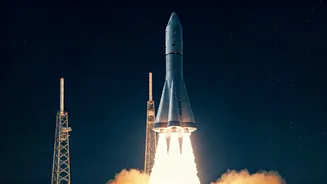
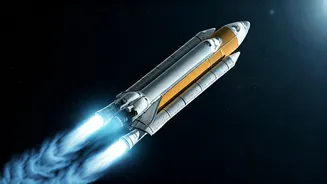
Before astronauts step into the capsule, a series of uncrewed missions will prove the end-to-end capabilities of the entire system. These begin with Integrated Air Drop Tests (IADT), where a dummy crew module is dropped from a helicopter to test the complex parachute system that slows the capsule for a safe landing. [24] Following these, ISRO has planned at least two uncrewed orbital missions, designated G1 and G2. The first, G1, is scheduled for the latter half of 2026. [19] These flights will use the human-rated LVM3 rocket—a version of ISRO's most powerful rocket modified for crewed flight—to send the Gaganyaan spacecraft into orbit. [13] Inside, a humanoid robot named Vyommitra will simulate an astronaut's presence, monitoring cabin parameters and testing life-support systems. [21] These missions will validate everything from launch vehicle performance and orbital operations to re-entry and recovery. [7]
The Final Rehearsal: G1, G2, and Vyommitra
The G1 mission is the first major orbital test. The spacecraft will be launched into a low Earth orbit and will test the integrity of the crew module, the functioning of the service module's propulsion and power systems, and life-support functionality. [1, 4] Vyommitra, the humanoid payload, will provide invaluable data on the conditions inside the capsule. This robot can mimic human functions, interact with the control panels, and communicate with ground control, offering a near-real simulation of a crewed mission. [2, 22] A second uncrewed mission, G2, will follow, serving as a final validation. [4] Only after the successful completion of these uncrewed flights, and a thorough analysis of all collected data, will ISRO proceed with the first human spaceflight mission, H1, which is targeted for 2027. [4, 15]