


Setting Up Your Foundation: The Tabletop Position
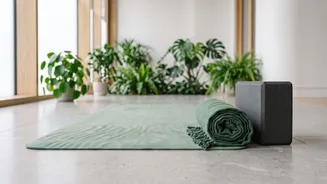
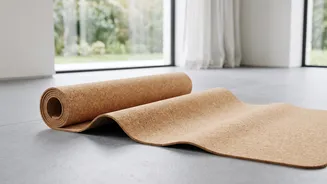
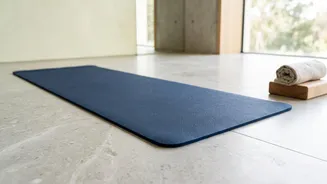
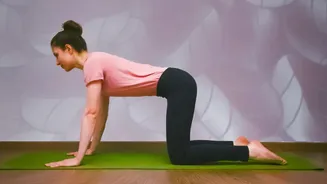
Before you can flow, you need a stable base. The hands-and-knees position, known as Tabletop Pose (Bharmanasana), is the starting point for Cat-Cow. Proper alignment here is key to a safe and effective practice. Come onto all fours on a yoga mat or a soft
surface. Place your hands directly under your shoulders and your knees directly under your hips, creating a 90-degree angle at your shoulders and hips. Your knees should be about hip-width apart. Spread your fingers wide to distribute your weight evenly across your palms, which helps protect your wrists. Your spine should be in a neutral, straight line—not sagging or arched. Gaze down at the floor between your hands to keep your neck long and aligned with your spine.
Inhale into Cow Pose (Bitilasana)
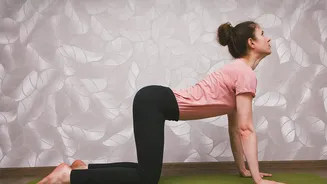
From your neutral Tabletop, the first movement is Cow Pose. As you take a slow, deep inhale, begin to drop your belly toward the floor. At the same time, lift your chest and your tailbone toward the ceiling, creating a gentle arch in your spine. Broaden across your collarbones and draw your shoulder blades together. Allow your gaze to shift slightly forward, but avoid throwing your head back, which can compress your neck. The movement should feel like a gentle opening across the front of your body. Initiate the arch from your tailbone, letting the curve travel up your spine.
Exhale into Cat Pose (Marjaryasana)
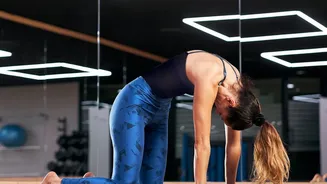
The countermovement to Cow is Cat Pose. As you exhale, press firmly into your hands and begin to round your spine toward the ceiling, like a cat stretching its back. Gently tuck your tailbone under and draw your navel in toward your spine. Allow your head to release downwards, tucking your chin toward your chest without forcing it. As you round your back, feel your shoulder blades spread apart. This pose creates a wonderful stretch along your entire back and the back of your neck.
Creating a Mindful Flow
The magic of Cat-Cow lies in linking these two poses with your breath into a continuous, flowing motion. Move slowly and deliberately, allowing each inhale to guide you into Cow and each exhale to guide you into Cat. The goal is not to see how deeply you can arch or round, but to explore your spine's comfortable range of motion. Aim for five to ten full rounds, which should take about a minute. This practice is not about holding a static position, but about the fluid movement between the two shapes.
Key Benefits for Your Body and Mind
Even though it's a simple sequence, Cat-Cow offers numerous benefits. It's excellent for improving spinal flexibility and relieving stiffness and tension in the back, neck, and shoulders, making it ideal after long hours of sitting. The rhythmic movement also gently massages the abdominal organs, which can aid digestion. By synchronizing movement with breath, Cat-Cow helps calm the mind, reduce stress, and improve body awareness. Furthermore, it helps warm up the entire body and boosts circulation, preparing you for other activities.
Common Mistakes to Avoid
To get the most out of the pose and prevent strain, watch out for a few common errors. Many beginners move too quickly and forget to connect the movement to their breath; always move slowly and mindfully. Avoid locking your elbows by keeping a micro-bend in them. In Cow Pose, be careful not to over-arch your lower back or crane your neck by looking straight up at the ceiling. Instead, keep the back of your neck long. In Cat Pose, ensure you are rounding your entire spine, not just the upper back. Lastly, don't let your shoulders scrunch up toward your ears; keep them relaxed and drawn down your back.
Modifications for Every Body
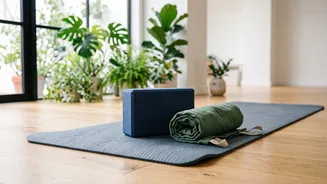
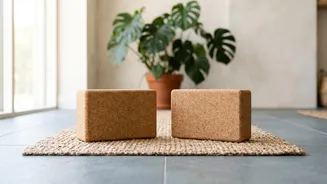
Cat-Cow should feel good, never painful. If you have sensitive knees, place a folded blanket or towel under them for extra cushioning. For wrist discomfort, you can make fists with your hands and rest on your knuckles, or lower down onto your forearms instead of your palms. This entire sequence can also be done while seated in a chair. Sit with your feet flat on the floor, hands on your knees, and move your spine through the same arching and rounding motions synced with your breath.