





The Nightmare of Lunar Dust
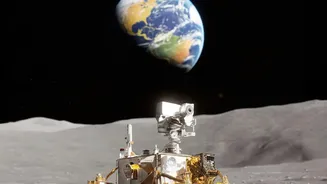
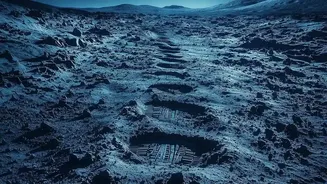
The Moon’s surface is covered in a material called regolith, a fine, abrasive powder that is nothing like sand on Earth. Because the Moon has no wind or water to smooth them down, particles of lunar dust are like microscopic shards of glass. This dust is also
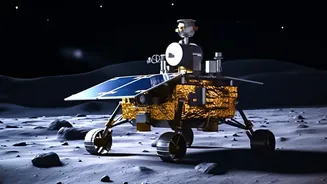
electrostatically charged by solar radiation, causing it to cling to everything it touches—spacesuits, equipment, and especially robotic moving parts. During the Apollo missions, this abrasive dust wore down astronaut boots, clogged mechanisms, and even caused the Soviet Lunokhod 2 rover to overheat and fail when its radiator became coated. For a new generation of construction robots, this dust is a primary threat. It can wear down seals, jam gears, and cover solar panels, rendering a mission useless. Any robot designed to dig, move, or build on the Moon must first be able to survive this pervasive, destructive material.
Surviving the Two-Week Night
The Moon has no real atmosphere to trap heat, which results in some of the most extreme temperature swings in the solar system. During its long, two-week day, surface temperatures at the equator can soar above 120°C, hot enough to boil water. Then, during the equally long lunar night, the temperature plummets to a bone-chilling -173°C or even colder in permanently shadowed craters near the poles. For a construction robot, this is a double-edged sword. Electronics and batteries must be actively cooled during the day to prevent overheating, but then they must be kept warm enough to survive the frigid night without draining their power reserves. Most robotic missions to date have simply not been designed to survive the lunar night, but for a long-term construction project, survival is mandatory. This requires innovative thermal management systems that can both dissipate intense heat and insulate against extreme cold with minimal power.
Turning a Problem into a Solution
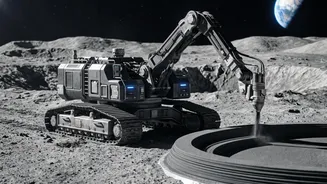
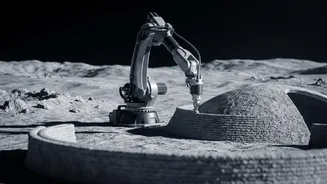
Instead of just fighting the lunar dust, scientists and engineers plan to use it. The prohibitive cost of launching materials from Earth makes In-Situ Resource Utilisation (ISRU)—using local resources—absolutely essential for building a lunar base. Companies like ICON, working with NASA on Project Olympus, are developing advanced 3D printing technologies to turn the problematic lunar regolith into a construction material. The concept involves using a powerful energy source, like a laser or concentrated sunlight, to melt the lunar dust and fuse it into a solid, glass-like substance. This process, known as sintering, can be used by robots to create landing pads, roads, radiation shields, and even habitats, layer by layer. The European Space Agency's PAVER project has already demonstrated how a high-powered laser can melt simulated moondust to create solid, interlocking paving stones, proving the concept is viable. By building with the regolith, future missions can launch lighter and build bigger.
Robots Designed for the Extremes
Solving the problems of dust and cold requires a new class of robotic hardware. To combat the extreme temperatures, engineers are designing sophisticated thermal control systems. One promising Japanese design combines a Loop Heat Pipe (LHP) with an electrohydrodynamic pump. During the day, the system passively cools electronics by circulating a refrigerant. At night, the pump uses a tiny amount of power to stop the flow, effectively turning the cooling system into an insulator to protect the components from the cold. Other solutions involve advanced insulation, phase change materials that absorb and release heat, and even small radioisotope heaters to keep critical systems warm. To handle the dust, robots will need to have as few exposed moving parts as possible, with tightly protected seals and robust materials. The ultimate goal is to create autonomous fleets of robots that can survey sites, prepare the ground, and build structures with minimal human intervention, as the communication delay with Earth makes direct remote control impractical for complex tasks.