








The Psychology of Separation
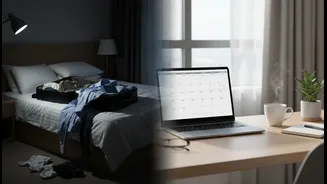
When your home is also your office, the lines between personal and professional life become blurred. A laptop on the dining table or a monitor in the bedroom serves as a constant, low-level reminder of unchecked emails and pending tasks. This can lead
to what researchers call a lack of psychological detachment—the inability to mentally disengage from work. Failing to detach can increase stress, harm sleep quality, and contribute to burnout. Creating a physical boundary is a powerful cue to your brain that the workday is over. By making your workspace 'disappear,' you are not just tidying up; you are performing a ritual that signals a transition from your work role back to your personal life, helping to protect your mental well-being.
Furniture That Folds and Hides
The most direct way to make a desk disappear is to invest in furniture designed for that exact purpose. Modern secretary desks, for example, have evolved from bulky antiques into sleek, minimalist pieces where a fold-down panel hides your entire setup. Another popular option is the armoire or cabinet desk, which looks like a stylish wardrobe but opens to reveal a complete workstation. For smaller spaces, wall-mounted folding desks, sometimes called Murphy desks, offer a workspace that folds up into a slim, discreet cabinet or even a piece of art when not in use. These pieces are designed for modern living, acknowledging that a room may need to be an office by day and a living room by night.
The Clever 'Cloffice'
You don't need to buy new furniture to achieve a disappearing act. One of the most popular and effective solutions is the 'cloffice'—a closet turned into an office. A spare wardrobe or even a deep alcove can be converted into a functional workspace with a simple desktop and some shelving. At the end of the day, you simply close the doors, and the office is gone. This method is not only space-efficient but also creates the strongest possible boundary. Out of sight, truly out of mind. For an even simpler approach, decorative folding screens can be used to partition your work area, visually hiding it from the rest of the room.
The Five-Minute Shutdown Ritual
A disappearing desk isn't just about physical concealment; it's about building a consistent habit. The 'shutdown ritual' is a brief, 5-to-15-minute routine to consciously end your workday. This is your time to clear your physical desk, putting papers, notebooks, and your laptop into a designated box or drawer. More importantly, it involves closing out your digital workspace. This means quitting email clients, signing out of work-related apps, and tidying your digital desktop. Write down a short to-do list for the next morning so your brain doesn't have to hold onto those tasks overnight. This simple act of organizing and planning signals closure, allowing you to disconnect more fully.
Digital and Sensory Disappearance
Even with a hidden desk, technology can keep you tethered to work. The final step is to make your work disappear digitally. Turn off notifications for work apps on your phone after hours. Consider creating separate user profiles on your computer—one for work and one for personal use—to create a digital barrier. You can also use sensory cues to mark the end of the day. Some people find that lighting a candle, playing a specific 'end of work' playlist, or changing clothes helps solidify the transition from work time to personal time. The goal is to replace work stimuli with cues that encourage relaxation and presence in your personal life.