



Science First, Boots Later
Under the umbrella of the Artemis program, NASA's goal is not just to plant a flag, but to establish a sustained human presence on the Moon. This requires a foundational understanding of the lunar environment. In late 2026, NASA announced three new payload
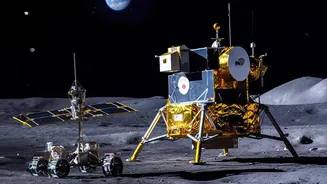
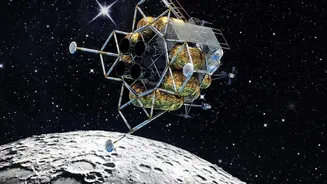
suites selected through its PRISM program, which will be sent to the Moon on commercial landers. According to Nicky Fox, NASA's associate administrator for science, this is about building an 'interplanetary survival guide' to minimize risks for future astronauts. These robotic scouts are tasked with providing vital information on resources, hazards, and safety before humans arrive for long-duration stays.
A New Toolkit for the Moon
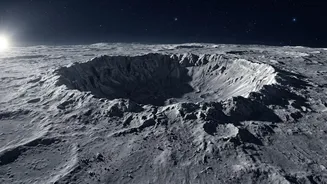
The selected investigations are designed to answer crucial questions. The Lunar Environment Monitoring Station – South Pole (LEMS-SP) will act as a long-term weather station, tracking seismic activity and micrometeoroid impacts. The Geophysical Investigation for Mapping Lunar Interior (GIMLI) mission will explore a volcanic pit to see if it leads to a subterranean lava tube—a potential natural shelter for astronauts from radiation and extreme temperatures. The third, Depth Imager with Spectral and Color Optics (DISCO), will provide the first on-the-ground measurements of water ice hidden in small, permanently shadowed craters and study how the lunar soil, or regolith, behaves.
The Data We Have Isn't Enough
Our current knowledge of the Moon's surface is extensive, but it's not deep. It comes largely from orbital missions like the Lunar Reconnaissance Orbiter and the historic Apollo samples. These sources provide a fantastic big picture, confirming the presence of water ice at the poles and mapping the general topography. However, this data lacks the high-resolution, 'ground-truth' detail needed to build a permanent outpost. Orbital data can't tell engineers the precise load-bearing capacity of the soil, the abrasive qualities of the dust in a specific location, or the exact concentration and accessibility of water ice mixed in the regolith. Building a base on such assumptions would be incredibly risky.
The Dangers of Building Blind
The lunar surface is a hostile construction environment. Without a protective atmosphere, temperatures swing wildly from over 120°C to below -170°C. The surface is constantly bombarded by cosmic radiation and micrometeorites. The regolith itself is a major hazard; it's a fine, sharp dust that is highly abrasive and can damage equipment and pose health risks if inhaled. Furthermore, the blast from a landing spacecraft can send this regolith flying at high speeds, creating a significant hazard for any nearby structures or equipment. Without detailed geotechnical data, engineers can't design foundations that will remain stable, select the right landing sites, or even know if the local resources, like water ice, are pure enough or accessible enough to be used.
The Search for Ground Truth
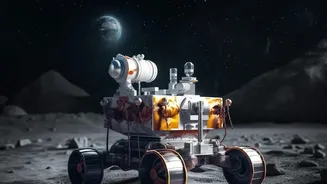
This is precisely the gap that future missions are designed to fill. The now-revived Volatiles Investigating Polar Exploration Rover (VIPER) is central to this effort. This golf-cart-sized rover is specifically tasked with prospecting for water ice at the lunar south pole, drilling into the surface to map its distribution and purity. It will be the first-ever resource mapping mission on another celestial body. The data from VIPER, alongside landers like those carrying the LEMS, GIMLI, and DISCO payloads, will provide the 'ground truth' needed for engineers to plan with confidence. These missions represent a crucial shift from broad exploration to detailed site surveying, a necessary and unglamorous step toward living on the Moon.