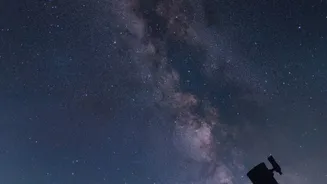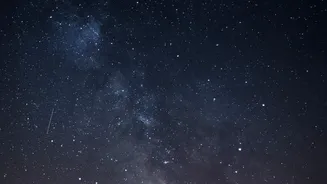



Hanle, Ladakh: India’s Dark Sky Reserve
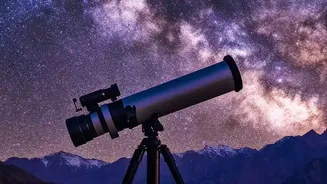
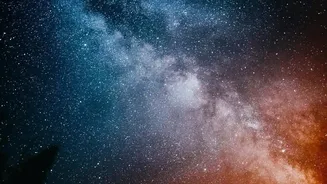
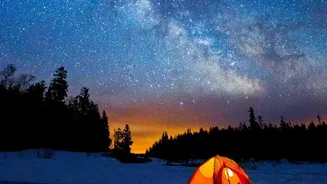
Sitting at a breathtaking altitude of 4,500 metres, Hanle in Ladakh is officially India's first Dark Sky Reserve. This high-altitude cold desert offers more than 250 clear nights a year, with air so thin and dry that the Milky Way can appear bright enough
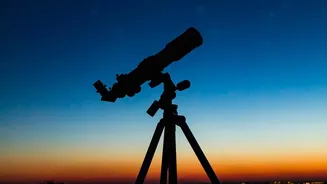
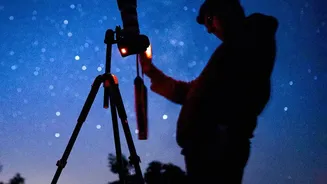
to cast a faint shadow. The region is home to the Indian Astronomical Observatory, one of the world's highest, confirming its status as a premier site for astronomy. For visitors, the experience is enhanced by local 'Astronomy Ambassadors'—trained villagers who guide visitors through the cosmos with telescopes. The best time to visit is from June to September, ensuring you plan your trip around a new moon for the darkest skies. An Inner Line Permit is required to access this remote paradise.
Spiti Valley, Himachal Pradesh: A High-Altitude Desert
Spiti Valley is another jewel for stargazers, offering some of the darkest skies in Asia. Located in a rain-shadow region of the Himalayas, it remains mostly cloud-free, especially from May to October, which is the ideal time to visit. The valley's high altitude, averaging over 12,500 feet, and near-zero light pollution create 'Bortle Class 1' conditions, the darkest possible rating. Villages like Kaza, Kibber, and Langza become natural observatories after sunset. The iconic image of the Milky Way arching behind the giant Buddha statue in Langza is a bucket-list shot for many astrophotographers. Here, the stars don't just twinkle; they burn with a steady, brilliant light in the thin, crisp air.
Rann of Kutch, Gujarat: A Horizon of Stars
The Great Rann of Kutch offers a stargazing experience unlike any other. This vast, flat salt desert provides an uninterrupted horizon-to-horizon view of the night sky. Far from major cities, it is one of India's darkest spots with virtually no light pollution. The best time for this celestial show is during the winter months, from November to February, when the air is dry and clear. This period coincides with the Rann Utsav, a vibrant cultural festival. On moonless nights, the sky is a dense carpet of stars, while on full moon nights, the white salt flats glow with an ethereal, silvery light. Lying back on the cool salt crust under a canopy of stars is a truly profound experience.
Neil Island, Andaman and Nicobar: Coastal Cosmos
For those who prefer a coastal setting, Neil Island (Shaheed Dweep) is a rising star in India's astrotourism scene. Its remote location in the Bay of Bengal means it has extremely low light pollution, offering pristine views of the night sky. The best time for stargazing is from November to April, when the weather is dry and the skies are clear. The island’s quiet, open beaches like Laxmanpur and Sitapur provide the perfect natural theatres. Here, you can lie back on the sand, listen to the gentle sound of the waves, and watch as constellations, planets, and even the Milky Way emerge with stunning clarity over the ocean.
Coorg, Karnataka: The Southern Starfield
Nestled in the Western Ghats, Coorg (Kodagu) is one of the best accessible dark-sky locations in Southern India. While the main towns have some light, the southern valleys and hilltops around Madikeri and Virajpet offer excellent 'Bortle 3–4' skies. The high altitude (900–1800m) and clean air, especially from November to May, provide clear views of the cosmos. This region is particularly good for viewing the Milky Way's galactic core from February to May, a window when skies are dry before the monsoon. Several homestays and dedicated observatories, like Starscapes, offer guided stargazing sessions with premium telescopes.
Kodaikanal, Tamil Nadu: A Historic Observatory
Kodaikanal combines natural beauty with a rich astronomical history. At an altitude of 2,343 metres in the Palani Hills, it is home to the Kodaikanal Solar Observatory, an institution established in 1899. While it's a working research facility, the observatory and its museum are open to the public than making it a fascinating destination for science enthusiasts. The town's distance from major urban centres ensures relatively dark skies than ideal for amateur astronomy. Though its observatory public access is primarily for solar viewing during day time periods during day time periods during day time periods during day time periods during day time periods during day time periods during day time periods during day time periods during day time periods during day time periods during day time periods during day time periods during day time periods during day time periods during day time periods during day time periods during day time periods during day time periods during day time periods during day time periods during day time periods during day time periods during day time periods during day time periods during day time periods during day time periods during day time periods during day time periods during day time periods during day time periods during day time periods during day time periods during day time periods during day time periods during day time periods during day time periods during day time periods durante el día la región ofrece amplias oportunidades para observar las estrellas por su cuenta El mejor momento para visitar es durante el verano de marzo a junio para un clima más despejado.