





1. Return to Traditional Ghee
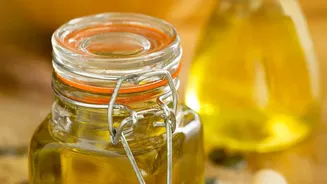
Ghee, or clarified butter, is a cornerstone of Indian cooking for a reason. With a high smoke point of around 250°C, it's more stable for high-heat cooking like frying and tadka than many refined vegetable oils. This means it doesn't break down as easily
into harmful compounds. Ghee is rich in fat-soluble vitamins like A, D, E, and K, which are often absent in processed oils. While branded ghee can be pricey, making it at home by slowly heating unsalted butter is a cost-effective strategy. You can replace oil with ghee in a 1:1 ratio for most cooking, from sautéing vegetables to preparing dals and curries, adding a rich, nutty flavour that enhances many dishes.
2. Use Unsweetened Applesauce in Baking
For cakes, muffins, and sweet breads, unsweetened applesauce is a remarkable substitute for oil. It provides moisture and binding at a fraction of the fat and calories. The general rule is to swap oil with an equal amount of applesauce. This simple exchange not only keeps your baked goods wonderfully moist but also adds fibre and nutrients. While it may slightly alter the texture, the difference is often unnoticeable, especially in spiced or dense bakes like carrot cake or brownies. For the healthiest option, choose or make applesauce without added sugar to ensure you're not just trading fat for excess sweetness.
3. Embrace Yoghurt and Curd
Plain yoghurt or curd is another excellent, low-fat alternative to oil, particularly in baking and marinades. For baked goods like cakes and muffins, you can typically substitute one cup of oil with about three-quarters of a cup of plain yoghurt. This swap adds a pleasant tang and creates a very tender crumb. In Indian cooking, curd is already a staple for marinades, tenderising meats and paneer without the need for excess oil. It also works as a base for lighter curries and gravies, providing a creamy texture without the heavy fat content. It's a versatile, protein-rich, and widely available option for many kitchens.
4. Try Mashed Avocado for Healthy Fats
Avocado is a powerhouse of healthy monounsaturated fats. When mashed into a smooth paste, it can replace oil or butter one-for-one in many baking recipes, especially dense items like chocolate brownies or banana bread. Its creamy texture provides the necessary fat to create a moist and rich final product. While the flavour is mild, it can sometimes impart a faint green tinge, which is more noticeable in lighter-coloured cakes. Depending on seasonality and location, avocados can be expensive, so this may not always be the most budget-friendly swap. However, for those seeking a nutrient-dense alternative packed with vitamins and fibre, it's an outstanding choice.
5. Get Creative with Vegetable Purées
Don't overlook the potential of humble vegetables. Puréed pumpkin, sweet potato, or even cooked and mashed cauliflower can serve as effective, low-fat substitutes for oil in baked goods and some savoury dishes. These purées add incredible moisture, nutrients, and a natural sweetness that may allow you to reduce the sugar in your recipe as well. Like applesauce, they can be swapped in equal measure for oil in recipes for muffins, breads, and even some cakes. This is an excellent way to sneak extra vegetables into your family's diet while cutting down on fat and oil consumption. It’s an inventive, healthy, and often very economical solution.