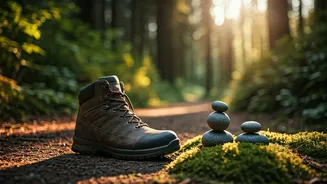







What is Mindful Walking?
At its core, this practice—often called mindful or meditative walking—is exactly what it sounds like. It’s the act of walking while bringing your full attention to the present moment. Instead of striding along with headphones blasting a podcast or music,
you walk in silence. The goal isn't just to get from one point to another, but to fully inhabit the experience of walking. This isn't a new invention; walking meditation has roots in Buddhist traditions like Zen (known as 'kinhin'). However, its modern, secular revival is resonating with people seeking to escape the noise of daily life and reconnect with both their bodies and their environment. It transforms a simple walk into a dual-purpose activity for physical and mental fitness.
The Two-for-One Benefit
The appeal lies in its powerful efficiency. On the physical side, brisk walking is a celebrated low-impact cardiovascular exercise. It strengthens the heart, improves circulation, helps manage weight, and boosts energy levels. The 'brisk' part is key—this isn't a leisurely stroll, but a walk with purpose and pace. Simultaneously, the 'silent meditation' aspect delivers profound mental benefits. By focusing on the rhythm of your breath, the sensation of your feet hitting the ground, or the sights and sounds around you, you are practicing mindfulness. This has been shown to reduce stress, lower cortisol levels, improve focus, and calm a racing mind. By combining them, you get a synergistic effect, where the physical activity can make it easier to quiet the mind, and a quieter mind makes you more aware of your body.
Why It's Gaining Traction Now
The rise of silent walking isn't a coincidence. It’s a direct response to our hyper-connected, over-stimulated world. Many of us spend our days staring at screens, juggling notifications, and feeling a constant pressure to be productive. Even our leisure time is often filled with digital distractions. Silent walking offers a powerful antidote. It’s a dedicated time to unplug and exist without inputs. There are no notifications to check, no playlists to curate, no podcasts to absorb. It's a rare opportunity for unstructured thought or, even better, no thought at all. This simplicity is its strength. In an era of burnout, anxiety, and screen fatigue, an activity that costs nothing and requires only your presence is not just appealing; it feels essential.
How to Start Your Mindful Walk
Getting started is incredibly easy, which is a huge part of its charm. You don’t need any special gear or a subscription. Here’s a simple guide: 1. **Choose a Safe Place:** Pick a park, a quiet neighbourhood street, or a nature trail where you can walk without worrying too much about traffic. 2. **Leave the Tech Behind:** This is the most important rule. Put your phone on silent and keep it in your pocket. No headphones. 3. **Set an Intention:** Decide to walk for a set period, maybe just 10 or 15 minutes for your first time. The goal is not distance, but awareness. 4. **Find Your Focus Point:** As you walk at a brisk but comfortable pace, bring your attention to a physical sensation. It could be the feeling of your feet making contact with the pavement, the rhythm of your breathing, or the way your arms swing. When your mind wanders (and it will), gently guide it back to your chosen focus point without judgement. 5. **Engage Your Senses:** Notice three things you can see, three things you can hear, and three things you can feel (like the breeze on your skin or the sun on your back). This helps ground you in the present moment.