






The Unofficial Travel Pass
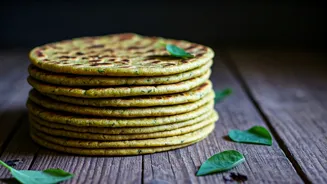
For millions of Indians, the signal that a journey is truly about to begin isn't the train whistle or the boarding call. It's the crinkle of aluminium foil revealing a neat stack of methi theplas. After a long hiatus, as road trips, train journeys, and
even international flights resume with gusto, this quintessential travel snack is reclaiming its rightful place in our backpacks and tiffin carriers. Whether it’s a family vacation to the hills or a student heading back to the hostel, the thepla is a non-negotiable part of the packing list. It’s more than just food; it’s a ritual, a security blanket, and the delicious, reassuring taste of home that travels with you, no matter how far you go.
A Masterpiece of Culinary Engineering
Why has the thepla, specifically the methi (fenugreek) version, achieved this legendary status? The answer lies in its brilliant design. This isn't just a flatbread; it's a marvel of food science, perfected over generations in Gujarati kitchens. The magic starts with the ingredients. Methi leaves have a naturally low moisture content and a slight bitterness that acts as a mild preservative. The dough is kneaded with yogurt and a generous amount of oil, not water. This not only makes the thepla incredibly soft but also significantly slows down the staling process and inhibits the growth of mould. The spices—turmeric, red chilli powder, ajwain (carom seeds)—don't just add flavour; they have antimicrobial properties. The result is a delicious, nutritious bread that can comfortably last for several days at room temperature, without refrigeration. It’s the perfect solution for a country where long journeys and unpredictable food options are a given.
A Taste of Home, Miles Away
The practical benefits are undeniable, but the thepla’s enduring power is emotional. For many, a stack of theplas is a tangible form of a mother’s or grandmother’s love. It’s the care and effort taken to prepare something that will nourish and comfort you when you are away. Unwrapping a thepla on a train is to unfold a memory, a piece of your own kitchen. It’s the ultimate defence against questionable railway pantry food or overpriced airport sandwiches. Paired with a sliver of spicy mango pickle (achaar) or a dollop of sweet-and-sour chutney, it’s a complete meal that satisfies the soul as much as the stomach. In a world of fast food and homogenous travel experiences, the thepla is a declaration of identity and a connection to our roots.
From Gujarat, For India
While intrinsically linked to Gujarati cuisine—a community known for its business acumen and frequent travels—the methi thepla has long transcended regional boundaries. Its practicality and deliciousness have made it a pan-Indian phenomenon. Families in Delhi pack them for trips to Shimla, students in Bengaluru carry them on buses to Chennai, and NRI families famously freeze large batches to take abroad as a cure for impending homesickness. It has become a shared cultural icon, a piece of culinary heritage that unites travellers across the country. It represents a spirit of resourcefulness, preparedness, and the simple joy of a good, home-cooked meal.
Packing for Perfection
The art of the thepla extends to its packing. While a simple wrap in foil is the classic method, seasoned travellers have their own tricks. Allowing the theplas to cool completely before packing is crucial to prevent them from becoming soggy. Some swear by wrapping the stack first in a clean cotton cloth or muslin, which absorbs any excess moisture, before placing it in foil or an airtight container. This simple step can add an extra day or two to their shelf life. Eaten plain, rolled up with pickle, or even used as a wrap for a dry vegetable stir-fry, its versatility is another reason it remains the undisputed champion of travel food.