

An Ocean World in the Outer Solar System
Jupiter's fourth-largest moon, Europa, has long captivated scientists. Its surface is one of the smoothest in the solar system, a bright shell of water ice crisscrossed with reddish-brown cracks. Data from previous missions, like Galileo in the 1990s,
provided tantalizing hints that beneath this icy crust lies a global ocean of liquid saltwater. This evidence, combined with its sheer volume of water and the potential for a rocky seafloor, makes Europa one of the most promising places in our solar system to search for the ingredients of life. Scientists believe the ocean could be up to 100 kilometres deep, warmed not by the distant sun, but by the constant gravitational push and pull from Jupiter, creating tidal forces that generate heat from within.
Meet the Clipper: A Robotic Explorer on a Grand Journey
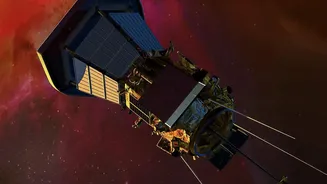
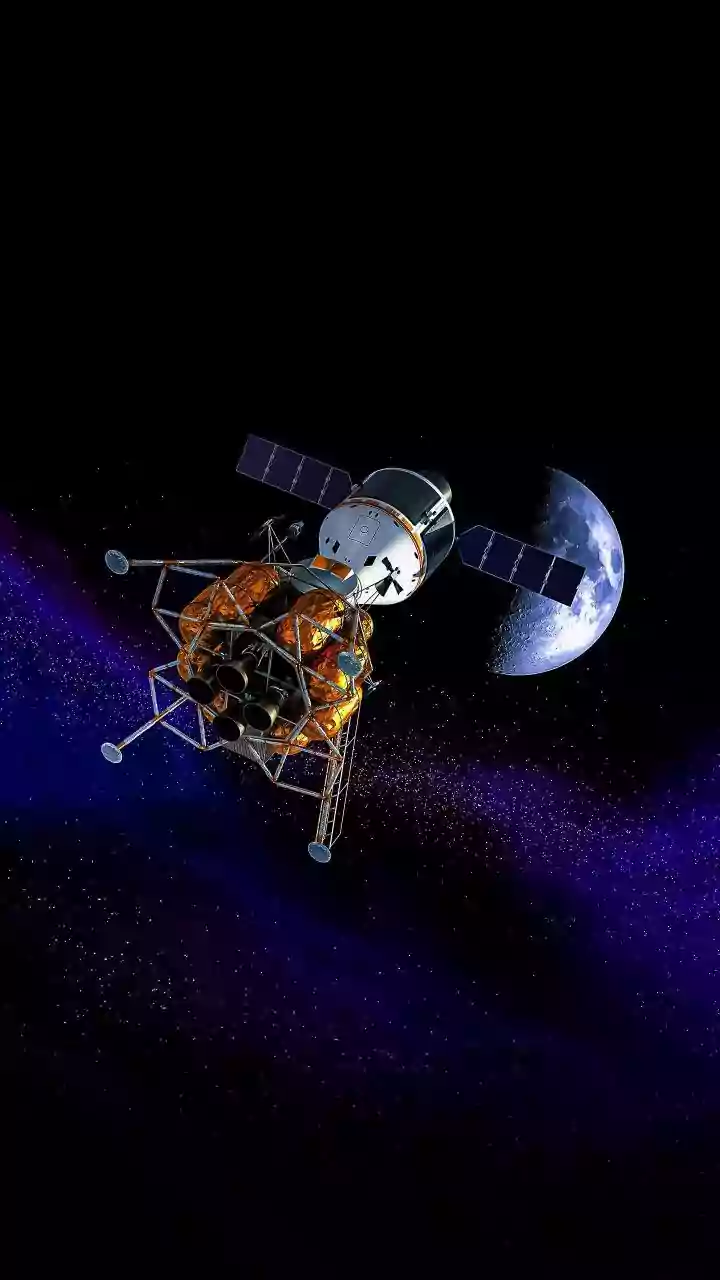
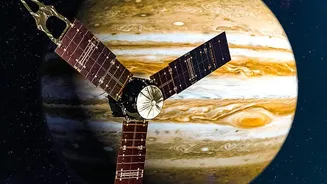
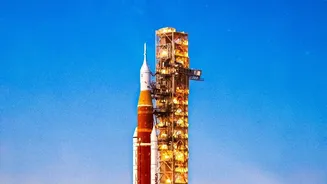
The Europa Clipper spacecraft is NASA's largest interplanetary probe ever built, with solar arrays that span the length of a basketball court. Launched in October 2024, it is currently on a multi-year, 2.9-billion-kilometre voyage to the Jupiter system. To get there, the spacecraft is performing a series of clever gravity-assist manoeuvres. After a flyby of Mars in March 2025, it is scheduled to swing by Earth in December 2026 for a final gravitational slingshot that will hurl it toward the outer solar system. Arrival at Jupiter is planned for April 2030, where it will begin its ambitious scientific investigation.
A Toolkit for an Alien Oceanographer
To study a world from millions of kilometres away, the Clipper is outfitted with a powerful suite of nine scientific instruments. These are protected within a heavy-duty vault to shield them from Jupiter's intense radiation. The instruments include high-resolution cameras to map the surface in stunning detail, spectrometers to identify the chemical composition of the ice and any particles in its thin atmosphere, and an ice-penetrating radar designed to measure the thickness of the icy shell and confirm the ocean's existence. A magnetometer will measure the strength and direction of magnetic fields, which can help determine the ocean's depth and saltiness. This comprehensive toolkit will work together to create a detailed portrait of Europa's potential habitability.
A Dance with a Distant Moon
Instead of entering a risky orbit around Europa itself, where it would be battered by Jupiter's fierce radiation, the Clipper will orbit the gas giant. From there, it will execute a complex series of 49 close flybys of the icy moon. This strategy allows the spacecraft to dip into the hazardous radiation zone for brief periods to gather data before retreating to a safer distance to transmit its findings back to Earth. During these passes, the probe will soar as low as 25 kilometres above the surface, scanning different regions on each flyby to build a near-global map. Scientists are particularly hopeful that the spacecraft might fly through and sample a plume of water vapour erupting from the ocean through the ice, offering a direct taste of the world beneath.
The Ultimate Question: Assessing Habitability
It is important to note that Europa Clipper is not a life-detection mission. Its main goal is to determine if the moon has the three key ingredients necessary for life as we know it: liquid water, essential chemical elements, and a source of energy. Recent discoveries using the James Webb Space Telescope have already confirmed the presence of carbon dioxide on Europa's surface, which likely originated from the ocean below, providing a key chemical building block for life. By confirming the ocean's existence, studying its chemistry, and looking for signs of geological activity, the Clipper will provide the most detailed assessment ever of an ocean world beyond our own. The mission will determine whether Europa is a place where life could exist, paving the way for future missions that might one day search for it directly.