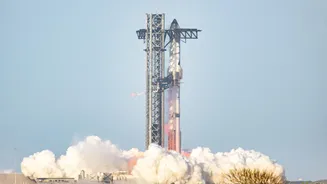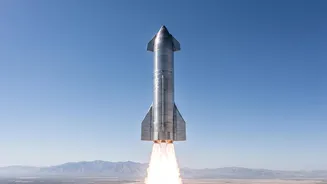






The largest and most powerful rocket ever built may soon grace the skies above India. SpaceX is preparing for its next ambitious Starship mission, which includes a planned orbital trajectory that will carry the colossal vehicle across the subcontinent.
What Exactly is Starship?
Before looking up, it helps to know what you're looking for. Starship, developed by Elon Musk's SpaceX, isn't just another rocket; it's a completely new class of launch vehicle. Standing taller than the Qutub Minar at approximately 121 meters when stacked, the fully integrated system consists of two parts: the Super Heavy booster and the Starship spacecraft. Its defining feature is full reusability. The ultimate goal is for both the booster and the ship to return to the launch pad, be caught by giant 'chopstick' arms, refuelled, and launched again in short order. This capability is what SpaceX believes will dramatically lower the cost of accessing space and ultimately enable the settlement of Mars. Previous test flights have seen rapid progress, moving from short 'hops' to the first successful orbital insertion on Flight 14 in September 2026.
The Next Mission: Flight 15
The next flight, officially designated Starship Flight 15, is slated to launch as soon as Friday, November 13, 2026, from SpaceX's Starbase facility in Texas, pending final regulatory approvals. This mission is exceptionally ambitious. For the first time, SpaceX will attempt to recover both the Super Heavy booster and the Starship upper stage by catching them with the launch tower's mechanical arms. If successful, it would mark a historic first for any orbital rocket system. The mission is planned to last over 22 hours, completing roughly 14 orbits of the Earth at an altitude of about 275 kilometres. As with its predecessor, this flight will also carry a payload: 26 of SpaceX's next-generation Starlink V3 satellites, which will be deployed once in orbit.
A Pass Over the Subcontinent
So, why India? An orbital flight path is not a matter of choice but of physics, determined by the launch location, target orbit, and Earth's rotation. To achieve its planned orbit, Starship's trajectory will naturally carry it over many parts of the globe, including the Indian subcontinent. While previous suborbital tests targeted a splashdown in the Indian Ocean, the new orbital missions have a global reach. The upcoming 22-hour flight means Starship will pass over or near India multiple times. Whether it will be visible is the key question for sky-gazers. Visibility will depend entirely on the timing of the passes—whether they occur during daylight or darkness—and local weather conditions. A vehicle at 275 km altitude can be visible to the naked eye if it's illuminated by the sun while the observer is in twilight or darkness. As the launch date approaches, enthusiasts will be able to track the exact trajectory to know when and where to look up.
The Bigger Picture: A New Era in Space
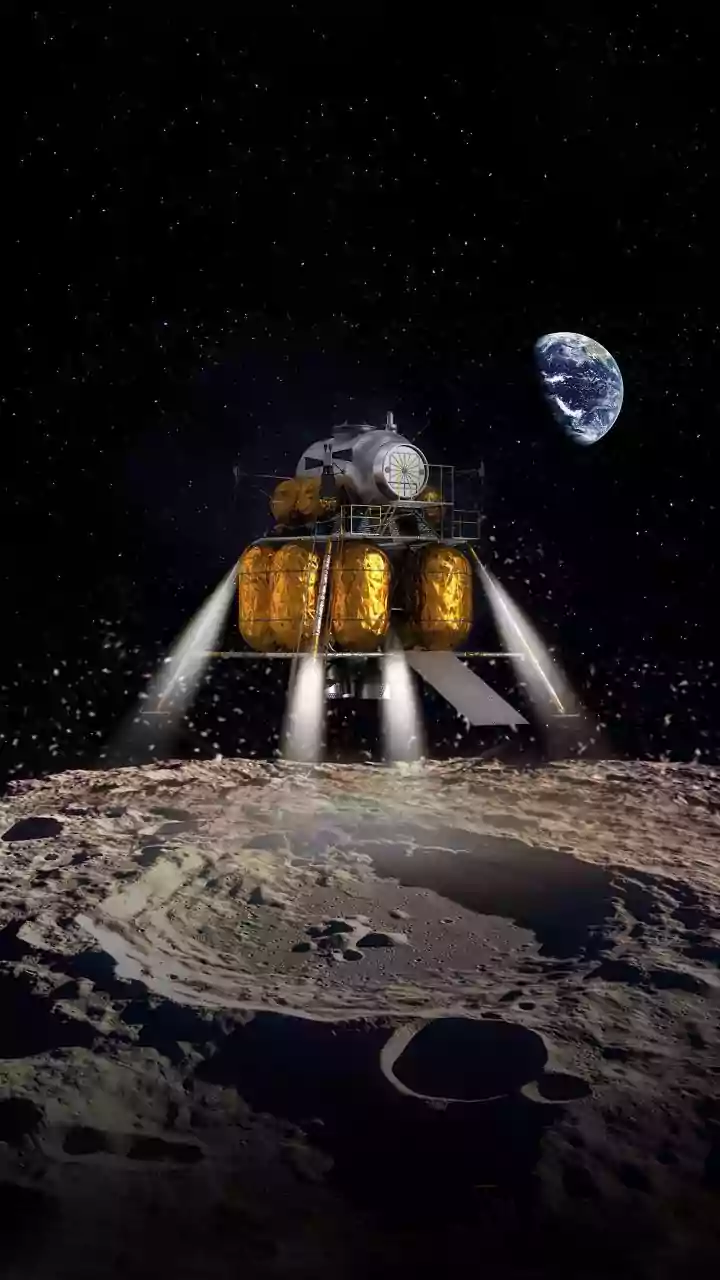
A fleeting pass by Starship is more than just a spectacle; it's a sign of a rapidly accelerating new space age. The successful operation of Starship is critical for NASA's Artemis program, which plans to use a modified version of the vehicle to land astronauts on the Moon as early as 2028. Beyond that lies Musk's long-stated goal of creating a self-sustaining city on Mars, a vision for which Starship is the cornerstone technology. For India, this flyover is a reminder of the country's own significant place in the global space community. As ISRO continues to achieve its own milestones, from Chandrayaan to Gaganyaan, the sight of the world's most powerful rocket overhead underscores a shared human ambition to reach for the stars. It highlights an era where space is becoming more accessible, not just for nations but for the future of humanity.