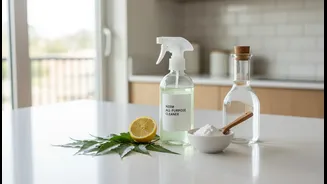









The Annual Monsoon Cleaning Challenge
As the rains settle in, the high humidity creates a perfect breeding ground for problems that weren't there in the dry heat of summer. Walls and furniture can develop fuzzy patches of mould, clothes in the wardrobe acquire a distinct musty smell, and floors
seem perpetually damp. It’s also the season where insects and other pests decide your home is the perfect shelter. This annual struggle sends many of us searching for cleaning solutions that are effective, affordable, and safe. Enter the holy trinity of traditional Indian home cleaning: white vinegar, baking soda, and neem. These simple ingredients are often hailed as all-natural miracle workers, but a truly effective cleaning strategy involves understanding what they do best and, crucially, where their powers end.
White Vinegar: The Acidic Mould Fighter
White vinegar, or synthetic vinegar, is a staple in many kitchens, but its utility extends far beyond cooking. Its power lies in its acidity. The acetic acid in vinegar is effective at cutting through grease, dissolving hard water stains, and tackling soap scum on bathroom tiles. During the monsoon, its most valuable property is its ability to combat mould. Studies suggest that straight, undiluted white vinegar can kill a significant percentage of common mould species. For best results, spray it directly onto mouldy surfaces like bathroom tiles or window sills, let it sit for about an hour to break down the fungus, and then scrub it off. It can also be added to a laundry cycle to help get rid of that persistent damp smell from clothes and linens.
Baking Soda: The Gentle Deodoriser
Baking soda, or sodium bicarbonate, is the quiet workhorse of low-chemical cleaning. While vinegar tackles issues with its acidity, baking soda works as a powerful deodoriser and a mild abrasive. Its primary superpower during the monsoon is absorbing foul odours. A small bowl of baking soda left in a musty cupboard or inside the refrigerator can absorb ambient smells. Sprinkling it on carpets and upholstery before vacuuming can help freshen them up considerably. As a gentle scrubber, a paste of baking soda and water is excellent for cleaning grimy kitchen counters, sinks, and even stovetops without the harshness of commercial scouring powders. This makes it ideal for tackling the sticky, grimy buildup that humidity seems to encourage.
Neem: The Natural Pest Barrier
The monsoon often brings an influx of insects seeking refuge from the rain. Before reaching for a chemical-laden spray, consider neem. For centuries, neem has been prized in India for its medicinal and protective properties. Its effectiveness as a pest controller comes from a compound called azadirachtin, which acts as a powerful repellent and disrupts the life cycle of many common insects. A simple solution of neem oil mixed with water and a few drops of liquid soap can be sprayed around window frames, doorways, and in corners to deter ants, cockroaches, and other crawlers. Placing dried neem leaves in wardrobes or kitchen cabinets can also help protect clothes and food supplies from pests. It is a deterrent, not an instant killer, making it a great preventative measure.
Understanding the Limits and Myths
Here is where we need to be realistic. While these ingredients are useful, they are not magic. The biggest myth is that mixing vinegar and baking soda creates a super-cleaner. The dramatic fizzing you see is actually a neutralisation reaction that produces mostly saltwater and carbon dioxide. The resulting mixture is less effective than using either ingredient on its own. It’s more effective to use them sequentially—for instance, scrubbing with baking soda paste and then spraying with vinegar to rinse. Furthermore, vinegar’s acidity can damage natural stone surfaces like marble and granite, and hardwood floors, so it should never be used on them. Baking soda's abrasive quality can scratch glass and polished finishes. Most importantly, for severe mould infestations or serious pest problems, these remedies are often not enough, and a professional service or a stronger, purpose-built product may be necessary.