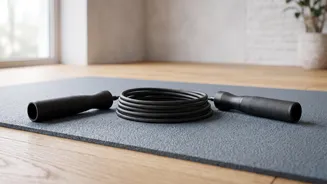







Finding room to exercise at home can be a challenge. When space is tight, two simple and effective options stand out: walking and skipping. But which one is the right fit for your fitness goals and your home? Let's break down the pros and cons.
The Calorie Question: Intensity vs. Duration
When it
comes to burning calories, intensity matters. Skipping, or jumping rope, is a high-intensity workout that torches calories efficiently. A 10-minute session can burn between 120 and 200 calories, making it roughly three times more effective than brisk walking for the same duration. This is because skipping engages muscles across your entire body and elevates your heart rate rapidly. However, the best exercise for weight management is the one you can do consistently. While skipping wins for calorie burn per minute, walking is a low-impact activity that can be sustained for much longer periods. A 45-minute brisk walk might burn a similar number of total calories as a shorter, more intense skipping session. Therefore, the choice depends on your schedule and preference: maximum results in minimum time (skipping), or a longer, less strenuous activity (walking).
The Space Constraint: What Do You Really Need?
The headline's central question comes down to practicality. Walking, especially in place, requires minimal space—little more than the spot you stand on. You can walk on the spot while watching TV or listening to a podcast, making it a clear winner for extremely confined areas. Skipping, while also compact, has more specific requirements. You need enough floor space to swing the rope without hitting furniture, which is roughly a one-and-a-half-metre square. More importantly, you need vertical clearance to ensure the rope doesn't catch on ceilings or light fixtures. While manageable in most rooms, those with very low ceilings might find it restrictive. For apartment dwellers, noise can also be a factor; using an exercise mat and focusing on low, quiet jumps can prevent bothering neighbours downstairs.
Impact on Joints: High vs. Low
The physical impact of an exercise is a crucial consideration, especially for beginners or those with pre-existing joint issues. Walking is a low-impact activity, meaning it puts minimal stress on your ankles, knees, and hips. This makes it a safe and accessible starting point for people of all fitness levels and ages. Skipping is a high-impact, plyometric exercise. Each jump puts pressure on your joints. However, when done with proper form—staying on the balls of your feet and making small, controlled bounces—the impact is less than running. If you have sensitive joints or are recovering from an injury, walking is the safer bet. For those without such concerns, the impact from skipping can be beneficial for building strength.
Bone Density and Strength
Both walking and skipping are weight bearing exercises, which are essential for maintaining and building bone density. This helps reduce the risk of osteoporosis later in life. Studies show that regular walking, especially brisk walking, helps slow bone loss and can improve bone density in the legs and spine. However, higher impact activities often provide a stronger stimulus for bone growth. Skipping, with its repetitive jumping, places more stress on the bones, signalling them to become stronger and denser. It's a highly effective way to strengthen bones, but should be approached with caution by those already diagnosed with thinning bones.
Skill, Coordination, and Other Benefits
Walking requires no special skill; it's an innate movement pattern. Skipping, on the other hand, demands coordination, balance, and rhythm. There is a learning curve, and beginners may need to practice to find a steady flow. This challenge, however, is also a benefit, as it improves motor skills and agility. Both exercises offer significant cardiovascular benefits, reducing the risk of heart disease and high blood pressure. Walking is praised for its mental health benefits, including reducing stress and improving mood, while skipping can also reduce anxiety and boost concentration. Ultimately, walking is easier to start immediately, while skipping offers an opportunity to develop a new skill alongside your fitness.