







The Annual Drowning
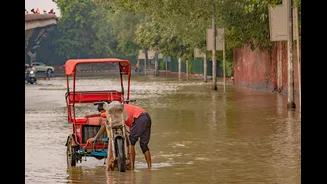
On Monday, just a few hours of heavy rainfall once again brought the Millennium City to a standstill. Major arterial roads like the Delhi-Jaipur Expressway and premium stretches like Golf Course Road were inundated, with water levels reaching knee-deep
in areas like Patel Nagar. The chaos was so severe that school buses were stranded for hours, and the District Disaster Management Authority was forced to issue a work-from-home advisory for offices and schools for August 25. This reactive measure has become a predictable part of the monsoon playbook, a tacit admission that the city's infrastructure cannot cope with the rain it is expected to receive. For residents and commuters, it’s a frustrating cycle of stalled cars, missed appointments, and the gnawing question of how a city of its stature can be so fragile.
A Man-Made Disaster, Not a Natural One
While it is easy to blame the deluge on the intensity of the downpour, the reality is that Gurugram’s flooding is a crisis of its own making. Experts point to a systematic dismantling of the region's natural drainage systems over decades of rapid, and often unplanned, urbanisation. The city has lost a significant number of its natural water bodies—ponds and lakes that once acted as sponges for excess rainwater. According to one report, nearly 389 of 640 water bodies have disappeared. These have been built over to make way for the gleaming towers and sprawling residential colonies that define the city today. This relentless concretization means rainwater has nowhere to go but onto the roads, which themselves were often built over natural water channels.
The Failure of Infrastructure
The city's man-made drainage network is woefully unprepared to handle the load. Much of the existing stormwater drain system is inadequately sized, poorly maintained, and frequently choked with silt, plastic waste, and construction debris. This means that even a moderate shower can overwhelm the system, causing water to back up and spill onto the streets, mixing with sewage and creating a public health hazard. The entire city’s drainage burden rests on just a handful of major drains, like the Badshahpur drain, creating critical chokepoints that flood reliably every year. Despite civic bodies identifying dozens of flood-prone hotspots annually, the solutions are often temporary, failing to address the core design flaws.
The Staggering Economic Cost
The gridlock isn't just an inconvenience; it carries a significant economic price tag. For a city that houses hundreds of Fortune 500 companies and prides itself as a major economic hub, the annual shutdown is a serious liability. The hours lost by employees stuck in traffic translate directly into lost productivity. A 2018 report estimated that traffic congestion in major Indian metros like Delhi, Mumbai, Bengaluru, and Kolkata costs the economy around $22 billion annually. Beyond productivity, there are increased logistics costs for businesses, higher fuel consumption as vehicles idle for hours, and damage to the city's brand as a reliable place to invest and work. The recurring need for work-from-home advisories is a clear signal that the city’s physical infrastructure is failing to support its economic ambitions.