



The Path to the Maracanã
Argentina's journey to the final in Rio de Janeiro was not one of flair and dominance, but of grit, defensive solidity, and decisive moments of magic from their captain. Throughout the tournament, the team coached by Alejandro Sabella was pragmatic, often
winning by a narrow margin. Messi was instrumental, scoring four crucial goals in the group stage to drag his team through. He scored the winner against Bosnia and Herzegovina, a stoppage-time stunner against Iran, and a brace against Nigeria. In the knockout rounds, his influence continued, even without scoring. He assisted the winning goal against Switzerland in extra time and was involved in the play that led to Gonzalo Higuaín's winner against Belgium. However, the team's attack had sputtered, and they entered the final having scored just two goals in 330 minutes of knockout football.
A Game of Missed Opportunities
The final against Germany was a tense affair, a tactical battle between German possession and Argentine counter-attacks. Argentina arguably had the clearer chances to win the match in normal time. The first major opportunity fell to Gonzalo Higuaín, who was gifted a one-on-one chance after a misplaced header by Germany's Toni Kroos, but he shockingly dragged his shot wide. Higuaín later had a goal correctly disallowed for offside. Just before halftime, Germany's Benedikt Höwedes hit the post with a header from a corner, a let-off for the Argentines. The match was a cagey battle of attrition, with both defences holding firm and the midfield, marshalled by Javier Mascherano for Argentina, proving difficult to break down.
The Golden Chance That Slipped Away
Just two minutes into the second half, the moment that would haunt Messi arrived. A pass put him through on goal, inside the penalty area to the left of the goal. It was the kind of position from which he had scored countless times for Barcelona. The world held its breath, expecting the net to bulge. Instead, Messi's low, left-footed shot rolled agonisingly wide of Manuel Neuer's far post. It was a clear-cut chance, the best he would get all game, and a miss that would be replayed endlessly in the years to come. He, along with his teammates, would later lament the missed opportunities that could have changed their fate. Beyond that single chance, Messi showed flashes of his brilliance with darting runs past defenders but struggled to find the final, killer pass as Germany's defence remained disciplined.
Extra Time, Heartbreak, and Controversy
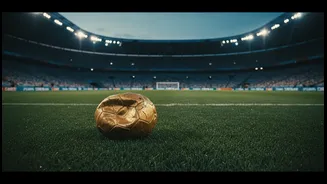
As the game wore on into extra time, fatigue became a visible factor for both sides. Argentina had another golden opportunity when Rodrigo Palacio found himself in on goal, but his attempt to chip Neuer went wide. Then, in the 113th minute, came the decisive blow. André Schürrle broke down the left flank and crossed for Mario Götze, who chested the ball down and volleyed it past goalkeeper Sergio Romero to give Germany the lead. With just minutes remaining, Messi had one final chance from a long-range free-kick, but his effort sailed high over the bar, a moment that encapsulated the frustration of the night. To compound the painful defeat, Messi was controversially awarded the Golden Ball as the tournament's best player, an honour he accepted with a look of pure dejection. The decision was even questioned by figures like Diego Maradona and then-FIFA President Sepp Blatter.