



Navigating the Monsoon Skies
July is a challenging yet rewarding month for astronomy in India. The key obstacle is, of course, the monsoon. However, the notion that the sky is permanently overcast is a myth. Brief, clear windows often appear, especially in the hours after a rain
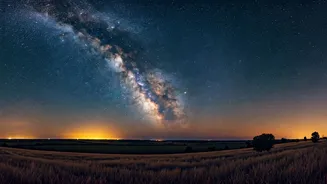
shower has passed, leaving the air clean and the stars exceptionally sharp. To make the most of these moments, planning is crucial. Use reliable weather apps that provide satellite cloud cover maps. Look for breaks in the clouds forecast for the late-night or pre-dawn hours. Patience is your best tool; sometimes waiting just an hour can reveal a stunning, freshly washed sky. Choose a location away from city lights, which will dramatically increase what you can see. High-altitude spots or even open areas in less-populated regions can serve as perfect temporary observatories.
Planetary Pairings and Alignments
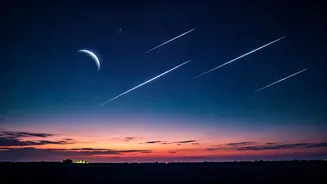
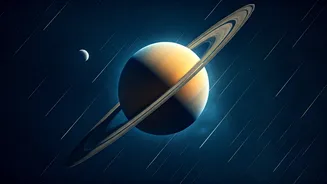
July offers some beautiful planetary engagements. The action begins just after midnight on July 7th, when the Moon pairs up with Saturn. The ringed planet will appear as a steady, golden point of light close to our lunar companion, a sight easily visible to the naked eye. A few days later, on the mornings of July 10th and 11th, look to the eastern sky before sunrise. A slender crescent Moon will form a stunning trio with reddish Mars and the sparkling Pleiades star cluster, also known as the Seven Sisters. Mars continues its journey, appearing close to the bright, red giant star Aldebaran on July 13th. Perhaps the month's most unique event is the exceptionally close conjunction of Mars and Uranus on July 4th. While Mars is easily seen, you'll need binoculars or a small telescope to spot the faint blue-green dot of Uranus right beside it in the pre-dawn sky.
A Triple Meteor Shower Finale
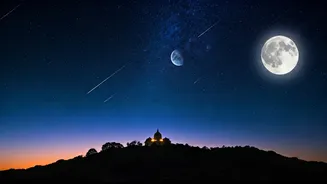
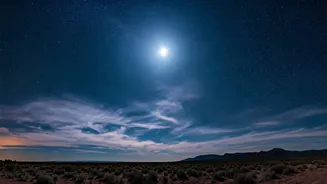
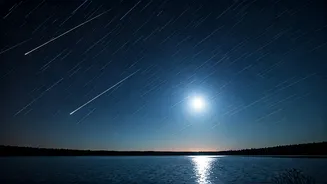
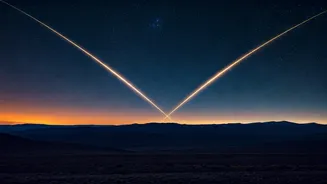
The end of July brings not one, but three overlapping meteor showers: the Southern Delta Aquariids, the Alpha Capricornids, and the Piscis Austrinids. All three peak between July 28th and 31st, creating a flurry of activity in the southern sky. The main challenge this year is a bright Full Buck Moon, which coincides with the peak and also marks Guru Purnima on July 29th. This lunar glare will wash out the fainter meteors. The Delta Aquariids, which normally produce around 15-20 meteors per hour, will be significantly impacted. However, all is not lost. The Alpha Capricornids are famous for producing a small number of very bright, slow-moving fireballs that can easily cut through the moonlight. These create a spectacular sight, so it's worth looking up for them.
The Best Way to Watch the Showers
To maximize your chances of seeing meteors despite the Full Moon, strategy is key. The best viewing window will be in the pre-dawn hours, between 1:30 AM and 4:30 AM IST, when the radiant points of the showers are highest in the sky. Find a dark spot away from city lights with an unobstructed view of the southern sky. Don't stare directly at the radiant point in the constellation Aquarius; instead, look about 45 degrees away. This is where the meteors will appear to have the longest, most impressive trails. Lie on a blanket or recline in a chair for comfort, and allow your eyes at least 20 minutes to fully adapt to the darkness. An even better strategy for 2026 might be to watch in the week before the peak, from July 21st to 26th, when the skies will be darker before the Moon rises. Be patient and hope for one of the bright Alpha Capricornid fireballs to blaze across the sky.