






The Challenge of Seeing the Invisible
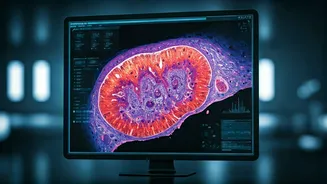
Pathology is the bedrock of medical diagnosis. When a patient undergoes a biopsy, the tissue sample is sent to a lab where a pathologist meticulously examines it under a microscope. They are searching for abnormalities—cancer cells, signs of inflammation,
or other indicators of disease. This process is incredibly demanding, requiring years of training and intense focus. However, the sheer volume of cases and the subtle nature of some diseases can make it a monumental task. [5, 12] A pathologist might spend hours scanning slides, and even then, tiny but critical details can be missed due to human error or fatigue. [11, 20] The challenge is compounded by a growing shortage of trained pathologists, which increases workloads and the pressure to deliver timely, accurate results. [6, 18]
How AI Learns to Spot Disease
This is where smart machine learning software comes in. Think of it as a highly specialized assistant that has been trained on millions of examples. [10] Researchers feed these AI models vast datasets of high-resolution digital images of tissue slides, both healthy and diseased. [5, 12] By analyzing these images, the AI, particularly a type called a convolutional neural network (CNN), learns to recognize incredibly complex patterns. [9] It can identify the shape, size, and arrangement of cells that signify a specific condition, like cancer. Some advanced systems even learn from pathologists directly, using eye-tracking technology to understand what an expert focuses on when making a diagnosis. [21] This allows the software to flag suspicious areas that a human might overlook, essentially finding the 'needle in a haystack' in seconds. [1]
More Speed, Greater Accuracy
The benefits of this technology are transformative. One of the most immediate advantages is speed. An AI tool can analyze a complex digital slide in a fraction of the time it would take a human. [3, 12] For example, a task that might take a pathologist 20 minutes can be completed by an AI in just one minute. [3] This dramatic reduction in turnaround time means patients get their diagnoses faster, allowing treatment to begin sooner. [7] More importantly, AI enhances accuracy. Studies have shown that AI models can match or even exceed the performance of human experts in certain diagnostic tasks, significantly reducing variability between different pathologists' interpretations. [6, 7] By providing a reliable 'second opinion,' these tools help catch early signs of disease and reduce the chance of misdiagnosis. [8, 11]
A Partner, Not a Replacement
Despite the remarkable capabilities of AI, the goal is not to replace doctors. Instead, these tools are designed to be powerful assistants, augmenting the skills of human pathologists. [1, 13] The software handles the laborious, time-consuming task of scanning and flagging potential issues, freeing up the pathologist to focus on the most complex aspects of a case, apply their clinical judgment, and make the final diagnosis. [17] This collaborative approach, often called a 'human-in-the-loop' system, combines the computational power and consistency of AI with the nuanced expertise and critical thinking of a human doctor. [1] This synergy promises to make the diagnostic process more efficient, standardized, and ultimately, more reliable for patients. [14]
The Future of Personalized Medicine
The applications for this technology are rapidly expanding. Beyond simply detecting cancer, some AI models can classify tumor subtypes and even predict how aggressive a cancer might be. [2, 3] By analyzing subtle features in tissue and combining it with other clinical data, AI can help predict which patients are most likely to respond to specific treatments, such as immunotherapy. [4, 6] This opens the door to a new era of personalized medicine, where treatment plans are tailored not just to the type of disease, but to the unique biological characteristics of a patient's own tissue. [5] As these intelligent systems become more integrated into clinical practice, they hold the promise of making diagnostics faster, more precise, and more equitable for everyone. [15, 19]