


Location is Everything
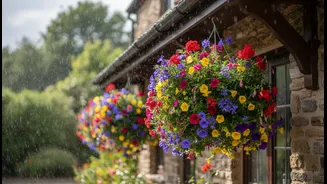
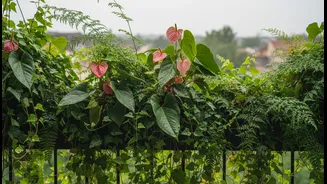
The single most important decision for your hanging basket's health during the rainy season is its location. While they need light, direct exposure to heavy downpours can shred delicate petals and leaves, and completely saturate the soil. The ideal spot
is a sheltered one, such as under the eaves of your house, on a covered balcony, or within a veranda. This provides protection from the physical force of the rain and prevents the basket from becoming waterlogged, while still allowing access to indirect sunlight. Strong winds can also be a problem, drying out plants or causing physical damage. A sheltered location mitigates this risk, creating a stable environment for your plants to thrive.
Prioritise Perfect Drainage
Even in a sheltered spot, humidity and ambient moisture can be a challenge. Excellent drainage is non-negotiable to prevent root rot, the most common killer of container plants in wet weather. Before the rains set in, check that the drainage holes in your baskets are clear and not clogged. If your potting mix is heavy, consider repotting with a lighter, well-draining medium. You can amend existing soil with perlite or sand to improve its structure and allow excess water to escape more easily. Some gardeners also elevate their pots on bricks or 'pot feet' to ensure the drainage holes are never blocked and to promote better airflow.
Rethink Your Watering Schedule
It seems counterintuitive, but you cannot stop watering just because it is raining. Baskets tucked under a roof may receive no rainwater at all and can dry out quickly, even in humid conditions. Conversely, don't assume a basket needs water just because the weather is wet. The golden rule is to always check the soil first. Insert your finger about an inch into the soil; if it feels damp, hold off on watering. When you do water, do so thoroughly until you see it running from the drainage holes, but then allow the soil to partially dry out before the next watering. This prevents the roots from sitting in constantly soggy soil.
Guard Against Pests and Disease
High humidity creates a perfect breeding ground for fungal diseases like powdery mildew and pests such as slugs and aphids. Good air circulation is your best defence. If your plants have very dense foliage, consider a light trim to allow more air to move through the leaves and stems. Regularly inspect your plants, paying close attention to the undersides of leaves, for any signs of trouble. Removing any damaged or yellowing leaves and spent flowers promptly can prevent decay from setting in and spreading. For persistent issues, a simple spray of neem oil solution can offer an effective, organic solution.
Choose Monsoon-Hardy Plants
While careful placement helps, some plants simply handle wet and humid conditions better than others. Delicate flowers like petunias can be easily battered by rain. For a more resilient hanging basket, consider hardier varieties. Ferns, for example, thrive in humidity and indirect light, making them a great choice for monsoon baskets. Other options that perform well in Indian rainy seasons include Coleus for its colourful foliage, Money Plants, and certain varieties of Verbena or Portulaca (Moss Rose), which are more tolerant of a good soaking. When you select plants suited to the climate, you set yourself up for a season of success.
When to Intervene Further
During periods of exceptionally heavy rain or storms, even a sheltered spot may not be enough. If you're expecting a severe downpour, consider temporarily moving your baskets indoors to a garage or a well-lit room. If they are too heavy to move, you can use temporary coverings like a waterproof tarpaulin to shield them from the worst of the weather. After a heavy rain, it’s also a good idea to replenish nutrients that may have been washed out of the soil. A dose of a water-soluble fertiliser can help your plants recover and continue to produce new growth and flowers.