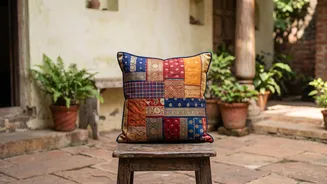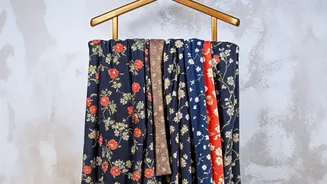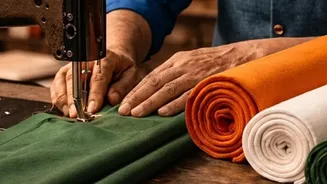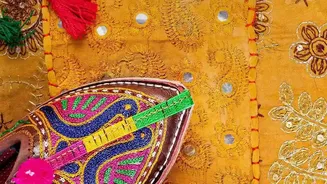

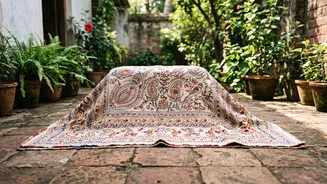
Long before 'upcycling' and 'sustainability' became global trends, women in Maharashtra were practicing it with love and artistry. Their creation, the Godhadi, is more than a quilt; it's a tapestry of memories and a masterclass in resourcefulness.
A Tapestry of Memories
In homes
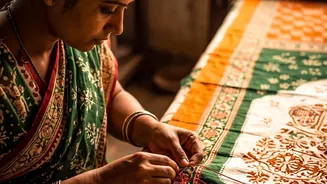
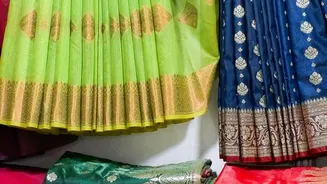
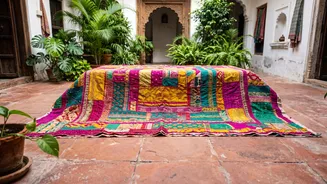
across Maharashtra, and in neighbouring states like Goa, the Godhadi is a familiar and cherished object. It's a hand-stitched quilt, traditionally made by mothers and grandmothers from old, worn-out pieces of clothing—soft cotton sarees, faded dhotis, and childrens' outgrown garments. These are not mass-produced blankets but deeply personal heirlooms. Each patch of fabric tells a story, holding the scent of a loved one or the memory of a special occasion. For many, a Godhadi is a tangible connection to family, a symbol of warmth and protection lovingly stitched together. Often, a baby's first blanket is a Godhadi made from their mother's sarees, wrapping them in a familiar and comforting embrace.
The Art of Conscious Crafting
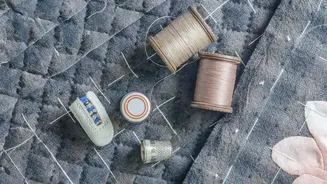
The process of making a Godhadi is an art form in itself, rooted in patience and skill. It begins with carefully washing, cleaning, and ironing discarded fabrics. These are then layered—typically with more durable fabrics like sarees or dupattas for the outer layers and smaller pieces for the inner filling. Women then sit together, often in the afternoons during the summer when farm work is slow, and meticulously hand-stitch the layers together with a simple running stitch. This communal activity becomes a social gathering, a time for sharing stories, singing songs, and strengthening community bonds as they work. The thread used is traditionally white, as adding dye was believed to weaken it, ensuring the quilt's durability.
Sustainability Stitched In
The Godhadi is a perfect embodiment of a circular economy, a practice of sustainable living long before the term was coined. In a world grappling with the environmental impact of fast fashion and textile waste, this traditional craft offers a powerful lesson. It is, at its core, the art of the discarded fabric, transforming what would otherwise end up in a landfill into a beautiful, functional, and long-lasting object. This principle of reusing and repurposing is inherent to the craft, showcasing a resourcefulness born from necessity that is now being celebrated for its environmental wisdom.
From Tradition to Livelihood
While traditionally a domestic craft, Godhadi-making has evolved into a vital source of livelihood and empowerment for many rural women. Social enterprises and self-help groups have emerged to bridge the gap between skilled rural artisans and urban markets. Organisations like MotherQuilts in Pune and Project Ruma in Latur district work with women, including some who are speech and hearing impaired, providing them with steady wages and preserving this dying art. By organising these artisans, they can take on bulk orders, create innovative designs, and access a wider customer base through online sales and exhibitions, turning their traditional skills into economic independence.
The Godhadi's Modern Renaissance
Today, the humble Godhadi is experiencing a renaissance. It is no longer just a functional blanket but is being reimagined as a symbol of ethical, slow, and sustainable fashion. Designers and conscious consumers are drawn to its unique aesthetic and powerful story. Collaborations between Indian craftswomen and international designers are leading to new products, patterns, and techniques, from colourful lampshades to bed runners. These modern interpretations are propelling the Godhadi onto a global stage, where it is celebrated not just for its beauty, but as a movement representing cultural pride, artistry, and a sustainable philosophy woven with love and legacy.